• Email Us: [email protected]
  • Contact Us: +1 718 874 1545
  • Skip to main content
  • Skip to primary sidebar

Medical Market Report

  • Home
  • All Reports
  • About Us
  • Contact Us

Ronaldo The Solitary Brazilian Boa Has 14 Babies In Rare “Virgin Birth”

July 5, 2024 by Deborah Bloomfield

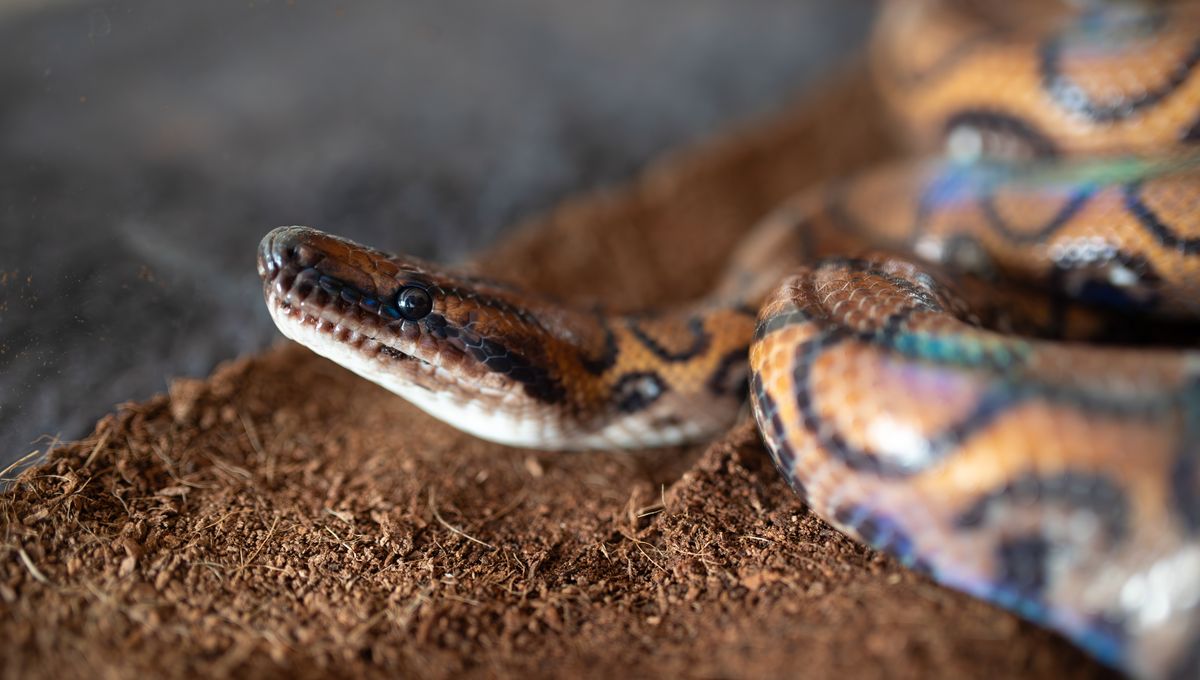
Ronaldo the boa was believed to be a male who had happily spent the past nine years alone at a school in the UK. So, you can imagine the surprise when students came to class one day and found the 13-year-old snake had given birth to 14 babies.

Advertisement

“One of the students discovered them during a routine vivarium check. At first, we thought she must have been mistaken. We couldn’t believe our eyes!” Amanda McLeod, an animal care technician at the City of Portsmouth College, said in a statement.

Ronaldo, a 13-year-old Brazilian rainbow boa, was previously declared to be male by a veterinarian – but clearly, this isn’t the case. 

“Ronaldo had been looking slightly fatter than usual, like he’d eaten a big meal, but we never thought for a moment that he, or should we say she, was pregnant,” added Pete Quinlan, a reptile specialist at the college.

Despite not being in contact with another snake for almost a decade, the boa managed to reproduce through a rare process called parthenogenesis, stemming from the term “virgin birth” in Greek.

ⓘ IFLScience is not responsible for content shared from external sites.

It is a form of asexual reproduction whereby an embryo develops without the need for an egg’s fertilization. Different species pull off this feat using a variety of mechanisms, but one of the more common ones in vertebrates involves the egg merging with cells called polar bodies, which contain genetic material left over from egg cell formation.

“I’ve been breeding snakes for 50 years and I’ve never known this happen before. Effectively the babies are clones of their mother although their markings are all slightly different,” added Pete Quinlan, a reptile specialist at the college.

Although rare, parthenogenesis has been documented in various species of insects, amphibians, birds, reptiles, and fish. City of Portsmouth College says this is only the third time it has been reported in a captive Brazilian rainbow boa.

Advertisement


The rare reproduction method occurs in response to a lack of viable males. Scientists are not certain how the animal triggers the process, although environmental change may sometimes be a factor. For instance, in aphids, overcrowding and predation may cause females to opt for parthenogenesis, while high salinity sparks the process in some species of freshwater plankton.

Snakes have a whole host of reproductive tactics to utilize in times of need. Another strategy used by female snakes is long-term sperm storage, which allows them to produce offspring after prolonged separation from males. In one instance, scientists documented a wild-collected female Western Diamond-backed Rattlesnake that gave birth to two healthy litters around six years after it had contact with a male, marking the longest vertebrate sperm storage ever recorded.

Deborah Bloomfield
Deborah Bloomfield

Related posts:

  1. ARK Invest’s Wood expects market rotation back to growth stocks
  2. Most Plant-Based Milks Are Poorer In Key Micronutrients Than Dairy
  3. Great Pacific Garbage Patch Now A Floating Love Shack For Coastal Species
  4. Hard Working Urchins Don’t Deserve Their Bad Reputation

Source Link: Ronaldo The Solitary Brazilian Boa Has 14 Babies In Rare "Virgin Birth"

Filed Under: News

Primary Sidebar

  • US Just Killed NASA’s Mars Sample Return Mission – So What Happens Now?
  • Art Sleuths May Have Recovered Traces Of Da Vinci’s DNA From One Of His Drawings
  • Countries With The Most Narcissists Identified By 45,000-Person Study, And The Results Might Surprise You
  • World’s Oldest Poison Arrows Were Used By Hunters 60,000 Years Ago
  • The Real Reason You Shouldn’t Eat (Most) Raw Cookie Dough
  • Antarctic Scientists Have Just Moved The South Pole – Literally
  • “What We Have Is A Very Good Candidate”: Has The Ancestor Of Homo Sapiens Finally Been Found In Africa?
  • Europe’s Missing Ceratopsian Dinosaurs Have Been Found And They’re Quite Diverse
  • Why Don’t Snorers Wake Themselves Up?
  • Endangered “Northern Native Cat” Captured On Camera For The First Time In 80 Years At Australian Sanctuary
  • Watch 25 Years Of A Supernova Expanding Into Space Squeezed Into This 40-Second NASA Video
  • “Diet Stacking” Trend Could Be Seriously Bad For Your Health
  • Meet The Psychedelic Earth Tiger, A Funky Addition To “10 Species To Watch” In 2026
  • The Weird Mystery Of The “Einstein Desert” In The Hunt For Rogue Planets
  • NASA Astronaut Charles Duke Left A Touching Photograph And Message On The Moon In 1972
  • How Multilingual Are You? This New Language Calculator Lets You Find Out In A Minute
  • Europa’s Seabed Might Be Too Quiet For Life: “The Energy Just Doesn’t Seem To Be There”
  • Amoebae: The Microscopic Health Threat Lurking In Our Water Supplies. Are We Taking Them Seriously?
  • The Last Dogs In Antarctica Were Kicked Out In April 1994 By An International Treaty
  • Interstellar Comet 3I/ATLAS Snapped By NASA’s Europa Mission: “We’re Still Scratching Our Heads About Some Of The Things We’re Seeing”
  • Business
  • Health
  • News
  • Science
  • Technology
  • +1 718 874 1545
  • +91 78878 22626
  • [email protected]
Office Address
Prudour Pvt. Ltd. 420 Lexington Avenue Suite 300 New York City, NY 10170.

Powered by Prudour Network

Copyrights © 2026 · Medical Market Report. All Rights Reserved.

Go to mobile version