• Email Us: [email protected]
  • Contact Us: +1 718 874 1545
  • Skip to main content
  • Skip to primary sidebar

Medical Market Report

  • Home
  • All Reports
  • About Us
  • Contact Us

Russia’s Soyuz Crewed Space Launch Aborted Just 21 Seconds Before Liftoff

March 22, 2024 by Deborah Bloomfield

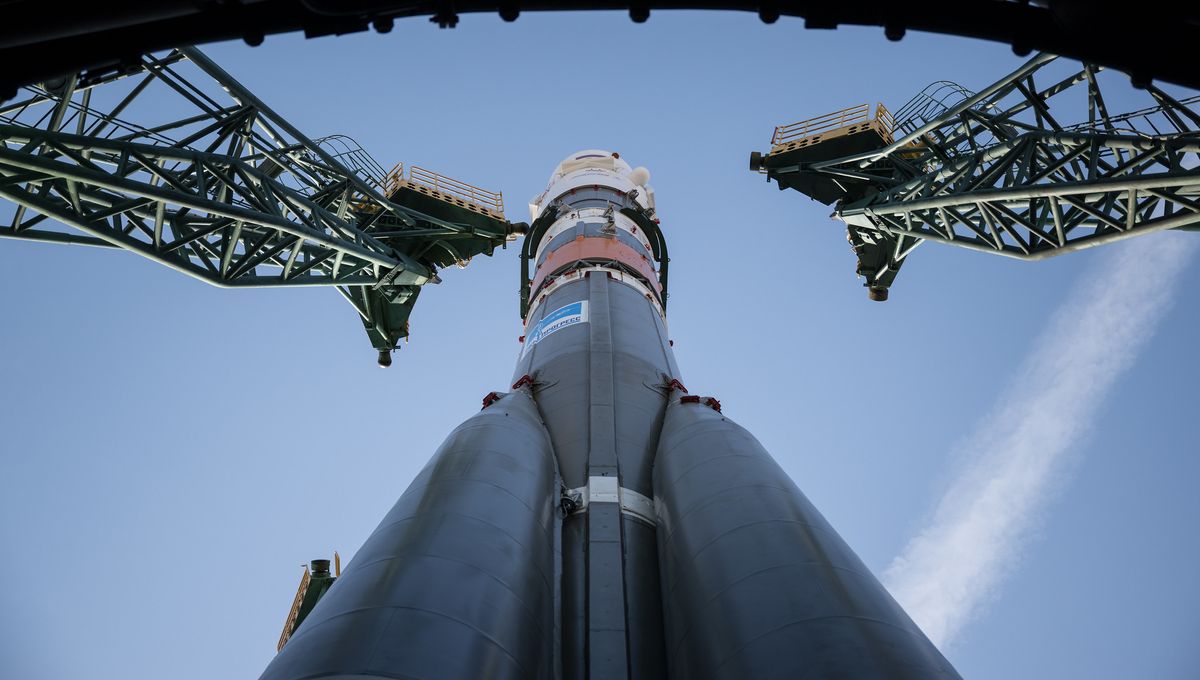
When you are about to launch into space, you want to make sure everything is GO – all the more so if you have people on that rocket. Yesterday’s Soyuz launch toward the International Space Station was scrubbed just 21 seconds before lift-off.

The abort was triggered by an automated system, the cause being a low voltage reading in the Soyuz rocket’s electrical system. The window for the next launch is tomorrow, and both Roscosmos and NASA will want to know if what happened yesterday will affect the next launch attempt.

Advertisement

“The next available launch opportunity is Saturday, March 23, pending completion of State Commission review for the Roscosmos launch. More information will be provided as available,” NASA said in a statement.

Soyuz MS-25 carries to the International Space Station NASA astronaut Tracy C. Dyson, Roscosmos cosmonaut Oleg Novitskiy, and spaceflight participant Marina Vasilevskaya of Belarus. Dyson is going to spend six months aboard the space station as part of the Expedition 71 crew. Marina Vasilevskaya, who will become the first Belarusian woman in space, will be in orbit for 12 days and return with a member of Expedition 70 crew as well as Novitskiy.

Soyuz rockets are extremely reliable and an abort before launch is very rare. Yesterday’s event reminded us of the in-flight abort of 2018, when NASA astronaut Nick Hague and cosmonaut Alexey Ovchinin’s Soyuz was jettisoned from its rocket and forced to do an emergency landing.

Once launched, the Soyuz will complete two orbits and dock after a few hours with the Prichal module on the Russian side of the space station. They will be met by NASA astronauts Loral O’Hara, Matthew Dominick, Mike Barratt, and Jeanette Epps, as well as Roscosmos cosmonauts Oleg Kononenko, Nikolai Chub, and Alexander Grebenkin. Loral O’Hara will hitch a ride and come back with Vasilevskaya and Novitskiy in early April. 

Deborah Bloomfield
Deborah Bloomfield

Related posts:

  1. Cricket-NZ players reach Dubai after ‘specific, credible threat’ derailed Pakistan tour
  2. Soccer-Liverpool’s Alexander-Arnold ruled out of Man City game
  3. What Are Baby Platypuses Called?
  4. Should You Wash Chicken Before Cooking It?

Source Link: Russia’s Soyuz Crewed Space Launch Aborted Just 21 Seconds Before Liftoff

Filed Under: News

Primary Sidebar

  • Does Sleeping On A Problem Actually Help? Yes – It’s Science-Approved
  • Scientists Find A “Unique Group” Of Polar Bears Evolving To Survive The Modern World
  • Politics May Have Just Killed Our Chances To See A Tom Cruise Movie Actually Shot In Space
  • Why Is The Head On Beer Often White, When Beer Itself Isn’t?
  • Fabric Painted With Dye Made From Bacteria Could Protect Astronauts From Radiation On Moon
  • There Used To Be 27 Letters In The English Alphabet, Until One Mysteriously Vanished
  • Why You Need To Stop Chucking That “Liquid Gold” Down Your Kitchen Sink
  • Youngest Mammoth Fossils Ever Found Turn Out To Be Whales… 400 Kilometers From The Coast
  • The First Wheelchair User To Travel To Space Is About To Make History
  • “It Was Bigger Than A Killer Whale”: 66 Million-Year-Old Tooth Suggests Mosasaurs Were Hunting In Rivers, Not Just Seas
  • Killer Whales And Dolphins Team Up In First-Ever Footage Of Cooperative Hunting
  • Why Does Chocolate In Advent Calendars Taste Different From Normal Chocolate?
  • Why Do Sheep And Goats Have Rectangular Pupils?
  • What Kind Of Parents Were Dinosaurs?
  • First Images Of A Tatooine-Like Planet That Orbits Its Two Stars Closer Than We’ve Seen Before
  • JWST Finds Earliest Supernova Yet, From When The Universe Was Just 730 Million Years Old
  • How A Comet On Christmas Day Changed What We Knew About Space
  • What Color Was Diplodocus? First-Ever Sauropod Fossils With Melanosomes Bring Us A Step Closer To Finding Out
  • Why Do NASA’s Voyager Spacecraft Sometimes Get Closer To Earth, As They Head Out Of The Solar System?
  • What Is The Fastest Animal In The World?
  • Business
  • Health
  • News
  • Science
  • Technology
  • +1 718 874 1545
  • +91 78878 22626
  • [email protected]
Office Address
Prudour Pvt. Ltd. 420 Lexington Avenue Suite 300 New York City, NY 10170.

Powered by Prudour Network

Copyrights © 2025 · Medical Market Report. All Rights Reserved.

Go to mobile version