Even if you are a natural late riser, if you’re ever faced with cancer, it might be time to make an exception. A study of patients receiving immunotherapy for small-cell lung cancer found a remarkably large difference in survival between those treated early and late in the day.
Most people when diagnosed with lung cancer will probably take the first appointment they can get for treatment. However, a new study adds to evidence that a morning next week might be better than tomorrow afternoon.
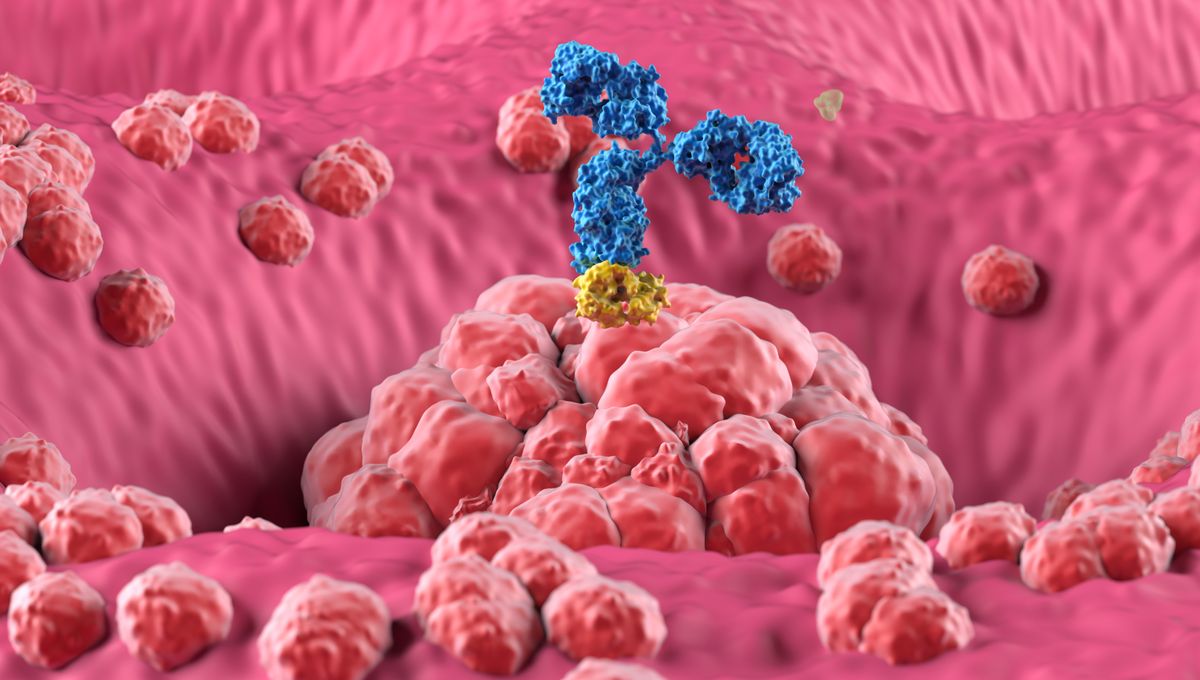
Researchers from five Chinese institutions compared the outcomes of 397 patients treated with chemotherapy and either atezolizumab or durvalumab. Atezolizumab and durvalumab are both immune checkpoint inhibitors (ICIs), which are used to block pathways that allow cancers to evade the immune system. Their administration takes half an hour.
Patients were categorized by the average time of day at which they received their first four ICI treatment cycles, revealing dramatically better outcomes for those treated earlier in the day.
Using 3:00 pm as the cut-off, the authors found a 63 percent lower risk of death for those treated before that time, and a 52 percent lower risk of the cancer showing detectable progression in CT scans and MRIs.
Treatments only started at 11:00 am, and there was a general trend for results to get worse until 3:00 pm, after which they stabilized. However, samples were small enough that the difference between an appointment at a specific time and an hour later was not statistically significant, thus the grouping into before and after 3:00 pm.
It’s important to note that this was a retrospective study, rather than a randomized trial. Consequently, it’s possible that those getting treated later in the day were not a truly representative sample, perhaps having longer travel times to the hospital or responsibilities that made it harder for them to get well. The study excluded patients where the time of day of their treatment was not known, or who received a different form of immunotherapy.
Nevertheless, the authors argue the findings add to evidence that the influence of circadian rhythms on the immune system makes treatment times important, particularly for ICI administration.
Even aggregating all treated at 3:00 pm or later, the sample size was smaller than ideal. However, the authors point out there have been at least 10 previous studies published in the last four years on the effect of time of treatment on immunotherapy.
Eight of these previous studies involved even smaller sample sizes than this one and the improvements in survival rate or progression time were smaller in most cases than found here. Nevertheless, almost all trials showed significantly greater delays in cancer progression for those receiving treatment earlier in the day, and most also reported substantially lower mortality.
Collectively, these studies make a powerful case for getting immunotherapy earlier in the day – although they use different cut-off points to define what earlier means. It’s also notable that some of these studies were done for patients with melanoma, renal cell carcinoma, and head and neck cancers, indicating the benefits are not confined to small-cell lung cancers. A meta-analysis including studies on an even larger variety of cancers reached similar conclusions.
“Adjusting infusion timing is a straightforward and easily implementable intervention that can be adopted across diverse healthcare settings without additional cost,” said senior author Dr Yongchang Zhang of Central South University in a statement. “This study has immediate clinical applicability and the potential to transform current treatment protocols for small cell lung cancer.”
The authors note that despite the evidence in favor of earlier immunotherapy, the mechanism is still unknown, and needs further research. There is, however, evidence from mice that synchronizing immunotherapy with maximum dendritic cell activity provides the greatest effectiveness.
Although the potential benefits are obvious, application could prove tricky, with most hospitals lacking the resources to treat all their patients in a narrow window each day. One can imagine a situation where for-profit institutions charge more for the early timeslots, creating one more example where wealth determines survival.
The study is published in the journal Cancer.

Source Link: Scheduling Cancer Immunotherapy In The Morning May Lower Your Risk Of Death By As Much As 63 Percent
