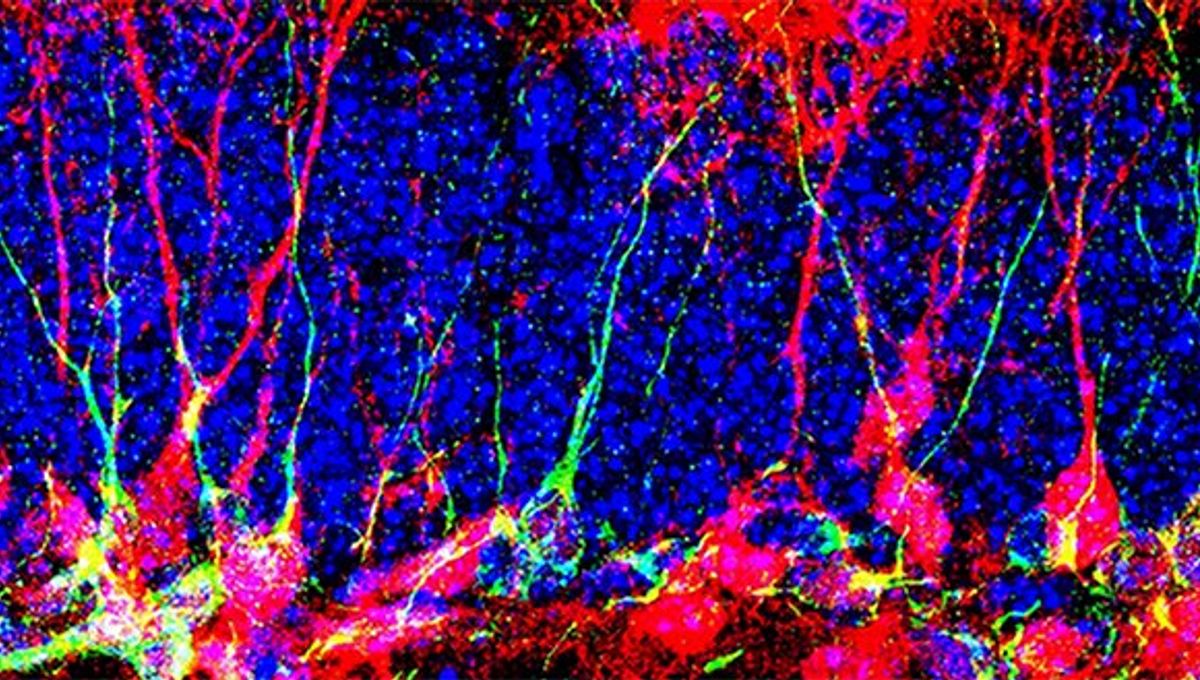
Dormant stem cells in the brains of adult mice have been resuscitated by kick-starting their metabolism, leading to the production of new brain cells. The new study shows how even adult brains could still have potential for regeneration, which could have long-term implications for the treatment of neurodegenerative diseases like dementia.
Neural stem cells (NSCs) are special, self-renewing cells that have the potential to develop into all of the different cell types in the central nervous system. These cells are what allow the brain to develop in the first place, but in adult humans, most NSCs are dormant, or “quiescent”. This limits our ability to make new neurons during our lifetimes, unlike some other animals that retain an incredible capacity for regeneration.
Now, a team of researchers from Switzerland has found a way to “wake up” these stem cells from their dormant state, allowing them to become active once more. It all revolves around that most famed of cellular organelles, the mitochondria.
Mitochondria are – all together now – the “powerhouse of the cell”, miniature factories that churn out chemical energy in the form of adenosine triphosphate (ATP). Eleven years ago, researchers in study co-lead Professor Jean-Claude Martinou’s group discovered a key protein complex called the mitochondrial pyruvate carrier (MPC), which helps direct cells down particular metabolic pathways. Dormant cells are metabolically different from active cells, so the researchers looked to figure out a way to use this mitochondrial mechanism to their advantage and switch the dormant NSCs to a more active state.
“Cellular metabolism is important for adult [NSC] behavior. However, its role in the transition from quiescence to proliferation is not fully understood,” the team summarize in their paper. “We here show that the mitochondrial pyruvate carrier (MPC) plays a crucial and unexpected part in this process.”
By knocking out MPC activity using chemical inhibitors and genetically modified mice, the researchers were able to remove its influence on the NSCs. Without the MPC, the NSCs could be reactivated and began to generate new neurons. This was achieved in the brains of adult and even elderly mice.
“With this work, we show that redirection of metabolic pathways can directly influence the activity state of adult NSCs and consequently the number of new neurons generated,” said study co-lead Professor Marlen Knobloch in a statement.
The ability to regenerate parts of the adult brain could have huge implications for the treatment of brain injury or disease, if the findings can be replicated in humans. Neurodegenerative conditions such as Parkinson’s disease involve the gradual loss of specific populations of brain cells; although still far in the future, leveraging reactivated NSCs to generate neurons to replace the ones that are lost is a promising avenue for further exploration.
“These results shed new light on the role of cell metabolism in the regulation of neurogenesis,” concluded Professor Martinou. “In the long term, these results could lead to potential treatments for conditions such as depression or neurodegenerative diseases.”
The study is published in Science Advances.

Source Link: Scientists Figure Out How To Spawn New Neurons In Adult Brains
