• Email Us: [email protected]
  • Contact Us: +1 718 874 1545
  • Skip to main content
  • Skip to primary sidebar

Medical Market Report

  • Home
  • All Reports
  • About Us
  • Contact Us

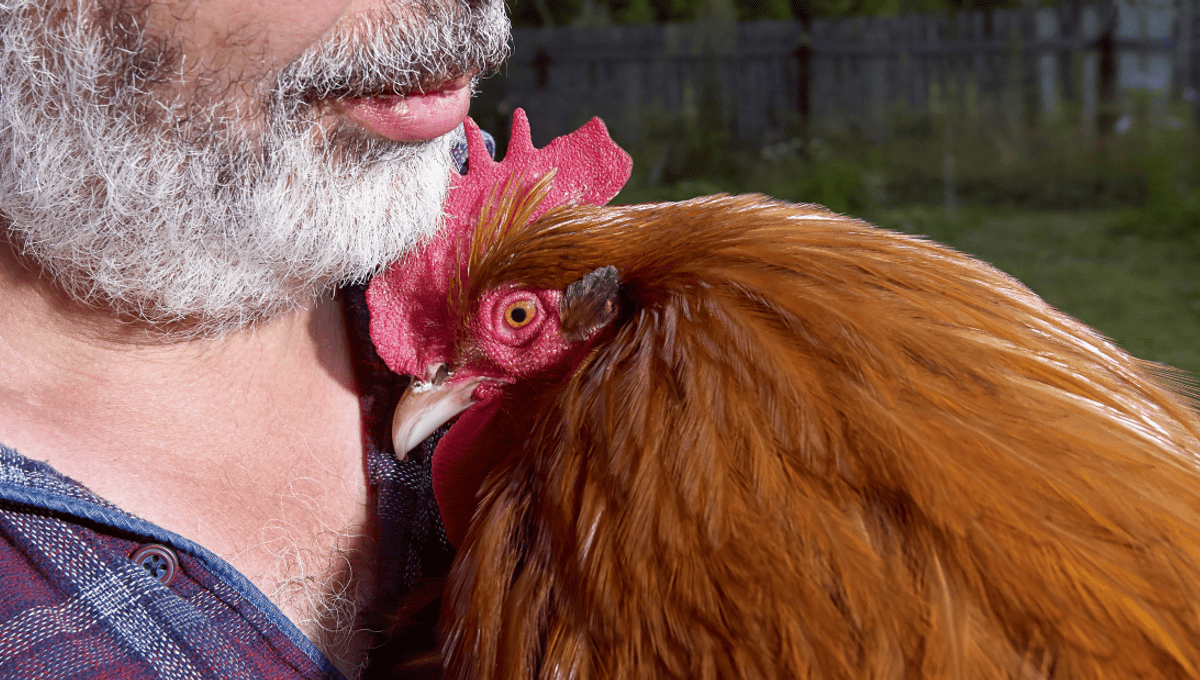
Scientists Plea: Don’t Hug Birds With Avian Flu

October 19, 2022 by Deborah Bloomfield

Avian influenza is currently seeing a spike in parts of the globe, with the UK environment agency recently announcing that Britain is experiencing its worst outbreak on record. While health authorities are advising residents across the globe on how to prevent the spread of disease, posts on social media have scientists worried as people comfort infected birds without personal protective equipment (PPE).

As we saw at the advent of the COVID-19 pandemic, which is thought to have spread from bats (possibly through an intermediate host) to humans, zoonotic diseases can become a public health issue. While human cases of avian flu are rare, they do happen, such as a reported case from the UK earlier this year.

Advertisement

Emmanuel the emu, much-loved TikTok star, has unfortunately been touched by the bird flu outbreak. His keepers are understandably very upset, but images of the emu being comforted with hugs from humans without PPE has scientists worried.

“If your emu (or any bird) has avian influenza, do not kiss it,” said virologist Dr Angela Rasmussen on Twitter. “Do not cuddle with it. Do not touch it. Bird flu is extremely dangerous to humans and other animals.”

“I am as captivated by Emmanuel the Emu as many on the on the internet & hope it recovers, but being face to face with a bird [with] avian flu is a bad idea,” tweeted Assistant Professor at Emory Healthcare, Dr Boghuma Kabisen Titanji, IDdoc blog author and infectious diseases specialist. “This is how zoonotic transmissions occur, this is why entire farms cull sick birds.”

Cases of human infection are rare with fewer than 1,000 cases reported globally since 2003, but they are most common in people who have regular contact with birds. Close contact is required for bird-to-human transmission of avian flu, which is why the official advice is to not touch sick or dead birds.

Cases have cropped up in unusual species in this latest outbreak, with the first-ever confirmation of bird flu in cetaceans coming from dolphins and porpoises. To try and slow the spread in Britain, the UK government has introduced an Avian Influenza Prevention Zone limiting who has access to sites housing lots of birds and regimented clothes changing and disinfection of potentially contaminated items and vehicles.

While some outbreaks occur among commercial flocks, domestic pets are also at risk and though watching animals we love suffer is incredibly painful, keeping a safe distance is necessary for the protection of other animals and human health.

Advertisement

For more information on avian flu, visit the Center for Disease Control and Prevention’s website.

Deborah Bloomfield
Deborah Bloomfield

Related posts:

  1. IMF says crucial Chad gets debt treatment deal with private creditors
  2. Asian shares at 1-month low, default fears stalk China Evergrande
  3. Allianz speeds up succession planning in light of Structured Alpha lawsuits
  4. Matter raises $7 million Series A to build a better reading app

Source Link: Scientists Plea: Don't Hug Birds With Avian Flu

Filed Under: News

Primary Sidebar

  • A Giant Volcano Off The Coast Of Oregon Is Scheduled To Erupt In 2026, JWST Finds The Best Evidence Yet Of A Lava World With A Thick Atmosphere, And Much More This Week
  • The UK’s Tallest Bird Faced Extinction In The 16th Century. Now, It’s Making A Comeback
  • Groundbreaking Discovery Of Two MS Subtypes Could Lead To New Targeted Treatments
  • “We Were So Lucky To Be Able To See This”: 140-Year Mystery Of How The World’s Largest Sea Spider Makes Babies Solved
  • China To Start New Hypergravity Centrifuge To Compress Space-Time – How Does It Work?
  • These Might Be The First Ever Underwater Photos Of A Ross Seal, And They’re Delightful
  • Mysterious 7-Million-Year-Old Ape May Be Earliest Hominin To Walk On Two Feet
  • This Spider-Like Creature Was Walking Around With A Tail 100 Million Years Ago
  • How Do GLP-1 Agonists Like Ozempic and Wegovy Work?
  • Evolution In Action: These Rare Bears Have Adapted To Be Friendlier And Less Aggressive
  • Nearly 100 Years After Debating Bohr On Quantum Mechanics, New Experiment Proves Einstein Wrong – Again
  • 9,500-Year-Old Headless Skeleton Is New World’s Oldest Known Cremated Adult
  • World’s Longest Jellyfish Can Reach A Whopping 36 Meters, Even Bigger Than A Blue Whale
  • In 1994, December 31 Was Wiped From Existence In Kiribati
  • A Giant Volcano Off The Coast Of Oregon Failed To Erupt On Time. Its New Schedule: 2026
  • Here Are 5 Ways In Which Cancer Treatment Advanced In 2025
  • The First Marine Mammal Driven To Extinction By Humans Disappeared Only 27 Years After Being Discovered
  • The Planet’s Oldest Bee Species Has Become The World’s First Insect To Be Granted Legal Rights
  • Facial Disfiguration: Why Has The Face Been The Target Of Punishment Across Time?
  • The World’s Largest Living Reptile Can “Surf” Over 10 Kilometers To Get Between Islands
  • Business
  • Health
  • News
  • Science
  • Technology
  • +1 718 874 1545
  • +91 78878 22626
  • [email protected]
Office Address
Prudour Pvt. Ltd. 420 Lexington Avenue Suite 300 New York City, NY 10170.

Powered by Prudour Network

Copyrights © 2026 · Medical Market Report. All Rights Reserved.

Go to mobile version