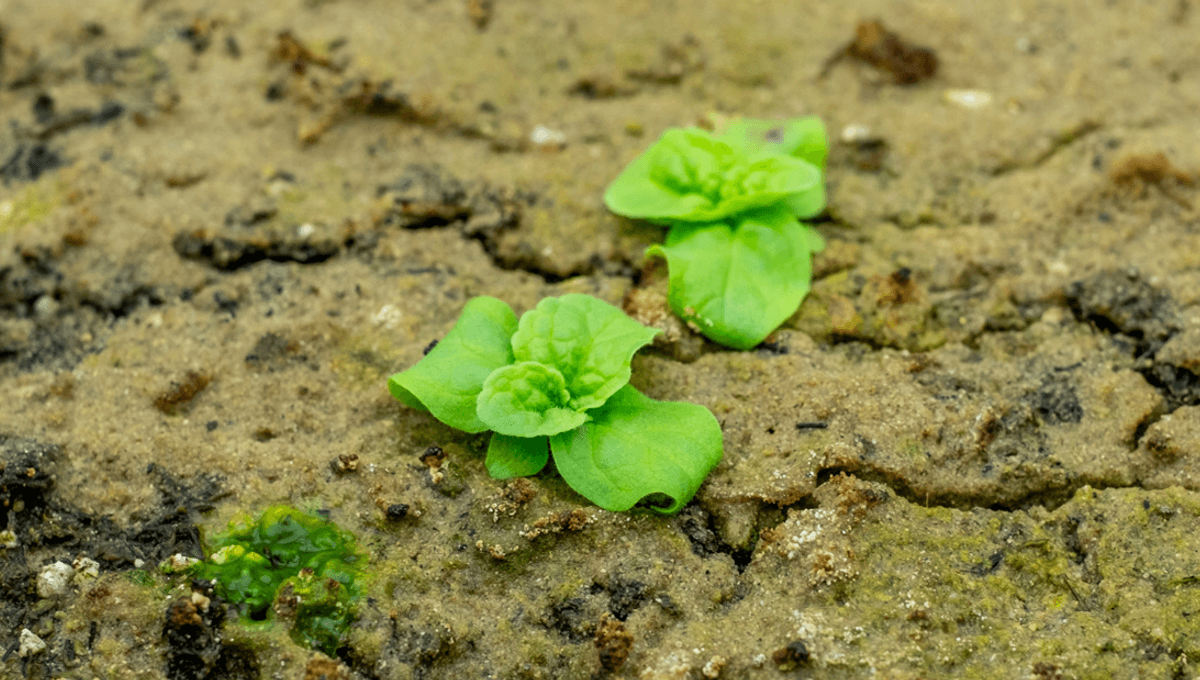
Back in 1879, botanist William J. Beal began one of the world’s oldest science experiments, burying 20 glass pint bottles filled with 50 seeds in sand. One hundred and forty-four years later, scientists at the same university have continued his work, resurrecting those seeds and finding among them a hybrid plant, likely not meant to be a part of the experiment.
Beal was interested in helping farmers by seeing how long weeds remained viable. Seeing no way to speed this process up, he decided he would place 50 seeds in 20 glass bottles from 23 different weed species, and then bury them with their mouths pointing downwards so that water didn’t collect inside. He would then dig up the seeds every five years, and germinate them to see if they were still viable.
This continued every five years until 1920, when it was determined that it should be slowed down to every 10 years, and then 20 years in 1980. In 2021 (having been prevented from doing so the previous year due to the pandemic), the 14th bottle of seeds was dug up from its secret, undisclosed location, to see if they would still grow.
While the overall study has found that most species of plant lost seed viability within the first 60 years of the experiment, the team found that a high percentage of the plants of the Verbascum genus were still able to grow.
“The biggest surprise to me is that the seeds germinated again,” Frank Telewski, professor emeritus, plant biologist, and Beal team leader, said in a statement. “It’s amazing that something so old can still grow.”
The team has since sequenced the DNA of the seeds (not bad for a 144-year-old experiment) that grew for the first time, and identified the plant types. The team had suspected that a hybrid had been included in the experiment by mistake, and after sequencing they found that their hunch was right.
“The molecular genetics work confirmed the phenotypes we saw, which is that the plants were Verbascum blattaria, or moth mullein, and one hybrid of Verbascum blattaria and Verbascum thapsus, or common mullein,” Grace Fleming, assistant professor of plant biology at Michigan State University, added. “Beal stated that he included only Verbascum thapsus seeds, so some mix-up must have happened while the bottles were being prepared.”
At the moment, the experiment is set to end in 2100, but this may have to be extended by making the interval between germination longer if the seeds continue to show that they are viable.
“In the 140-plus years since the experiment’s start, the question of seed bank longevity has gained new relevance, including for rare species conservation and ecosystem restoration; for example, prairie plantings on former farmland,” Lars Brudvig, professor of plant biology at the University, added.
“Our findings help to inform which plant species, like Verbascum, might be problematic weeds for a restoration project like this, and which other species may not, depending on how long a field was farmed before being restored.”
The study is published in the American Journal of Botany.

Source Link: Scientists Resurrect Hybrid Seeds From A Secretive 144-Year-Old Experiment
