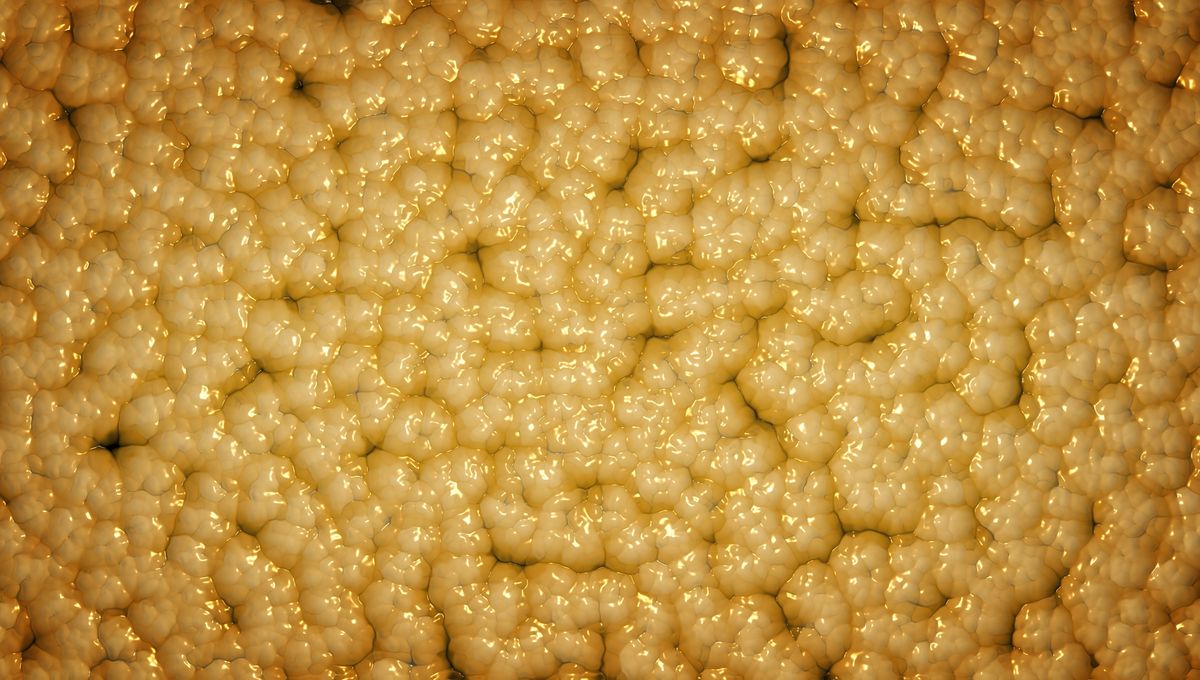
Scientists have figured out a way to transform white fat cells into beige ones, effectively forcing them to burn calories rather than store them. Though the feat has so far only been achieved in mice, the researchers say their discovery could lead to the development of new weight-loss treatments for humans.
We all have three basic types of fat cell – white, brown and beige. White fat cells store lipids and cause us to gain weight when we have too many of them. Brown fat cells, on the other hand, are designed to burn calories in order to keep us warm, although most of these are used up by the time we are a year old.
The beige variety, meanwhile, persists throughout our lives and has the ability to perform both functions, storing energy when needed and burning it on demand. Interestingly, white fat cells can become beige as a result of exercise or cold exposure, and scientists have spent years looking for a way to control this process pharmacologically.
In previous work on mice, researchers discovered that the distinction between the various types of fat cell depends largely on a protein called KLF-15, which is present in much higher concentrations in brown and beige fat cells than in the white variety. The authors of a new study therefore decided to breed a line of mice that completely lacked this protein in their white fat cells, and found that this caused them to transform into beige fat cells.
“A lot of people thought this wasn’t feasible,” said study author Brian Feldman in a statement. “We showed not only that this approach works to turn these white fat cells into beige ones, but also that the bar to doing so isn’t as high as we’d thought.”
Indeed, all it takes is the suppression of a single protein to achieve the transformation – in rodents, at least. To get a better idea of whether or not this would work on people, the researchers examined the role that KLF-15 plays in cultured human fat cells.
Results indicated that the protein interacts with a type of receptor called Adrb1, which plays a key role in maintaining energy balance. This discovery could provide a vital piece of the puzzle, since scientists had previously focussed much of their attention on a related receptor called Adrb3, which has been shown to influence weight loss in mice.
Drugs that target Adrb3 in humans, however, have proven ineffective. The study authors therefore suspect that the development of new drugs that interact with Adrb1 might have a better chance of successfully alleviating obesity by converting white fat cells into beige ones.
“We’re certainly not at the finish line, but we’re close enough that you can clearly see how these discoveries could have a big impact on treating obesity,” says Feldman.
The study has been published in The Journal of Clinical Investigation.

Source Link: Self-Burning Fat Cells Could Revolutionize Weight Loss Treatment
