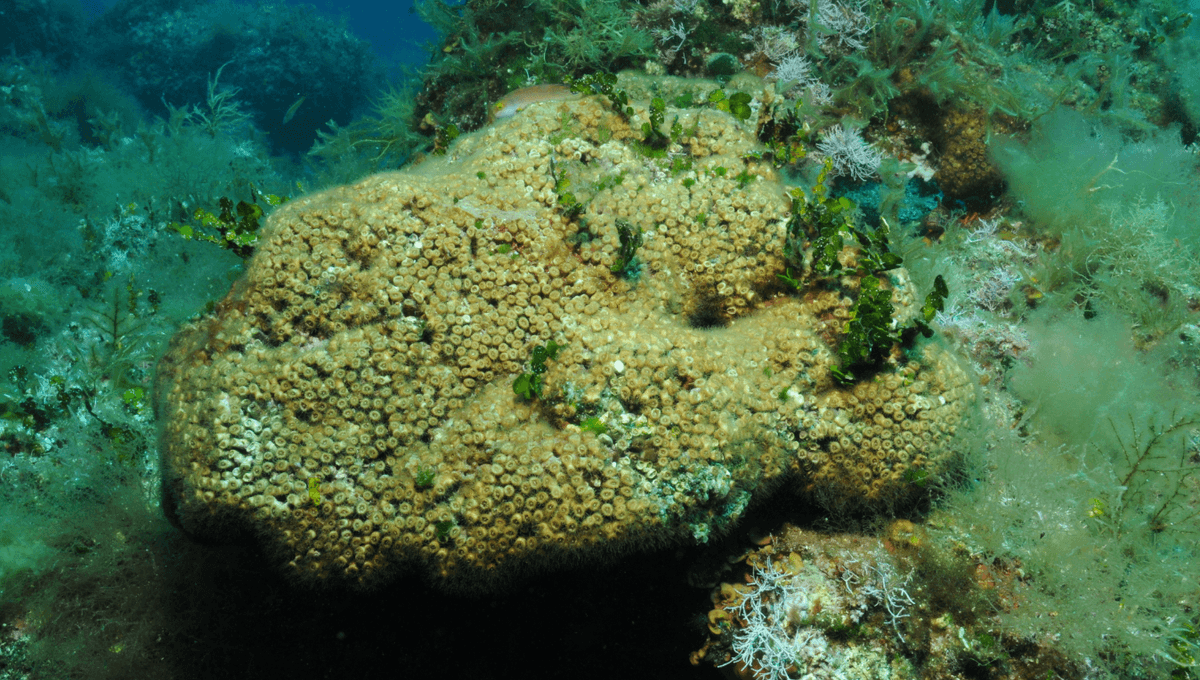
While studying a remote, coral-covered island in the Mediterranean, scientists were shocked to discover that it has become riddled with some of the highest levels of microplastic pollution ever recorded in the region.
The discovery was made in the volcanic bay of Illa Grossa, located on the Columbretes Islands marine reserve around 50 kilometers (31 miles) off the coast of Spain in the Western Mediterranean Sea.
The area is particularly special as it’s home to Cladocora caespitosa, the only reef-forming stony coral in the Mediterranean. Commonly known as cushion coral, the species builds 3D underwater structures that serve as vital habitats for a kaleidoscope of marine life, from darting fish to delicate invertebrates, creating the foundations of a rich ecosystem.
These reefs, however, are becoming increasingly dominated by a silent threat. Researchers collected sediment samples from five sites around Illa Grossa and found microplastics in every single one.
In the most contaminated sample, they found over 6,000 microplastic particles per kilogram of sediment, among the highest levels ever recorded in the Mediterranean.
“We found microplastics in every sample. The highest concentrations were observed in sediments embedded within the coral structures. These values are far higher than those observed to date in other parts of the western Mediterranean,” Dr Diego Kersting, co-author and researcher at the Torre de la Sal Aquaculture Institute, said in a statement.
The most common forms of plastics included polyethylene (28 percent of the total), polyethylene terephthalate (25 percent), and polystyrene (19 percent). All of these polymers are commonly used in everyday items, like soda bottles, food packaging, and synthetic clothing. The team also found a significant (around 16 percent total) presence of micro-rubber, which likely stems from car tire abrasion and industrial processes.
What’s most worrying is that many of the microplastics are tiny enough to be absorbed by the corals, potentially posing a serious threat not only to the corals themselves but also to the wider reef ecosystem, given their role as a keystone species.
“More than 90 percent of the particles were smaller than 250 micrometers — small enough to be ingested by corals,” explains Dr Daniel Pröfrock from the Helmholtz Center Hereon.
“Polyurethanes, in particular, are suspected of being especially harmful to marine organisms due to their chemical properties suggest that they may be toxic,” adds his colleague Dr Lars Hildebrandt.
The Mediterranean Sea is a hotspot for microplastic pollution, not just because it’s ringed by densely populated cities and tourist-friendly towns, but also due to its semi-enclosed shape and limited water circulation.
Yet the levels here were extreme, even by regional standards. The crescent-shaped Bay of Illa Grossa faces northeast, making it an effective trap for floating plastic debris. Carried by the Northern Current, a major ocean current in the western Mediterranean, plastic waste from heavily populated coastal areas of Spain, southern France, and northern Italy is funneled toward the Columbretes Islands. Once inside the bay, the debris becomes tangled up and accumulates.
“Our findings are deeply concerning. Even though they pertain to a limited area of the Mediterranean, they highlight that even protected areas are severely affected by global plastic pollution, which particularly endangers sensitive coral species. These results underscore the urgent need to expand research on such impacts and to intensify efforts to reduce global plastic emissions,” said lead author Lars Reuning of the Institute of Geosciences at Kiel University.
The study is published in the journal Marine Pollution Bulletin.

Source Link: Shockingly High Microplastic Levels Found On Remote Mediterranean Coral Reef Island
