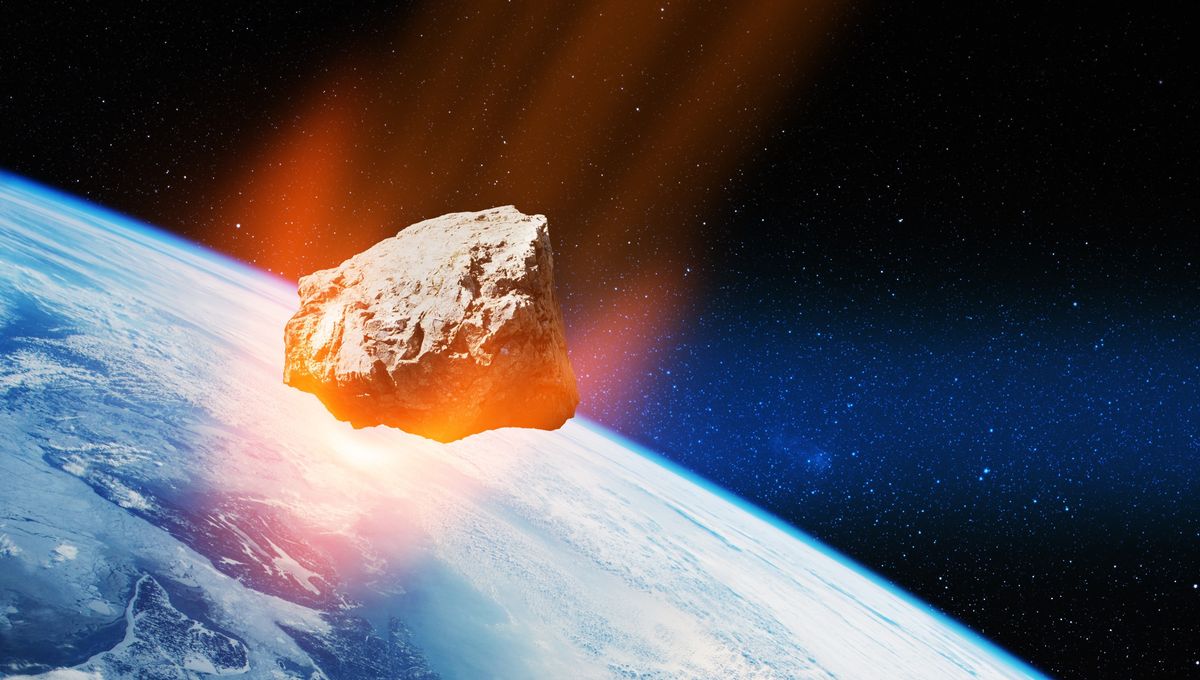
People around St Francis Bay in South Africa had an interesting morning last Sunday: between 8:30 and 9 am local time, a bright streak was seen illuminating the sky, with some people hearing a sonic boom and feeling a tremor. At first, it was speculated to be a piece of space junk falling through the atmosphere – but scientists have corrected the first reports. It was a space rock!
“Based on scientific assessment, the incident is consistent with a rocky asteroid about the size of a car entering Earth’s atmosphere at very high speed. Friction with the atmosphere created a spectacular fireball and caused it to break up in flight,” Professor Roger Gibson from the Wits University, said in a statement.
The last time this happened was more than 50 years ago, with one falling over Lichtenburg in 1973. Meteorites from this latest event have already been found, with researchers asking the public to keep an eye out for more.
“Meteorites are rare and hold deep scientific value as they give us a glimpse of the make-up and birth of our solar system, so it is extremely important for us to track, trace and find possible meteorites that may have fallen in our country. The way they interact with Earth’s atmosphere is also important as they pose a potential threat,” Gibson explained.
Despite the size of the country, there are only 51 known meteorites from South Africa and only 22 known meteorite falls. Researchers would love to get as many samples as possible, and it seems like the fall area is very wide.
“We have reports that someone has found several fragments of a meteorite near Kirkwood in the Eastern Cape, over 100 km [62 miles] from Cape St Francis. This may indicate an exceptional fall area,” Gibson added.
“Some people heard its sonic boom as far away as Plettenberg bay – over 200 km [124 miles] from Gqberha; others felt ground tremors caused by the sonic boom, or actually saw the meteor. We would be extremely interested to hear from any witnesses of this event,” Gibson continued. “This is a perfect opportunity for people to become involved in citizen science. We want to know what people saw or heard so that we can piece together the meteor’s trajectory, and also if anyone thinks they have found any meteorite fragments. We would like people to record their perceptions and contact us to tell their stories.”
The press statement contains email addresses for Gibson and one of the colleagues he is working with, Dr Leo Vonopartis. Meteorites can be confused with other rocks, but the dark smooth appearance – caused by the fusion crust – often gives them away. Some meteorites are fragile, so if you suspect you found one, take your time.
“Before you touch it, photograph it on the ground and take several photographs of its environment. Record a GPS pin of where you found it, wrap it into a piece of aluminium foil and place it securely in a zip-lock bag, then contact us to collect it. All of this provides vital scientific information,” explained Vonopartis.

Source Link: “Space Junk” Turns Out To Be Car-Sized Space Rock Falling Over South Africa
