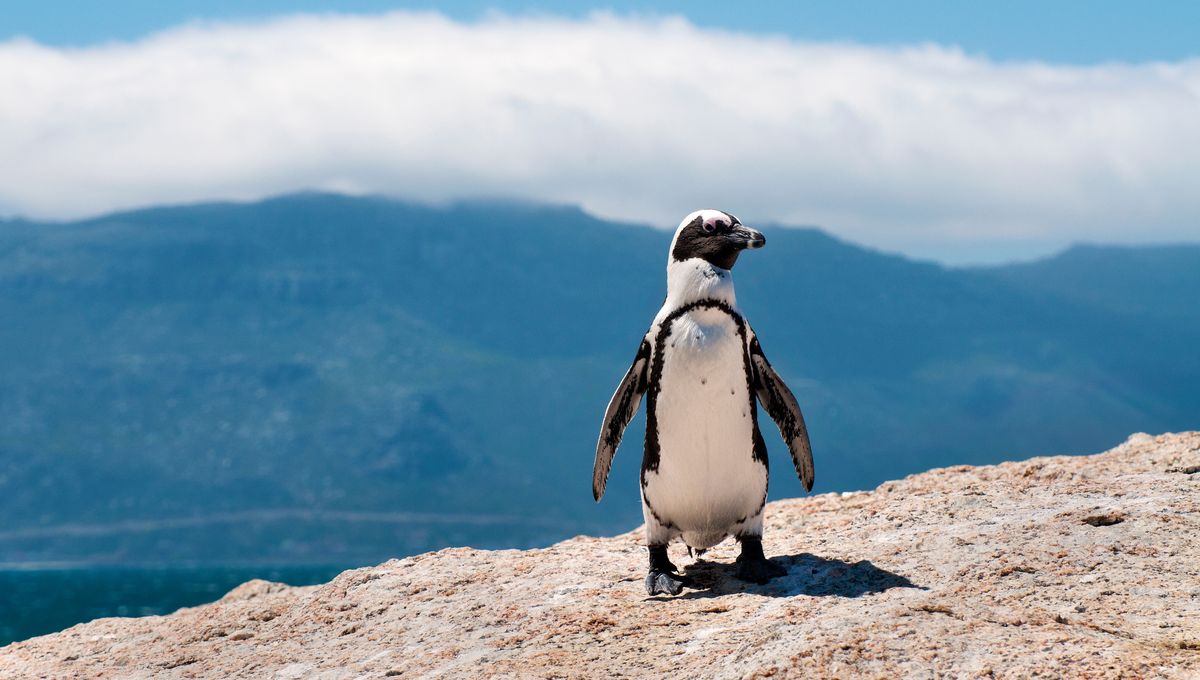
Crashing sardine stocks off the coast of southern Africa have pushed penguins to the brink, starving tens of thousands to death. In an especially devastating eight-year stretch, up to 62,000 breeding birds perished – nearly 95 percent of the population.
The findings come from new research that looks at how African penguins (Spheniscus demersus) were impacted by the sudden nosedive of sardine numbers along the coast of West Africa between 2004–2011.
The sudden sardine collapse was driven by a combination of environmental shifts and human activity. Ocean warming and changes in salinity made the West Coast spawning grounds far less productive, pushing sardines to spawn farther south, while the fishing industry remained focused on the depleted western region.
This combo of environmental decline and high exploitation rates caused sardine biomass to plunge below 25 percent of its historical maximum for nearly all years since 2004.
In the new study, researchers from the University of Exeter in the UK and South Africa’s Department of Forestry, Fisheries, and the Environment focused on two key penguin colonies on Dassen and Robben Islands, north of Cape Town, and tracked how shifting food availability altered the penguins’ fortunes.
African penguins moult once a year, swapping old feathers for new ones to stay insulated and waterproof. For around 21 days, they must stay on land and can’t hunt as they’re essentially naked, so they fatten up on sardines beforehand. It’s a perilous period at the best of times, let alone when food is in short supply.
“Between 2004 and 2011, the sardine stock off west South Africa was consistently below 25 percent of its peak abundance and this appears to have caused severe food shortage for African penguins, leading to an estimated loss of about 62,000 breeding individuals,” Dr Richard Sherley, study co-author from the Centre for Ecology and Conservation at the University of Exeter’s Penryn Campus in Cornwall, said in a statement.
The islands of Dassen and Robben are two of the region’s most important breeding colonies and long-term monitoring sites, but the researchers believe similar losses are being seen across the region. Dr Sherley commented: “These declines are mirrored elsewhere.”
https://youtube.com/watch?v=1cc-I9pp7oY&&wmode=opaque&rel=0
To reflect this demise, African penguins were demoted from “Endangered to “Critically Endangered” on the IUCN Red List in 2024. If the trend continues, they could plummet into extinction as early as 2035.
There is no easy solution to the problem, the researchers say, but better management of sardine fisheries is a good place to start.
“Fisheries management approaches that reduce the exploitation of sardine when its biomass is less than 25 percent of its maximum and allow more adults to survive to spawn, as well as those that reduce the mortality of recruits [juvenile sardines], could also help, although this is debated by some parties,” noted Dr Sherley.
The new study is published in Ostrich: Journal of African Ornithology.

Source Link: "Starved To Death En Masse": Populations Of Breeding Penguins Fall 95 Percent In Just A Few Years
