• Email Us: [email protected]
  • Contact Us: +1 718 874 1545
  • Skip to main content
  • Skip to primary sidebar

Medical Market Report

  • Home
  • All Reports
  • About Us
  • Contact Us

Surgeons Can Implant Teeth In Blind Patients’ Eyes To Restore Their Sight

March 5, 2025 by Deborah Bloomfield

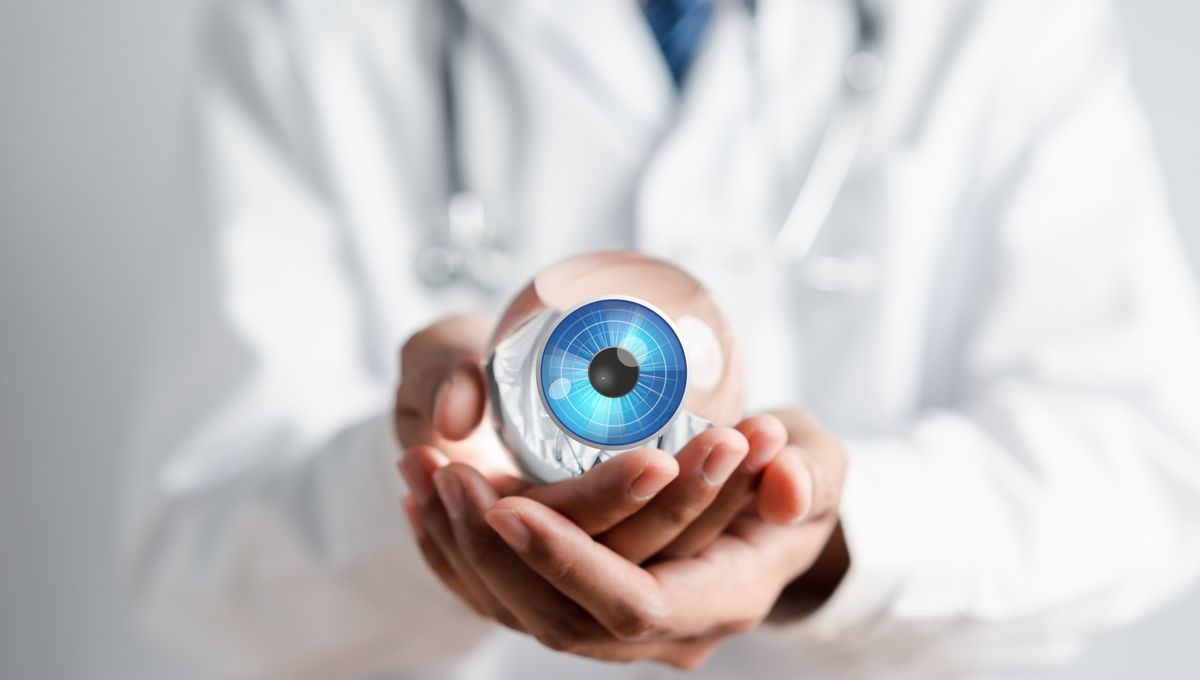
For the first time in Canada, surgeons have successfully carried out the first stage of a procedure involving implanting a tooth into the eyes of people with a type of severe blindness in the hopes of restoring their vision.

ADVERTISEMENT

The operation o known as osteo-odonto-keratoprosthesis, or “tooth-in-eye” surgery – was recently carried out at Mount Saint Joseph Hospital in Vancouver in three patients with severe corneal blindness. The cornea is the clear outer layer at the front of the eye that allows light to enter and be focused; in people with corneal blindness, this layer is scarred, affecting its transparency and thus their ability to see.

Tooth-in-eye surgery aims to change that in the space of just two surgeries. The first step is two-fold; one part sees the removal of the patient’s cornea and any scar tissue, replaced with tissue taken from their cheek. 

This first step also involves the creation of the implant. This involves the extraction of one of the patient’s teeth, which is shaved down into a rectangle with a hole drilled into it that will hold a plastic optical lens. The crafted tooth is then placed inside the patient’s cheek, where it stays for around three months in order to develop new tissue and a blood supply.

ⓘ IFLScience is not responsible for content shared from external sites.

Once that’s happened, in the second stage, surgeons remove the implant from the cheek and put it into the eye, where the plastic lens allows light through, restoring the patient’s vision. “It’s like replacing the windshield on a car when it’s totally frosted over,” Dr Greg Moloney, who led the Canadian surgeries, told the Vancouver Sun.

ADVERTISEMENT

It might sound a bit gross to put someone’s tooth in their eye, but it actually makes a lot of sense; both the fact that teeth are super hard and that it’s the patient’s own tooth increase the chances that the implant will last long term.

The procedure isn’t completely risk-free, Moloney told CBC Radio’s As It Happens, but “there is no risk of rejection, because we’re using part of the patient’s own body.”

The trio of patients are set to undergo the second surgery later this year. One of those patients, Gail Chapman, was the first to receive the initial surgery and is hopeful of what the procedure could mean for her future.

“I haven’t seen myself for 10 years,” Chapman told the Vancouver Sun. “If I’m fortune enough to get some sight back, there will be wonderful things to see.

ADVERTISEMENT

While this was a Canadian first, tooth-in-eye surgery is far from new. It’s been around since the 1960s, when it was pioneered by Italian ophthalmologist Professor Benedetto Strampelli, and was later refined into the procedure that it is today.

Deborah Bloomfield
Deborah Bloomfield

Related posts:

  1. Skype alumni head to court in a battle over Starship Technologies and Wire
  2. Soccer-West Ham win again, Leicester and Napoli falter
  3. Was Jesus A Hallucinogenic Mushroom? One Scholar Certainly Thought So
  4. Lacking Company, A Dolphin In The Baltic Is Talking To Himself

Source Link: Surgeons Can Implant Teeth In Blind Patients’ Eyes To Restore Their Sight

Filed Under: News

Primary Sidebar

  • Why Do Warm Hugs Make Us Feel So Good? Here’s The Science
  • “Unidentified Human Relative”: Little Foot, One Of Most Complete Early Hominin Fossils, May Be New Species
  • Thought Arctic Foxes Only Came In White? Think Again – They Come In Beautiful Blue Too
  • COVID Shots In Pregnancy Are Safe And Effective, Cutting Risk Of Hospitalization By 60 Percent
  • Ramanujan’s Unexpected Formulas Are Still Unraveling The Mysteries Of The Universe
  • First-Ever Footage of A Squid Disguising Itself On Seafloor 4,100 Meters Below Surface
  • Your Daily Coffee Might Be Keeping You Young – Especially If You Have Poor Mental Health
  • Why Do Cats And Dogs Eat Grass?
  • What Did Carl Sagan Actually Mean When He Said “We Are All Made Of Star Stuff”?
  • Lonesome George: The Giant Tortoise Who Was The Very Last Of His Kind
  • Bermuda Sits On A Strange, 20-Kilometer-Thick Structure That’s Like No Other In The World
  • Time Moves Faster Up A Mountain – And That’s Why Earth’s Core Is 2.5 Years Younger Than Its Surface
  • Bio-Hybrid Robots Made Of Dead Lobsters Are The Latest Breakthrough In “Necrobotics”
  • Why Do Some Italians Live To 100? Turns Out, Centenarians Have More Hunter-Gatherer DNA
  • New Full-Color Images Of Interstellar Comet 3I/ATLAS, As We Are Days Away From Closest Encounter
  • Hilarious Video Shows Two Young Andean Bears Playing Seesaw With A Tree Branch
  • The Pinky Toe Has A Purpose And Most People Are Just Finding Out
  • What Is This Massive Heat-Emitting Mass Discovered Beneath The Moon’s Surface?
  • The Man Who Fell From Space: These Are The Last Words Of Cosmonaut Vladimir Komarov
  • How Long Can A Bird Can Fly Without Landing?
  • Business
  • Health
  • News
  • Science
  • Technology
  • +1 718 874 1545
  • +91 78878 22626
  • [email protected]
Office Address
Prudour Pvt. Ltd. 420 Lexington Avenue Suite 300 New York City, NY 10170.

Powered by Prudour Network

Copyrights © 2025 · Medical Market Report. All Rights Reserved.

Go to mobile version