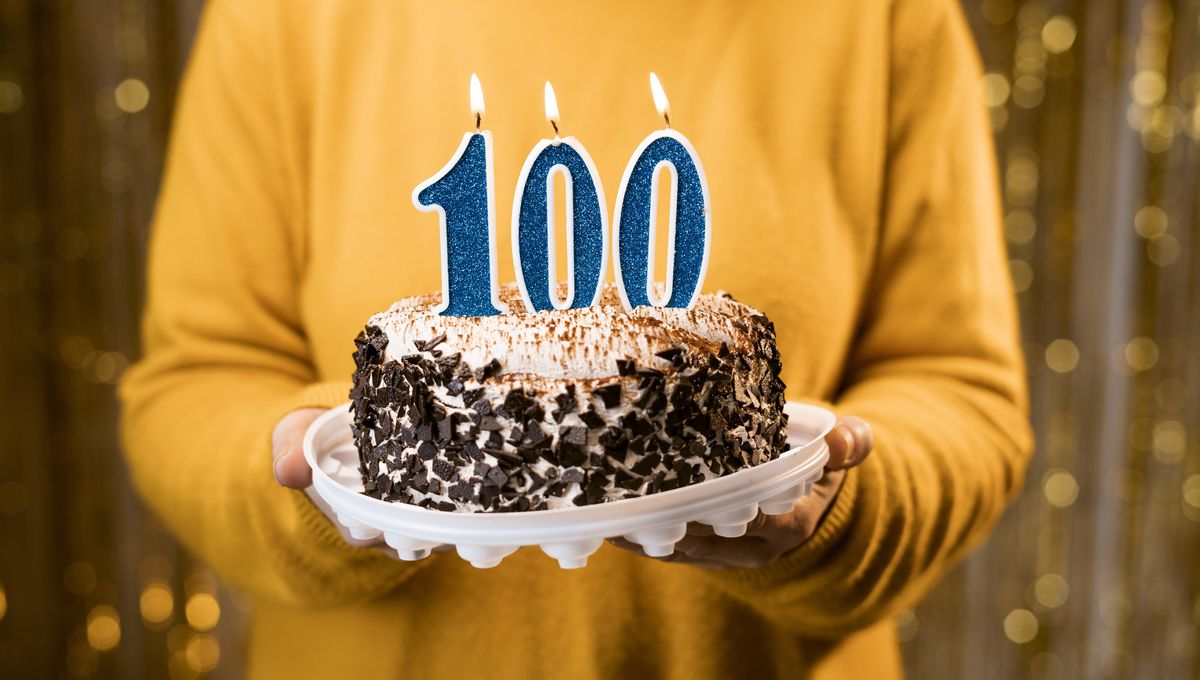
What’s the secret to living past 100? You may think the answer is something to do with healthy eating and regular exercise – but a new study from researchers in Madrid suggests there’s something more at play: your personality.
“Considering that happier people are likely to live longer, we asked ourselves whether healthy centenarians share psychological resources or positive personality characteristics that have enabled them to face traumatic situations and the challenges life more successfully,” the team explain in their paper, published this month in the delightfully-named Journal of Happiness Studies.
“Analysis of the lives of healthy centenarians provides us with knowledge that could help in achieving a healthy old age.”
By interviewing 19 people aged between 100 and 107 – 16 of whom were women – the researchers isolated eight psychological strengths that were common across the centenarians. “All of them are related to physical and mental health,” the paper notes, “so it is consistent that they are typical of healthy centenarians.”
And what are these all-important personality ingredients that help a person reach those trip figs? Well, the first is not surprising, when you think about it: it’s vitality.
“Vitality refers to feeling alive, alert, and full of energy,” the authors explain. “The centenarians interviewed are strongly connected to life, who not only live, but clearly want to continue living.”
The aged interviewees spoke of exercising daily; going to social groups; playing games such as cards or sudoku – basically just staying active, both mentally and physically.
Which leads us nicely into the second factor keeping the centenarians healthy: staying social. Not only through keeping up with friends and acquaintances – or, indeed, groups of scientists who want to interview you about the secret of your long life – but, importantly, with your loved ones too.
“The best thing in my life are my children, grandchildren, and the great-grandchildren, who love me more than the grandchildren,” one 104-year-old told the team. “I have one who’s 10 years old who sits on my lap and calls me ‘pretty great grandmother’.”
Of course, that’s made much easier by the third personality trait shared by the group: commitment, or “the psychological bond the person establishes with what he or she commits to,” per the paper. This could be a job, your family, friends, even just personal goals – the key is that when the centenarians found something they valued, they stuck with it.
Which makes sense, because the next key aspect of living life to its fullest is maintaining a sense of control in one’s life.
“[The] centenarians, in general, show: autonomy, environmental mastery, and practicality,” the authors write. “In general… they have made their own decisions, taken control of their own life, and directed it toward where they wanted to go.”
Fifth on the list is one that is practically synonymous with youth: being intellectually motivated – that is, being curious, having a love of learning, and teaching yourself. Interviewees recounted traveling far and wide, training their brains with things like logic puzzles, and above all else, reading: “Even those who were unable to go to school learned to read and write on their own,” note the authors, “which indicates a clear interest in learning, especially if we consider that when they were children illiteracy in Spain was 60 percent.”
Perhaps that’s a sign of the next trait uniting the group: positivity. Now, pessimists, don’t despair, you’re not doomed to an early grave just yet (or – well, you may be, but not because of this precisely.) The researchers defined positivity not as simply “having a sunny outlook” or “smiling lots” – it was more in terms of gratitude for the good, and an ability to work through the bad.
“Life has given me everything, thank God,” one 100-year-old woman related. “It has given me disappointments, like losing relatives, but thank God I haven’t had a bad time.”
It makes sense when you consider some of the effects that, say, depression is known to have: it’s been connected with early brain aging, higher risks of dementia, and even a worse-off immune system. While depression is hardly something you can opt out of, the fact that these old people likely didn’t suffer from it might have helped their impressive longevity.
It’s worth noting that this positivity was hardly the result of uniformly pleasant lives. In fact, the seventh characteristic listed by the researchers was a notable resilience: “The stories they tell reflect extremely difficult episodes in their life, such as: separation of parents during childhood, abusive husbands, loss of partner or even children, being locked in a room at the retirement home because of COVID-19, etc.,” the paper explains.
“This is in addition to the Spanish Civil War, which all of them lived at the end of their adolescence or in young adulthood,” the authors add. “Despite all this, the centenarians have known how to get on with their lives, in some cases to redirect them and, above all, to not be psychologically damaged by the experience of adversity.”
Finally, and in some ways uniting all the previous traits, we have intelligence.
“Not for nothing, intelligence is one of the best predictors of longevity,” write the authors. That’s potentially because it, by definition, allows a person to think abstractly, plan ahead, use new information to reason and problem-solve – skills that are useful when you’re doing things like taking care of your health or deciding whether or not to take a chainsaw to a grenade.
And the centenarians, the researchers argue, have intelligence in buckets. “They have successful academic and professional results, are self-taught, are problem-solvers, they take on challenges even though they are not specifically trained and succeed, they love to learn and are curious, their conversation is fast, agile, and they have a good memory, they at least know to read and write even without having gone to school, and they have been able to adapt and direct their lives toward paths they find satisfying,” they write. “For all these reasons, we would like to add that centenarians are intelligent people.”
Now, while it’s important to note that all the participants were in good health at the time – thus making things like “positivity” and “resilience” a bit easier to exhibit – the results are in line with what other researchers have seen, Sunil Bhar, who runs a well-being clinic for older people in Melbourne, Australia, told New Scientist.
In other words, this is a pretty good recipe for a long life. So what do you do if you don’t have all the ingredients?
Well, don’t worry: for those who lack these personality traits, there are ways to improve on them. For example, lead author Lola Merino told New Scientist, “you can practise gratitude by becoming aware of all the good things in your life and in the case of control, you can establish order and habits so everyday demands do not overwhelm you.”
The paper is published in the Journal of Happiness Studies.

Source Link: The 8 Psychological Traits Associated With Living Past 100
