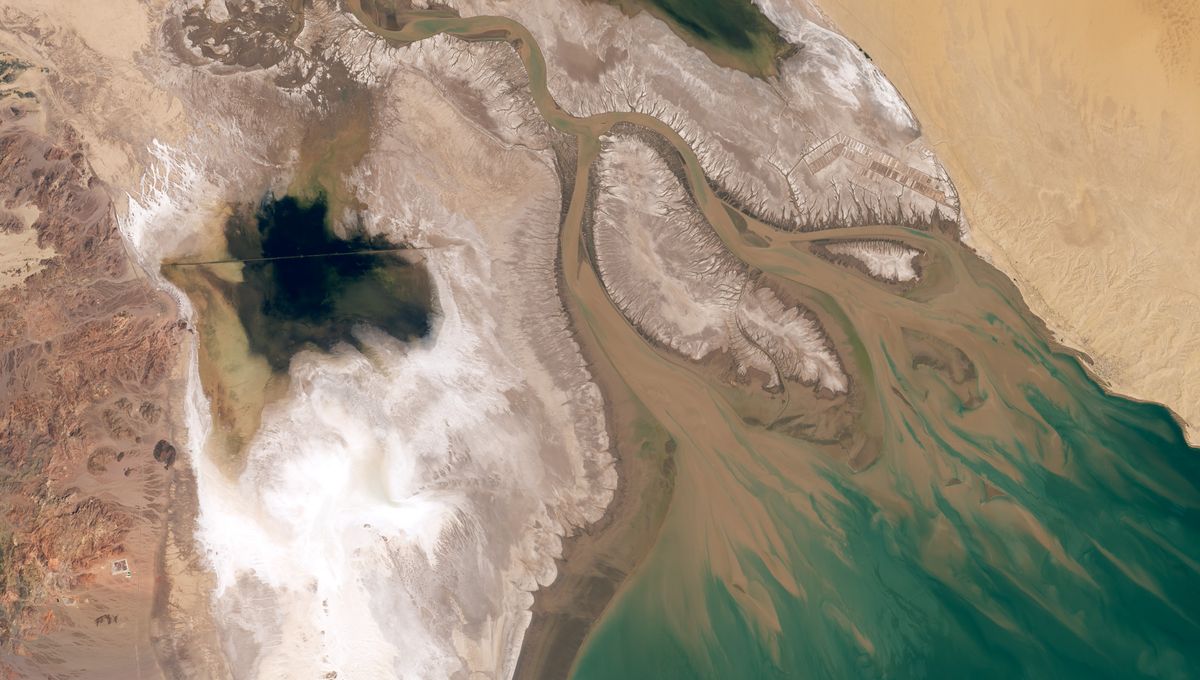
The Colorado River is perhaps one of North America’s most iconic, curving through such natural wonders as the Rockies and the Grand Canyon – but its waters are also historically low, to the point where it no longer reaches the sea. In an effort to figure out how best to tackle the problem, a new study has examined in fresh detail the reasons why it’s running dry.
Running for over 2,300 kilometers (around 1,500 miles), the Colorado River is considered a critical source of water to more than 40 million people across seven states. Its waters are also of vital importance to more than 2 million hectares of cropland.
The fact that its flow has reduced by 20 percent over the course of just a century, therefore, means there’s the potential for some pretty significant consequences.
The overarching reasons for why the river no longer reaches its previously lush delta in the Gulf of California have already been established: climate change has played a role, with an ongoing megadrought, and its waters are chronically overused.
Policymakers have been squabbling over how to both divvy up the remaining water and stop overuse, so researchers set to providing the first complete water budget for the river, in the hopes of providing information that would aid in negotiations.
“Detailed knowledge of how and where the river’s water is used can aid design of strategies and plans for bringing water use into balance with available supplies,” the authors write.
To calculate the river’s water budget, the team conducted a detailed analysis of the average annual water use and loss between 2000 and 2019 and the specific uses that contributed.
Importantly, this included all direct human uses – not just domestic use of water, but also agricultural uses like irrigation – and indirect losses, such as evaporation from reservoirs. The researchers also included factors that hadn’t been considered before, such as water consumption in Mexico – the Colorado River isn’t just found in the US, after all – and the Gila River that feeds the Colorado.
The results reinforced the role that humans have to play, but unlike previous assessments, pinpointed the main culprit: agriculture. “Water consumed for agriculture amounts to three times all other direct uses combined,” the authors write.
Irrigation in agriculture in particular appears to be a problem, with the analysis having found it was responsible not just for 74 percent of direct human uses of the river’s waters, but also more than half of the overall water consumption. Nearly two-thirds of this water was specifically used to hydrate crops used to feed cattle.
The team calculated that an estimated average of 23.7 billion cubic meters of water was consumed from the river each year before it could reach the delta. In order to avoid water shortages, they recommend that usage in the Upper and Lower Basin regions of the river will need to be reduced by around 22 to 29 percent, just to stabilize reservoir levels alone – and predict it’ll need to be reduced even more so by 2050 because of climate change.
“We hope that this new accounting will add clarity and a useful informational foundation to the public dialog and political negotiations over Colorado River Basin water allocations and cutbacks that are presently underway,” the authors conclude.
The study is published in Communications Earth & Environment.

Source Link: The Alarming Reasons Why The Colorado River No Longer Reaches The Sea
