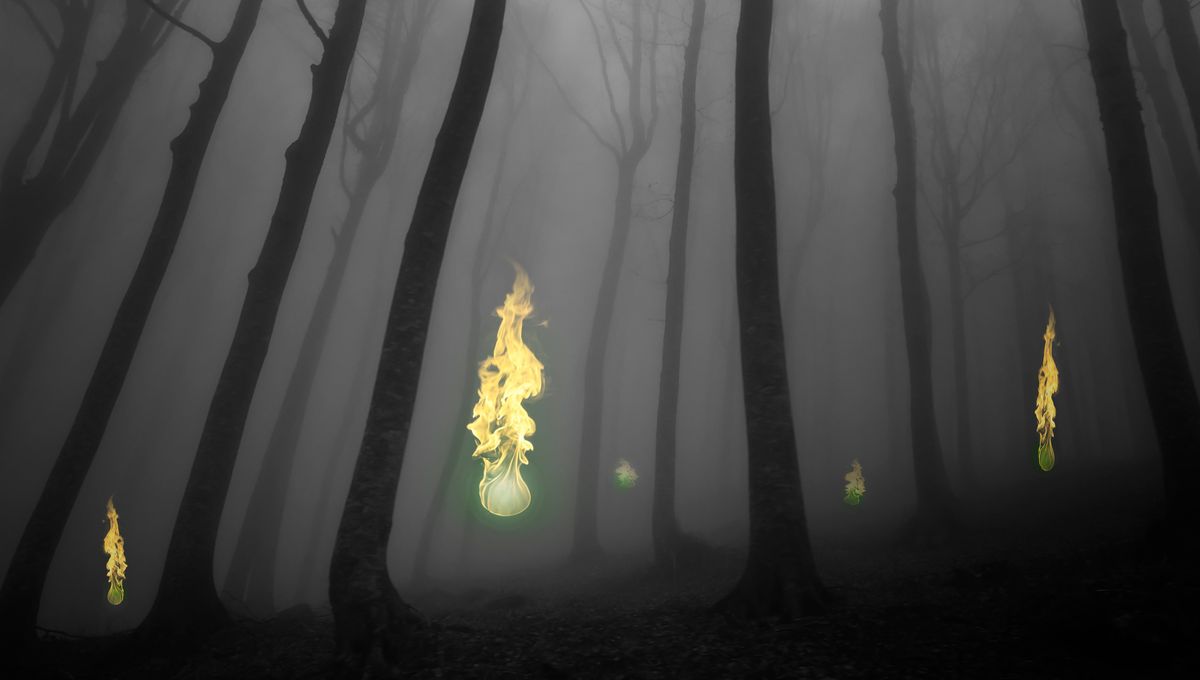
High-speed cameras have captured the moment when sparks initiate the phenomenon known as ignis fatuus or will-o’-the-wisps, finally offering an explanation for a phenomenon that has terrified and delighted humanity for millennia.
The bobbing blue lights seen in wetlands have formed the basis for a great many of humanity’s stories. Would our folklore of elves and sprites be nearly as rich without them? Four centuries ago, theologian Ludwig Lavater noted that the phenomenon mostly occurs in places where organic material rotting in the absence of oxygen forms methane, mixed with small amounts of other molecules to form “swamp gas”. In the late 18th century, scientists produced evidence supporting the idea that the light comes from oxidizing methane, with trace gases possibly adding color.
Today, we even understand the temperature effects that lead to methane mostly escaping water bodies at night, for extra eeriness.
However, while we now understand the fuel and the oxidation process that releases the light, the mystery was only half explained. Fire needs a source of ignition. New research identifies small electrical discharges, which the authors call microlightning, as producing oxidation without burning.
As with the static electricity produced by stroking hair, fur, or carpet in the right conditions, the microlightning results from a buildup of opposing charges until the field created is strong enough to make them leap a gap.
High-speed imaging reveals the source of the charge as the surface of tiny bubbles of methane, which become either positively or negatively charged as they move through water, split, and combine. The charge concentration appears to survive the bubbles’ escape to the air. When the spark jumps the gap between a neighboring positive and negatively charged bubble, it leads to non-thermal oxidation, releasing energy from the chemical reaction between methane and oxygen, but mostly as blue-violet light rather than heat.
The cool nighttime conditions where will-o’-the-wisps are most seen don’t provide the heat required to cause methane to ignite. Moreover, the lack of heat that will-o’-the-wisp observers report has been a longstanding argument against the marsh gas explanation.
Phosphine will spontaneously ignite in contact with oxygen, so the idea that small quantities of phosphine in the swamp gas catch fire, providing the heat to make methane burn, has been the most popular explanation for some time. However, whether phosphine is widespread enough to account for all will-o’-the-wisps is open to question.
Just because microlightning can explain will-o’-the-wisps doesn’t mean it’s the only thing that can induce methane oxidation, so the phosphine theory could be correct under the right circumstances.
Nevertheless, the authors point out, “our findings demonstrate that transient electrical discharges at gas–water interfaces can mediate redox chemistry, expanding the role of interfacial phenomena in natural and engineered systems.”
We may have good reason to thank microlightning, and even seek ways to encourage it. The oxidation of methane produces carbon dioxide. However, atmospheric methane is a far more potent greenhouse gas, with around 30 or 84 times the warming capacity, depending on the timescale used.
Consequently, as long as wetlands continue to produce methane, it’s much better for the planet’s heat balance for will-o’-the-wisps to oxidize it quickly. Maybe the fae are looking after us after all.
The study is published in Proceedings of the National Academy of Sciences.

Source Link: The Ancient Mystery Of Will-O’-The-Wisps Might Have An Electric Explanation
