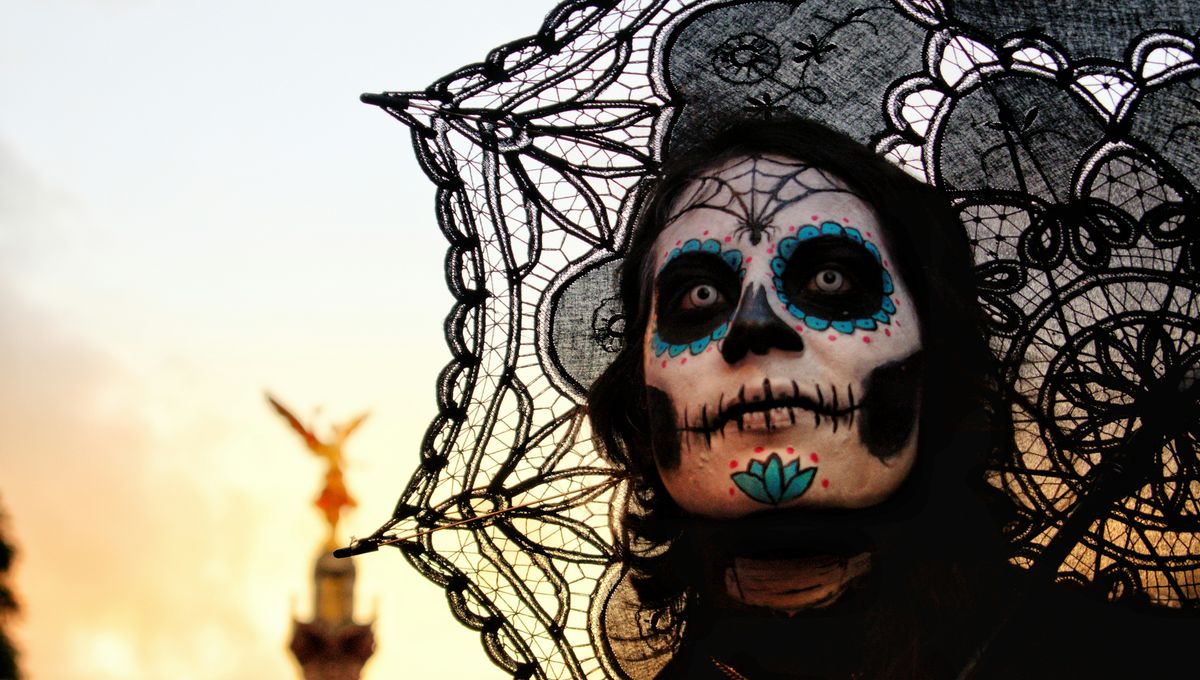
The Aztecs and the Celts were separated by an entire ocean and several millennia, which means they never met and had absolutely nothing to do with other. Despite this, their respective beliefs around death and the afterlife have now become fused to create both Halloween and the Day of the Dead (or Día de los Muertos).
The rest of this article is behind a paywall. Please sign in or subscribe to access the full content.
Samhain: The Beginnings Of Halloween
The Celts occupied large swathes of northern Europe during the late Bronze Age and Roman era, and celebrated the festival of Samhain around the end of October each year, just as the nights began to get longer, as if to herald the approach of winter. On this one night, the Celts believed that the veil between the worlds of the living and the dead was at its thinnest, and welcomed their ancestors by lighting bonfires, wearing costumes, and telling stories about ghosts and spirits.
Centuries later, as Christianity spread across the region, the Church went to great lengths to stamp out pagan beliefs and customs like Samhain. Yet the tradition persisted, so in the eighth century CE, Pope Gregory III designated November 1 as All Hallows’ Day – also known as All Saints’ Day – thus creating a Christian holy day to honor the dead that coincided with the Celtic festival.
In this way, the Church was able to incorporate Samhain into its own calendar, dressing up the Celtic practice as a Christian tradition. The night before All Hallows’ Day – which happens to be October 31 – automatically became known as All Hallows’ Eve, which later evolved into Halloween.
Samhain Meets The Aztecs
Around five centuries later, when the Spanish conquistadores took over the Aztec Empire in what is now Mexico, they encountered a culture with its own unique celebration of the everafter. For an entire month of each year, the Aztecs held feasts in honor of Mictēcacihuātl, the queen of the underworld.
Once again, the invading Europeans went to great pains to convert those they had conquered to Christianity and eradicate all Indigenous traditions, yet struggled to eliminate the practices surrounding Mictēcacihuātl and the afterlife – all of which probably predate the rise of the Aztec Empire in the 15th century. The best they could do, therefore, was to merge this tradition with All Hallows Day, creating a celebration for the dead at the start of November, which was endorsed by the Church but was heavily colored by Aztec customs.
As the centuries passed and belief in Mictēcacihuātl began to wane, the defining image of the Día de los Muertos was replaced with that of La Catrina, an elegant skeleton woman wearing flowery European-style clothing. Designed by political cartoonist José Guadalupe Posada around the time of the Mexican Revolution in 1910, La Catrina was probably intended to satirize elite Mexicans who aspired to appear European and forsake their Indigenous heritage – in this case represented by the Aztec-style skull.
Indeed, human skulls were a major cultural motif for the Aztecs, who often depicted their gods as skeletons and installed enormous racks filled with real skulls – known as tzompantli – at several of their major temples.
These days, of course, skull racks have been replaced by candy skulls, yet each time you go trick-or-treating or celebrate the Day of the Dead, you’re participating in a tradition that fuses Samhain with the feast of Mictēcacihuātl.

Source Link: The Aztec Origins Of The Day Of The Dead (And The Celtic Roots Of Halloween)
