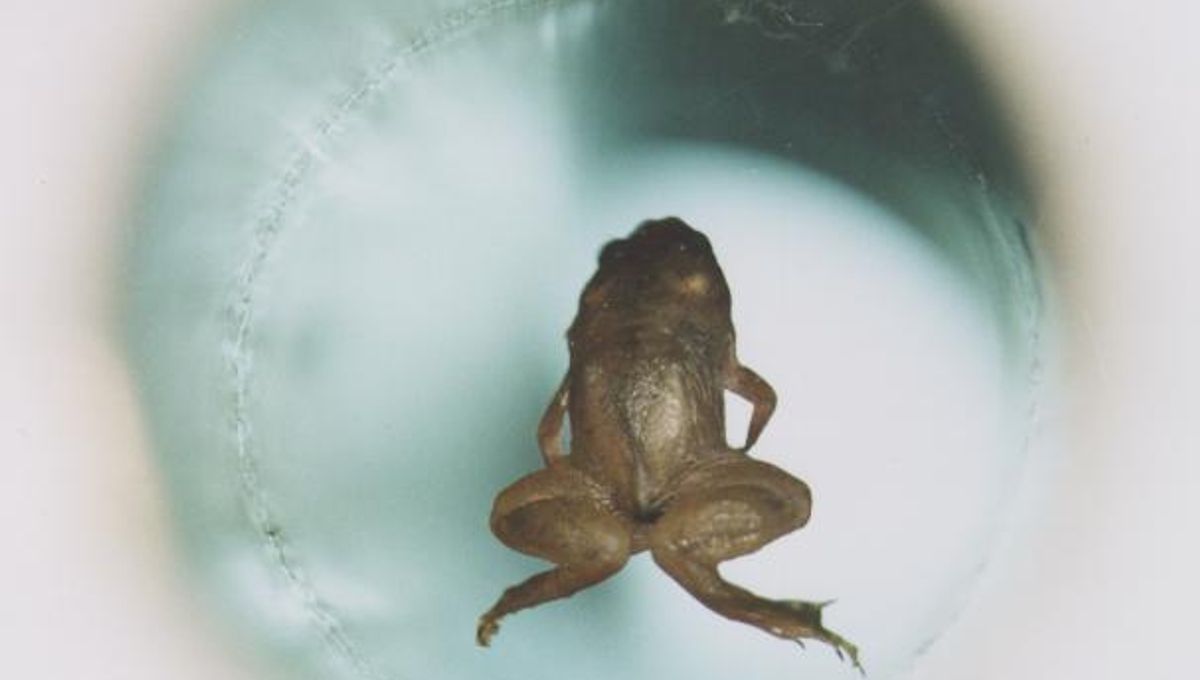
In 2000, the famous 1997 Levitating Frog experiment hopped its way to an Ig Nobel Prize, thanks to Dr. Andre Geim and his team, who figured out how to make a frog, a cricket, and a few plants float using magnetism. Geim would later win a real Nobel Prize for graphene, but that’s another story. Right now, let’s talk about frogs that fly.
The rest of this article is behind a paywall. Please sign in or subscribe to access the full content.
Everything is at least a little bit magnetic. That’s an important concept to grasp before we move on, as it’s crucial in understanding how diamagnetism could lift a frog (and, theoretically, a human) off of the ground.
Metals like iron and cobalt tend to spring to mind when we think of magnetic objects – with good reason, as they exhibit strong magnetism. However, everything has a magnetic field. Some are just stronger than others.
As atoms and electrons zoom around each other, they create a field that (when placed in, say, one of the strongest electromagnets in the world) can repel opposing forces. It’s a quantum mechanical effect known as diamagnetism that can occur with any object: living or inanimate, frog or cricket.
Geim and colleagues put this theory to the test in 1997 as they popped a frog into the throat of a high field magnet, and – surprise, surprise – the amphibian took to the air like a floating deity.
The levitating amphibian was so popular that it earned Geim and colleagues the Ig Nobel, drawing further attention to the experiment. Following this, they began receiving all sorts of requests – including, as they told NPR, the leader of a small religious group in England “who offered us a million pounds if we could levitate him in front of his congregation to improve his public relations.”
In case you’re worried about the floating frog and its fellow participants, you’ll be glad to know the experiment had no negative side effects on its living subjects. Outside of making celebrities out of amphibians, diamagnetic levitation has applications in industry and research, including the effects of zero gravity, as floating living things here on Earth is cheaper than sending them out into space.
As for levitating a human, an insightful YouTube video from SciShow estimates that it is possible, but the space limitations (about the size of a bagel) mean most machines don’t have the room. Scientists are still working with the technology, though, including improving our understanding of drugs by making cells levitate.
Still have dreams of lifting off? You could always try this flying car, or if that doesn’t float your boat, how about a hoverboard?

Source Link: The Bizarre 1997 Experiment That Made A Frog Levitate
