• Email Us: [email protected]
  • Contact Us: +1 718 874 1545
  • Skip to main content
  • Skip to primary sidebar

Medical Market Report

  • Home
  • All Reports
  • About Us
  • Contact Us

The Bizarre 1997 Experiment That Made A Frog Levitate

October 11, 2025 by Deborah Bloomfield

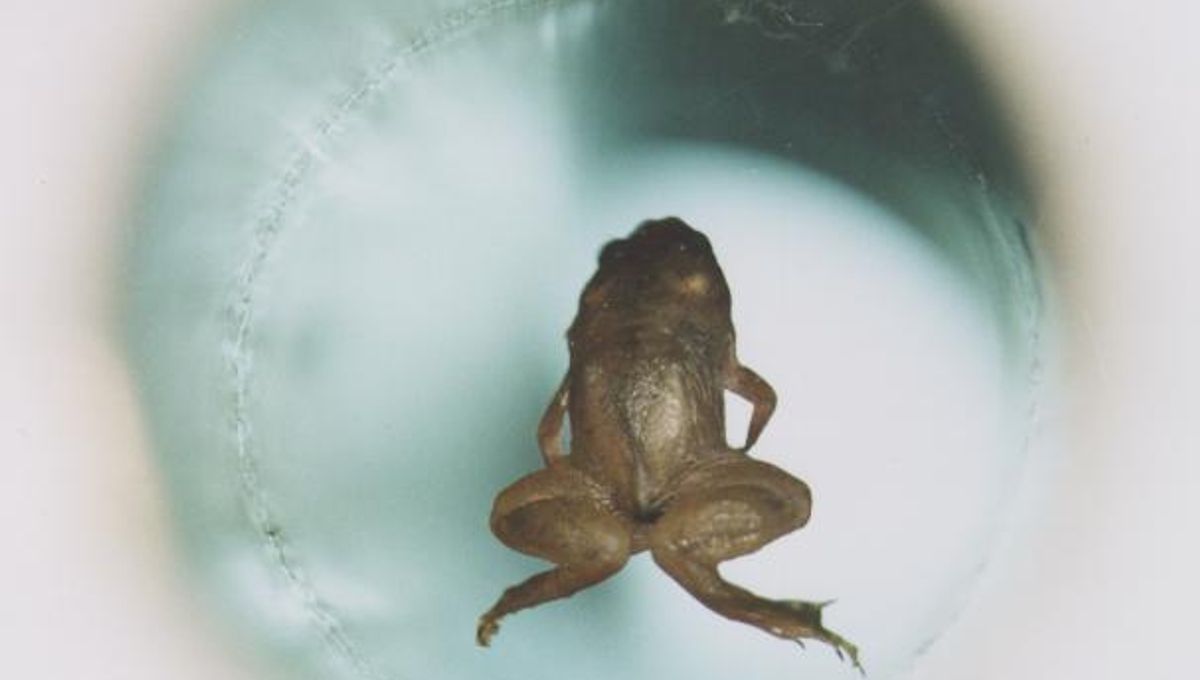
In 2000, the famous 1997 Levitating Frog experiment hopped its way to an Ig Nobel Prize, thanks to Dr. Andre Geim and his team, who figured out how to make a frog, a cricket, and a few plants float using magnetism. Geim would later win a real Nobel Prize for graphene, but that’s another story. Right now, let’s talk about frogs that fly.

The rest of this article is behind a paywall. Please sign in or subscribe to access the full content.

Everything is at least a little bit magnetic. That’s an important concept to grasp before we move on, as it’s crucial in understanding how diamagnetism could lift a frog (and, theoretically, a human) off of the ground.

Metals like iron and cobalt tend to spring to mind when we think of magnetic objects – with good reason, as they exhibit strong magnetism. However, everything has a magnetic field. Some are just stronger than others.

As atoms and electrons zoom around each other, they create a field that (when placed in, say, one of the strongest electromagnets in the world) can repel opposing forces. It’s a quantum mechanical effect known as diamagnetism that can occur with any object: living or inanimate, frog or cricket.

Geim and colleagues put this theory to the test in 1997 as they popped a frog into the throat of a high field magnet, and – surprise, surprise – the amphibian took to the air like a floating deity.


The levitating amphibian was so popular that it earned Geim and colleagues the Ig Nobel, drawing further attention to the experiment. Following this, they began receiving all sorts of requests – including, as they told NPR, the leader of a small religious group in England “who offered us a million pounds if we could levitate him in front of his congregation to improve his public relations.”

In case you’re worried about the floating frog and its fellow participants, you’ll be glad to know the experiment had no negative side effects on its living subjects. Outside of making celebrities out of amphibians, diamagnetic levitation has applications in industry and research, including the effects of zero gravity, as floating living things here on Earth is cheaper than sending them out into space.


As for levitating a human, an insightful YouTube video from SciShow estimates that it is possible, but the space limitations (about the size of a bagel) mean most machines don’t have the room. Scientists are still working with the technology, though, including improving our understanding of drugs by making cells levitate.

Still have dreams of lifting off? You could always try this flying car, or if that doesn’t float your boat, how about a hoverboard?

Deborah Bloomfield
Deborah Bloomfield

Related posts:

  1. Column: Delicate Fed-Treasury dance keeps bonds in check
  2. Scientists Reverse The Aging Of Skeletal Muscle In Longevity Breakthrough
  3. “Human Or Not”: Millions Of People Just Participated In An Online Turing Test
  4. Goliath Birdeater: The Biggest Spider In The World, Or Is It?

Source Link: The Bizarre 1997 Experiment That Made A Frog Levitate

Filed Under: News

Primary Sidebar

  • This Month’s New Moon Will Be The Farthest From Earth For The Next 18 Years
  • Playing Music To Baby Mice Shapes Their Brain Development In A Sex-Specific Way
  • Ice XXI: Scientists Discover A New Form Of Ice Born At Room Temperature Under Intense Pressure
  • Citizen Scientists Are Helping With Rescue Efforts In Hurricane Melissa’s Aftermath – Here’s How You Can Too
  • What Is The Radio Blackout Scale And When Is It Needed?
  • “It’s Alive!”: The Real (And Horrifying) Science That Inspired Mary Shelley’s Frankenstein
  • First-Ever View Of The Sun’s Polar Magnetic Field Reveals Major Surprise
  • A Killer Whale Birth Has Been Captured On Camera In The Wild For The First Time
  • If You Shine A Light In Your Garden And See Lots Of Dots Reflected Back, We’ve Got Bad News
  • The “Sailor’s Eyeball” Blob Is One Of The Largest Single-Celled Organisms Ever Discovered
  • Icefish Live In Sub-Zero Antarctic Waters, So Why Don’t They Freeze?
  • We Finally Know What Happened To The Stone Of Destiny
  • Meet The Fishing Cat: The World’s Most Aquatic Feline Has Evolved To Master The Wetlands
  • Why Is There A Mysterious White Pyramid In Arizona?
  • Humpback Hitchhickers: Watch POV Footage Of Suckerfish Clinging To Whales As They Migrate Across Oceans
  • Oldowan Tools Saw Early Humans Through 300,000 Years Of Fire, Drought, And Shifting Climates, New Site Reveals
  • There Are Just Two Places In The World With No Speed Limits For Cars
  • Three Astronauts Are Stranded In Space Again, After Their Ride Home Was Struck By Space Junk
  • Snail Fossils Over 1 Million Years Old Show Prehistoric Snails Gave Birth to Live Young
  • “Beautiful And Interesting”: Listen To One Of The World’s Largest Living Organisms As It Eerily Rumbles
  • Business
  • Health
  • News
  • Science
  • Technology
  • +1 718 874 1545
  • +91 78878 22626
  • [email protected]
Office Address
Prudour Pvt. Ltd. 420 Lexington Avenue Suite 300 New York City, NY 10170.

Powered by Prudour Network

Copyrights © 2025 · Medical Market Report. All Rights Reserved.

Go to mobile version