Recently, alarm bells rang after a mining company in Australia misplaced a tiny radioactive cylinder somewhere along its delivery route. An intense hunt was started and the team managed to recover the materials, which experts likened to finding a “needle in a haystack”. For those few days, a health warning was in place and a huge group of officials were walking along the long stretches of road in a desperate attempt to find it, and it would be easy to think the ordeal was overkill.
However, history has taught us that these things should not be taken lightly, with no harder lesson than the Kramatorsk radiological accident.
Just a small cylinder
In the Soviet Union of the late 1970s, a stone quarry in the Donetsk region of modern-day Ukraine began taking on increased responsibilities to keep up with looming demand. The 1980 Olympics were to be a statement from the Soviet Union, to show other nations that communism was a means of prosperity and not the squalor that the rest of the world believed it to be. Apartments were to be built rapidly to show that the average man lived in comfortable housing, and this demanded a huge amount of basic building resources.
Even to this day, mines use a radiation level gauge to measure the density of materials in the quarry, which contain the extremely radioactive caesium-137. Users of this tool need to be extremely careful, as just a short contact with the isotope can cause severe radiation burns. In the intense pressure to produce the building materials, the quarry accidentally misplaced their caesium-137. Unbeknownst to them, it had fallen into some gravel.
The Kramatorsk radiological accident
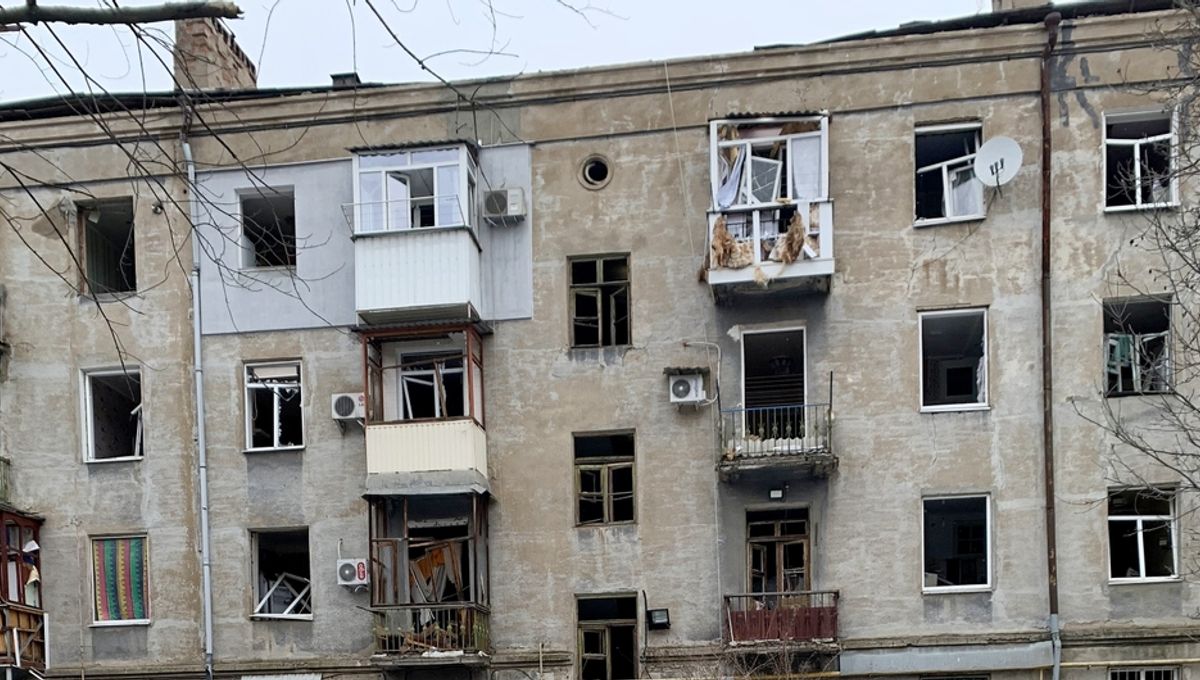
For residents of building number 7, their apartments were a dream come true. They had hot water, a fancy elevator, and looked significantly more upmarket than other apartment buildings of the time. During the 1980s, two families stayed in apartment 85 across nine years, including two teenagers and their parents, but their enjoyment of the building was short-lived.
After just a year, an 18-year-old woman suddenly fell ill with leukemia and died just a few months after, which residents and family members thought was a tragic and random happening. However, just a year later, a 16-year-old boy from the same family died from the same disease, and then their mother shortly after that. It became clear that something was awry.
Superstitions ran rampant among people that knew the family, claiming the apartment was somehow bad, but the stories did not reach the wider public and the doctors chalked up the disease to genetic predisposition.
The council handed the keys to a new family and they moved in sometime in the 1980s after the tragic events of the previous owners. Their fortune was just as bad, however, and in 1987 the new family held a funeral for their teenage son while their other younger son fought for his life in hospital, both suffering from the same disease – leukemia. The father of the boys was expectedly distraught, and, armed with the new evidence, pushed for officials to do something.
It’s in the walls
It took until 1989 for experts to arrive on scene, armed with radiation gauges, and they entered the room that the children had stayed in shortly before dying. To their shock (and apparent terror), they discovered radiation levels that were off the charts, more than enough to deliver lethal doses of gamma rays. The room was dismantled and a large chunk of wall was shipped to the Kyiv Institute for Nuclear Research, where they recovered a tiny vial – the same that was lost in the quarry all those years ago.
The misplacing of just a small cylinder was enough to deliver lethal doses of radiation to an estimated four residents and lesser doses to a further 17, releasing a suspected 1,800 roentgens per year into the surrounding area. It was in the wall close to the beds of the children, resulting in a tragedy targeting the most vulnerable members of the household.
Building 7 still stands to this day, but the wall has long since been disposed of. The Kramatorsk radiological accident serves as a stark reminder of the importance of safety regulations over radioactive materials, and the importance of immediate investigations into deaths that follow a distinct pattern. Sadly for 21 people, nine years was simply too long.

Source Link: The Devastating Kramatorsk Radiological Accident Almost Killed An Entire Apartment Block
