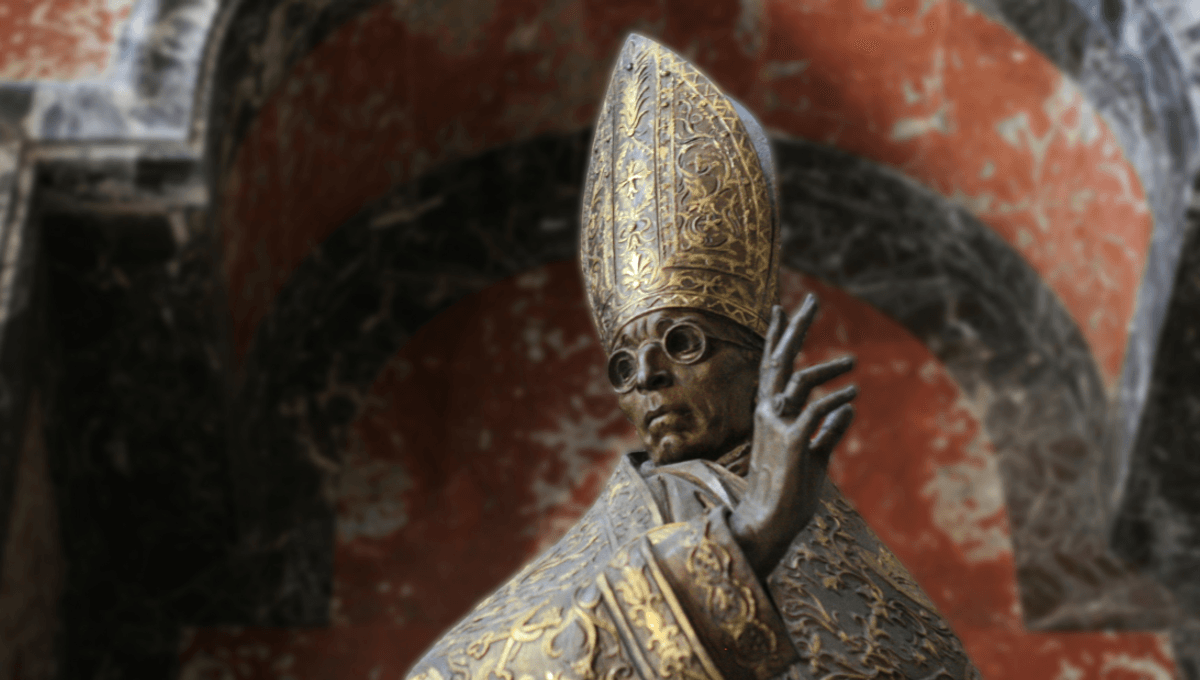
Human funerary practices have shown some real flair over the ages, from the remarkable mummification of Ancient Egyptians (ever wondered what happened to the eyeballs?) to the eco-friendly options like composting and aquamation available today. One of the most widespread ways to treat the dead is embalming, something that can make a corpse safe for display if – say – the person in question is the Bishop of Rome.
That said, it can go very, very wrong.
Cast your mind back to Rome, October 1958. If you weren’t there (or alive yet), the reigning pope Pius XII had just died of acute heart failure. When he was alive he had known that, as pope, his corpse would one day go on display so that it could be visited by mourners, but he bucked one particular trend in saying that he wanted his organs to be kept inside.
This was the start of an unfortunate sequence of questionable embalming practices that led Pope Pius XII to, well, explode a bit. It brought a swift end to the procession of visitors, and even had members of the Swiss Guard keeling over, but more on that later.
Like so many ill-fated experiments in history, the exploding pope all began with a dream. The dream of physician Riccardo Galeazzi-Lisi, that is, who wanted to try out a new approach to embalming that could adhere to Pope Pius’s wish that his organs remain inside.
Here, we touch on a crucial step of embalming which is that, typically, all of the body’s tissues and internal organs are drained and filled with preservation fluid. Or better yet, the organs are removed, as in mummification. That’s because without doing that, the host of bacteria that have been kept in check by the immune system throw a big, gas-producing party (like all good parties), which is why corpses’ abdomens often swell.
Instead, Galeazzi-Lisi focused on soaking the body with oils before wrapping it with layers of plastic. Combined with the unusually hot weather this fateful October, this created the perfect conditions to speed up the process of decomposition happening inside the body, and eventually, something had to give.
As Senior Research Fellow at The Anatomy Lab, Surgeons Hall Museums, Professor Ken Donaldson explained, “Although it was in line with Pius’s wishes to be buried ‘as God had made him’, you may spot the mistake in that the internal organs were not preserved in this approach. Inevitably autolysis, plus putrefaction caused by the gut bacteria, were soon generating large amounts of gas inside the body.”
“Over the 4 day course of the viewing and funeral ceremony, the Pope’s chest ‘exploded’ due to build-up of gas in the chest cavity, then the nose and fingers fell off and the body turned a greenish black colour. The smell was so sickening that some guards fainted, and guarding could only be made bearable by changing the guard every 15 minutes.”
Yes, it seems the decomposition ecosystem is a force that waits for no man, woman, or pope; and we see examples of its ferocity in nature, like the flies that will dig 2 meters (6.6 feet) down to climb inside coffins and lay eggs. It’s a handy process for getting rid of carcasses out in the wild, but it can cause problems depending on the kind of funeral you’re after – just ask William the Conqueror, the king who burst over his mourners. And if you think a popping pope is a strange fate for the bishop, just wait until you hear about the dead pope that was put on trial.

Source Link: The Exploding Pope: What Happens When Embalming Goes Wrong?
