• Email Us: [email protected]
  • Contact Us: +1 718 874 1545
  • Skip to main content
  • Skip to primary sidebar

Medical Market Report

  • Home
  • All Reports
  • About Us
  • Contact Us

The Fastest Underwater Plumes On Record Reshaped The Seabed After The Tonga Eruption

September 8, 2023 by Deborah Bloomfield

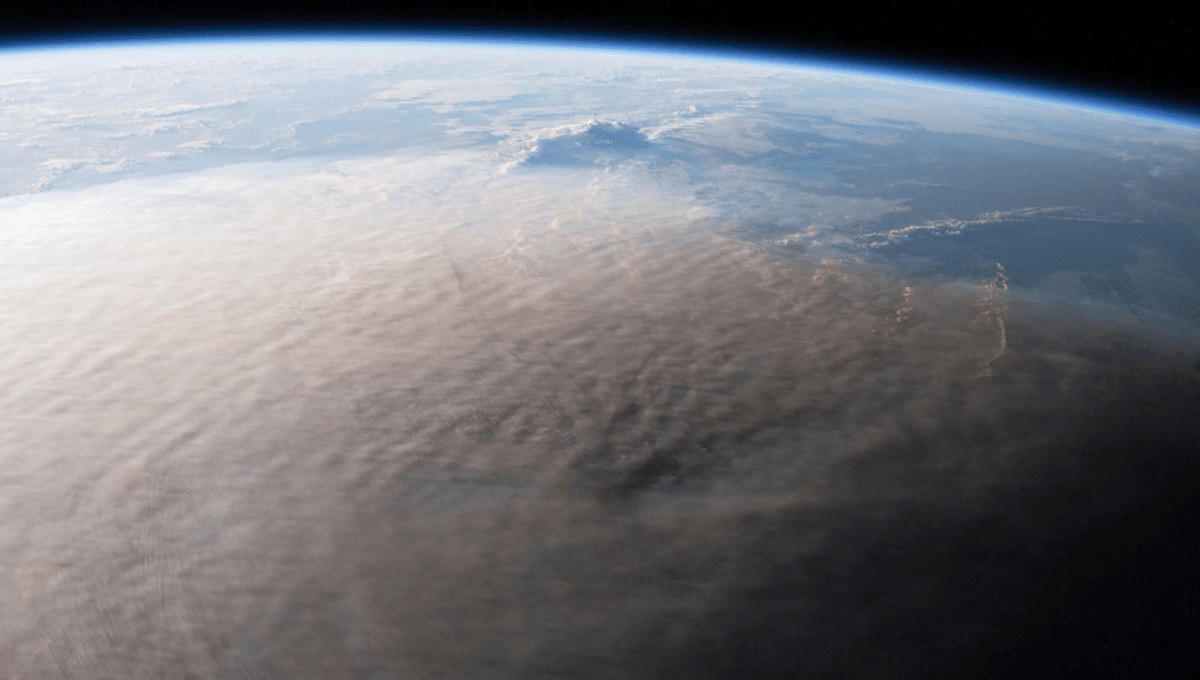
Plumes of devastation known as “pyroclastic density currents” ripped across the seabed following the Tonga Eruption in 2022, a volcanic blast that’s claimed near-countless world records. Carrying debris like rock, mud, and ash, they traveled at speeds of up to 122 kilometers (75 miles) per hour and carried on for over 100 kilometers (62 miles).

The 2022 Hunga Tonga-Hunga Ha’apai eruption in Tonga occurred beneath the Pacific Ocean on January 15, 2022. When it went up, it transferred roughly 146 billion kilograms (322 billion pounds) of water into the stratosphere, where it could remain for up to a decade and contribute to the degradation of the ozone layer.

Advertisement

It was the largest natural explosion in a century, triggering an 11-hour lightning marathon, and the highest plume ever recorded, reaching heights of 57 kilometers (34 miles), more than 17 kilometers (11 miles) clear of the previous record holder, Mount Pinatubo in the Philippines.

And it seems what went up also went sideways, as the devastation that traveled underwater during the carnage has now set its own record, reports the BBC. Known as pyroclastic density currents, they’re driven by all the stuff that exploded into the eruption column – largely superheated ash and rock – collapsing down into the surrounding water.

As the debris entered the sea, it formed a stampede of muddy, ashy destruction that charged across the seafloor at over 120 km/h (75 mph), smothering marine life and severing telecommunications cabling that keeps the Pacific kingdom online. The authors of a new paper about the eruption suggest that if we’re to return connectivity in a meaningful way, more extensive seafloor mapping is needed to identify other submerged volcanoes that could experience similar eruptions.

Tonga isn’t alone in facing this threat from underwater volcanoes, and the authors have established that there are plenty more we need to be keeping an eye on if we’re to anticipate and better plan for the next big eruption in light of all we’ve learned from Hunga Tonga-Hunga Ha’apai.

Advertisement

“We confirm that bedforms observed on many other shallow submerged volcanoes worldwide can be produced by powerful eruptions, demonstrating that the hazards experienced at Hunga volcano can occur elsewhere,” they write.

“Explosive eruptions from these often unsurveyed and unmonitored submerged volcanoes can produce high-energy submarine density currents and warrant far greater consideration as tsunamigenic sources and as primary threats to vulnerable coastal communities and critical subsea infrastructure.”

The study is published in Science.

Deborah Bloomfield
Deborah Bloomfield

Related posts:

  1. Soccer – FIFA backs down on threat to fine Premier clubs who play South American players
  2. U.S. House passes abortion rights bill, outlook poor in Senate
  3. Two children killed in missile strikes on Yemen’s Marib – state news agency
  4. Study Reveals Which Humans Survived The Last Ice Age And Which Didn’t

Source Link: The Fastest Underwater Plumes On Record Reshaped The Seabed After The Tonga Eruption

Filed Under: News

Primary Sidebar

  • In 1940, A Dog Investigated A Hole In A Tree And Discovered A Vast Cave Filled With Ancient Human Artwork
  • “Time Is Not Broken”: US Officials Work To Correct Time, After Discovering It Is 4.8 Microseconds Out
  • The Evolutionary Reason Why Rage Bait Affects Us – And How To Deal With It This Holiday Season
  • Whales Living To 200 May Actually Be The Norm – There’s A Sad Reason Why We Don’t Know Yet
  • IFLScience The Big Questions: Can Magic Be Used As A Tool In Science?
  • Sheep And… Rhinos? There’s A Very Cute Reason You See Them Hanging Out Together
  • Why Does The Latest Sunrise Of The Year Not Fall On The Winter Solstice?
  • Real Or Fake Christmas Trees: Which Is Better For The Environment?
  • “Cosmic Dipole Anomaly” Suggests That Our Universe May Be “Lopsided”, Seriously Challenging Our Understanding Of The Cosmos
  • Which Animals Mate For Life?
  • Why Is Rainbow Mountain So Vibrantly Colorful?
  • “It’s An Incredible Feeling”: Salty Air Bubbles In 1.4-Billion-Year-Old Crystals Reveal Secrets Of Earth’s Early Atmosphere
  • These Were Some Of The Most Significant Scientific Experiments Of 2025
  • Want To Know What 2026 Has In Store? The Mesopotamians Have A Tip, But You’re Not Going To Like It
  • Can Woolly Bear Caterpillars Predict Winter Weather? No – But They Do Have A Clever Way To Survive The Freeze
  • Is Showering More Hygienic Than Bathing – What Does The Science Say?
  • Why Is Christmas Called Xmas?
  • Stardust Didn’t Reach The Solar System The Way We Thought, So How Did It Get Here?
  • This Might Be The First Time We’ve Ever Seen A Gravitational Wave Event Gravitationally Lensed
  • Carnivorous, Enormous, And Corpse-Scented: What Are The Rarest Plants On Earth?
  • Business
  • Health
  • News
  • Science
  • Technology
  • +1 718 874 1545
  • +91 78878 22626
  • [email protected]
Office Address
Prudour Pvt. Ltd. 420 Lexington Avenue Suite 300 New York City, NY 10170.

Powered by Prudour Network

Copyrights © 2025 · Medical Market Report. All Rights Reserved.

Go to mobile version