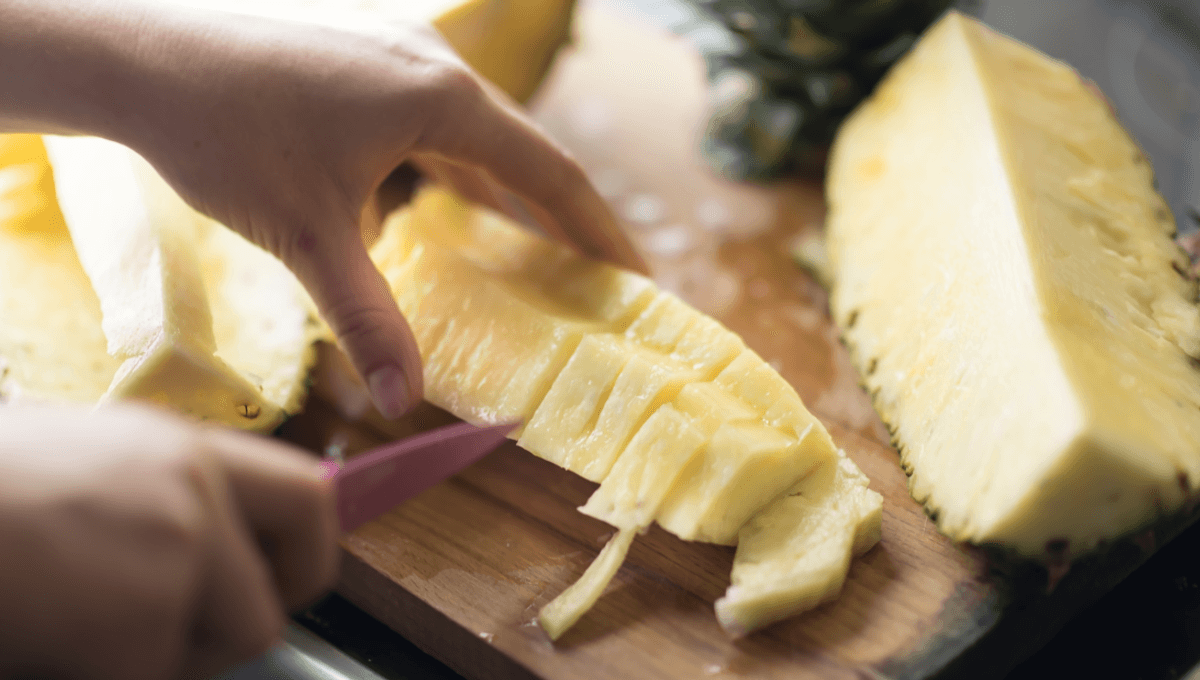
A bloody mouth isn’t the aesthetic most people are looking for in their summer snaps, but if you’re kicking back with some delicious fresh pineapple, that’s exactly what you might end up with. Pineapple is a refreshing snack high in vitamins C and B6 among other dietary goodies, but it also packs an enzyme so powerful it’s used as a meat tenderizer.
Yep. When you’re eating the pineapple, it’s kind of eating you right back.
Why does pineapple make you bleed?
That meat tenderizer we mentioned is actually an enzyme called bromelain. It’s used to soften tough cuts because it can break down proteins, which unfortunately include those found inside our mouths.
For some people, a pineapple’s potent enzymes will just cause a bit of tingling or stinging. However, for some unlucky souls the pineapple’s revenge is more severe, causing bleeding of the tongue, gums, and cheeks.
What is bromelain?
Bromelain is a group of proteolytic enzymes that can break apart proteins. They are found in the fruit and stem of the pineapple plant, Ananas comosus.
According to the National Center for Complementary and Integrative Health, bromelain has been studied for the treatment of burns. “Preliminary research has shown that bromelain helps to remove dead and damaged skin from burns in children and adults,” they write. “Whether bromelain treatment is better than standard treatment for scarring over the long term still needs to be examined.”
The idea is that it could improve the healing of full-thickness burns through something called “bromelain-based enzymatic debridement”. It works because bromelain contains cysteine proteinases, that can break down any protein wherever they have a cysteine amino acid in the long-chain molecule. Mammalian cells have plenty, so the enzymes have plenty to work with when presented with human tissue.
Is pineapple safe to eat?
Pineapple is perfectly safe to eat (so long as you’re not allergic, which is rare), but for some people it can come with unpleasant side effects. While bromelain can be helpful in breaking down scar tissue, it doesn’t discriminate and will gladly get to work on some of the cells in our mouths.
Cutting pineapple from the stem where bromelain is most concentrated can reduce the risk of ouchies, as can opting for tinned over fresh. If you want a risk-free pineapple experience, cooking it can destroy the enzymes so that you won’t get a little bit eaten while enjoying a snack.
On the topic of fruits that pack a bunch, did you know that too much limey fun in the sun can give you “margarita burn”?
All “explainer” articles are confirmed by fact checkers to be correct at time of publishing. Text, images, and links may be edited, removed, or added to at a later date to keep information current.

Source Link: The Grim Reason Eating Fresh Pineapple Makes Some People's Mouths Bleed
