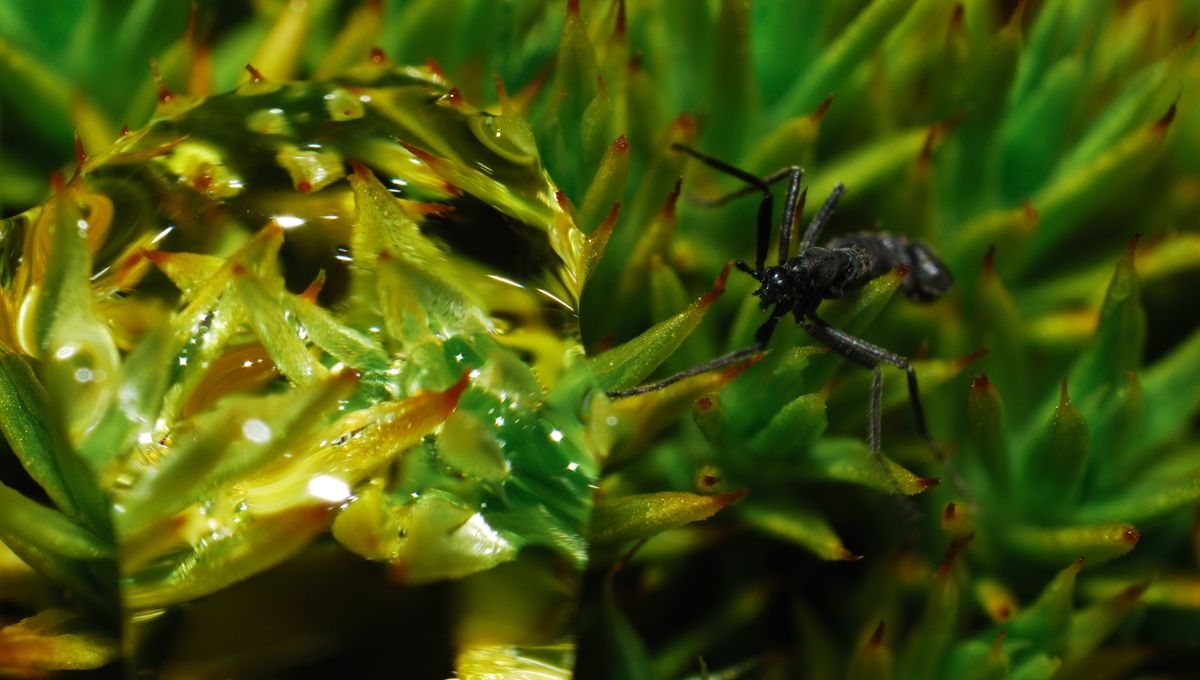
Antarctica is known for being a rather inhospitable place, what with its extreme cold, violent winds, and low levels of water – it is technically a desert. Much of continent also sits at high altitude, making it a difficult environment for creatures to survive. But despite its harsh conditions, Antarctica is not completely devoid of life. In fact, it takes a very special creature to endure such a hellish place – but special doesn’t mean big!
The rest of this article is behind a paywall. Please sign in or subscribe to access the full content.
The Antarctic midge (Belgica antarctica), a flightless insect the size of an ant (2-6 millimeters), is the largest fully terrestrial animal on the continent. These tiny critters feed on the few mosses and plants that are capable of surviving in this environment. Basically, Antarctica is pretty poor when it comes to food sources, but the poop of animals like penguins and seals injects nutrients into the soil that some plants can feed off. When these plants die, the midges get their meal.
In addition to being the largest land-based animal in Antarctica, the midge can also boast being one of the only insects there too. Antarctica’s brutal conditions and incredibly short summers mean there is little warmth or food available to anything that might fly there. It’s for this reason the midge has lost its wings – they’re useless in the high winds. Crawling also lets the insect conserve energy and avoid heat loss.
Over the centuries, these hardy midges have also tempered their genetic makeup to better survive in the cold, making them true polyextremophiles. They can even survive as long as a month without oxygen and spend around nine months of the year completely frozen (a process known as quiescence).
They achieve much of this superpower from a combination of rapid cold hardening – allowing them to survive the freezing environment – and spending time underground where it is slightly warmer.
Antarctic midges have a two-year life cycle punctuated by their time being tiny insect popsicles. The insect larvae quickly develop to their second instar – a developmental stage of arthropods, like insects, that occurs between each molt where they shed their exoskeleton – by their first winter. Then they undergo quiescence before resuming their development when temperatures rise again.
When the second winter arrives, the insects reach their final instar, but do not pupate. Rather they enter obligate diapause – a genetically programmed pause in their development – so they can all emerge as adults when summer returns. A lot of work goes into getting these insects to sexual maturity, but they only have a few days of life left at this point.
So, adulthood for the Antarctic midge is a short sex frenzy before death. But while life for these insects is tough already, the impacts humans are having on the environment are making it harder still. Recent research has even shown evidence of microplastics in their digestive systems. Although the situation is not critical yet, it is a worrying development that shouldn’t be ignored.

Source Link: The Largest Native Terrestrial Animal In Antarctica Is Both Smaller And Tougher Than You'd Expect
