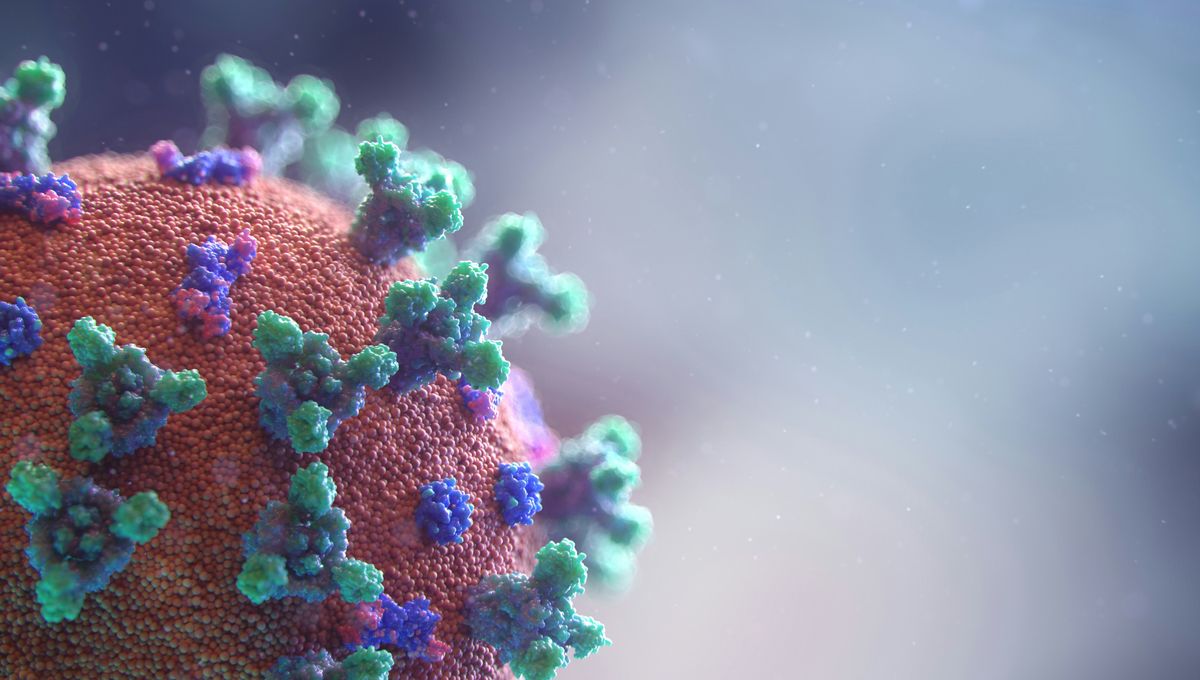
Between 33 million and 15 million years ago, an ancient group of viruses ran riot through countless ancient mammals, including the relatives of everything from humans and chimpanzees to aardvarks and pandas. This band of prehistoric viruses eventually died out around 15 million years ago – perhaps it had infected all the hosts it could – but inactive fragments of its DNA still sneakily live on in many modern-day mammals (including us).
It’s a strange thought, but up to 8 percent of our genome is composed of genetic sequences from retroviruses that infected our ancestors a long time ago.
Any retroviruses, including modern ones like HIV, have to insert a DNA copy of their RNA genome into the DNA of a host cell to replicate. This viral genetic material doesn’t generally get passed down from generation to generation, but it can if the ancient retroviruses gained the ability to infect germ cells, such as egg or sperm, which do pass their DNA down to future generations.
If the retroviruses do successfully make it into the germ cells, they can eventually become embedded into the genome of a population. This is what’s known as an endogenous retrovirus.
Arguably one of the most successful examples is ERV-Fc, a retrovirus (or maybe a genus or family of retroviruses) that spread globally from the Oligocene to the Early Miocene (between 30 million and 15 million years ago).
In 2016, scientists scanned the genomes of 50 modern mammals for “fossil” viral remnants of ERV-Fc and found it was present in the ancestors of at least 28 of them, including the relatives of aardvark, gray mouse lemur, squirrel monkey, marmoset, baboon, chimpanzee, human, dog, and panda.
Even more impressive still, it didn’t infect just one relative of all these mammals just a single time, but jumped between species more than 20 times. This was a truly intercontinental pandemic, impacting mammals on every continent except for the relatively remote regions of Australia and Antarctica.
ERV-Fc doesn’t seemingly have any impact on human health today; a fragment of its genetic material simply sits dormantly in our genome. However, a deeper understanding of ERV-Fc and other human endogenous retroviruses could help to inform how we approach modern-day diseases, such as HIV.
“Mammalian genomes contain hundreds of thousands of ancient viral fossils similar to ERV-Fc,” William E. Diehl, lead author of the 2016 study who conducted the research while a post-doctoral researcher at Boston College, said in a statement.
“The challenge will now be to use ancient viral sequences for looking back in time, which may prove insightful for predicting the long-term consequences of newly emerging viral infections. For example, we could potentially assess the impact of HIV on human health 30 million years from now. The method will allow us to better understand when and why new viruses emerge and how long-term contact with them impacts the evolution of host organisms,” explained Diehl.
[H/T: PBS Eons]

Source Link: The "Prehistoric Pandemic” That Ran For 15 Million Years – And Still Echoes On Today
