• Email Us: [email protected]
  • Contact Us: +1 718 874 1545
  • Skip to main content
  • Skip to primary sidebar

Medical Market Report

  • Home
  • All Reports
  • About Us
  • Contact Us

The Rare Earth Hypothesis A Hotly Debated Solution To The Fermi Paradox

May 17, 2024 by Deborah Bloomfield

Looking at the universe, we know that the Earth and the whole solar system are not in a special position. This has been extended too to the existence of alien life – if we are here, we are probably not special, and the universe must be teeming with life. To which, we ought to agree with physicist Enrico Fermi and ask: where is everyone? The Fermi Paradox has been tackled in many different ways, but one solution simply says: wait a minute! Maybe we are special!

Advertisement

This is known as the Rare Earth hypothesis, and it originates from a book published in 2000, titled Rare Earth: Why Complex Life Is Uncommon in the Universe. It was written by two scientists at the University of Washington; Peter Ward, a geologist and paleontologist; and Donald E. Brownlee, an astronomer and astrobiologist.

Advertisement

In the tome, the duo argues that the evolution of biological complexity requires so many factors that the odds are against complex life being common. The position in the galaxy needs to be right, the stellar properties need to be right, the position of the planet needs to be right, and maybe you need plate tectonics, a large satellite, and a planet like Jupiter that can save you from comets. The list goes on.

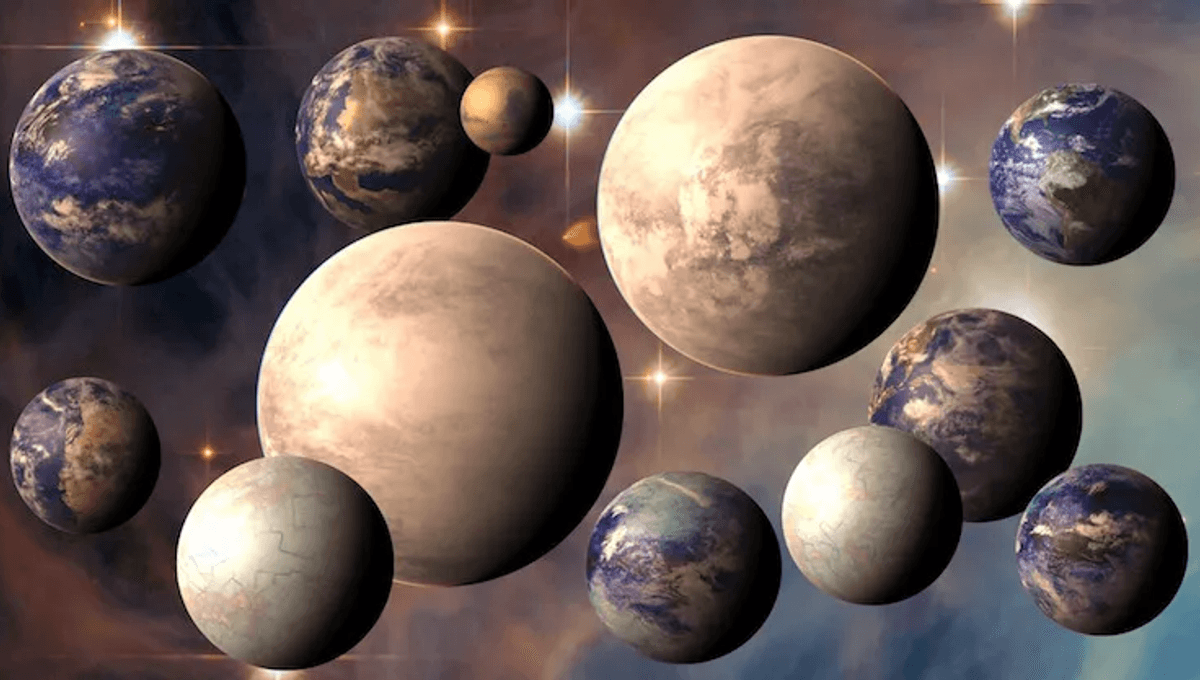
To be fair to the authors, when this was put forward, there were only 11 known exoplanets. Now, there are over 5,600 known exoplanets and thousands more candidate objects. Past estimates suggest that there might be 40 billion Earth-sized planets in the Milky Way. As planet and star combos go, it is not that rare. Not all those planets will be Earth-like, and it is possible that even planets with striking similarities with our own might fail to have the right conditions in the long run.

Venus is similar in mass to Earth, and it is believed to have had an ocean. But it is now a hellish place. And yet, scientists have speculated that life might exist in the clouds of Venus. One of the strongest criticisms of the Rare Earth hypothesis is that it fails to imagine life unlike our own. That it is only possible in the slimmest possible conditions on a blue marble.

Advertisement

But scientists are investigating so many different worlds, near and far, looking at those conditions and questioning them. So far we have not found life out there – but just because we haven’t doesn’t mean it’s not there.

We will tackle how we are looking for life on alien worlds in our upcoming free Curious LIVE! event on May 31.

Deborah Bloomfield
Deborah Bloomfield

Related posts:

  1. Cricket-NZ players reach Dubai after ‘specific, credible threat’ derailed Pakistan tour
  2. Soccer-Liverpool’s Alexander-Arnold ruled out of Man City game
  3. What Are Baby Platypuses Called?
  4. Should You Wash Chicken Before Cooking It?

Source Link: The Rare Earth Hypothesis A Hotly Debated Solution To The Fermi Paradox

Filed Under: News

Primary Sidebar

  • In 1940, A Dog Investigated A Hole In A Tree And Discovered A Vast Cave Filled With Ancient Human Artwork
  • “Time Is Not Broken”: US Officials Work To Correct Time, After Discovering It Is 4.8 Microseconds Out
  • The Evolutionary Reason Why Rage Bait Affects Us – And How To Deal With It This Holiday Season
  • Whales Living To 200 May Actually Be The Norm – There’s A Sad Reason Why We Don’t Know Yet
  • IFLScience The Big Questions: Can Magic Be Used As A Tool In Science?
  • Sheep And… Rhinos? There’s A Very Cute Reason You See Them Hanging Out Together
  • Why Does The Latest Sunrise Of The Year Not Fall On The Winter Solstice?
  • Real Or Fake Christmas Trees: Which Is Better For The Environment?
  • “Cosmic Dipole Anomaly” Suggests That Our Universe May Be “Lopsided”, Seriously Challenging Our Understanding Of The Cosmos
  • Which Animals Mate For Life?
  • Why Is Rainbow Mountain So Vibrantly Colorful?
  • “It’s An Incredible Feeling”: Salty Air Bubbles In 1.4-Billion-Year-Old Crystals Reveal Secrets Of Earth’s Early Atmosphere
  • These Were Some Of The Most Significant Scientific Experiments Of 2025
  • Want To Know What 2026 Has In Store? The Mesopotamians Have A Tip, But You’re Not Going To Like It
  • Can Woolly Bear Caterpillars Predict Winter Weather? No – But They Do Have A Clever Way To Survive The Freeze
  • Is Showering More Hygienic Than Bathing – What Does The Science Say?
  • Why Is Christmas Called Xmas?
  • Stardust Didn’t Reach The Solar System The Way We Thought, So How Did It Get Here?
  • This Might Be The First Time We’ve Ever Seen A Gravitational Wave Event Gravitationally Lensed
  • Carnivorous, Enormous, And Corpse-Scented: What Are The Rarest Plants On Earth?
  • Business
  • Health
  • News
  • Science
  • Technology
  • +1 718 874 1545
  • +91 78878 22626
  • [email protected]
Office Address
Prudour Pvt. Ltd. 420 Lexington Avenue Suite 300 New York City, NY 10170.

Powered by Prudour Network

Copyrights © 2025 · Medical Market Report. All Rights Reserved.

Go to mobile version