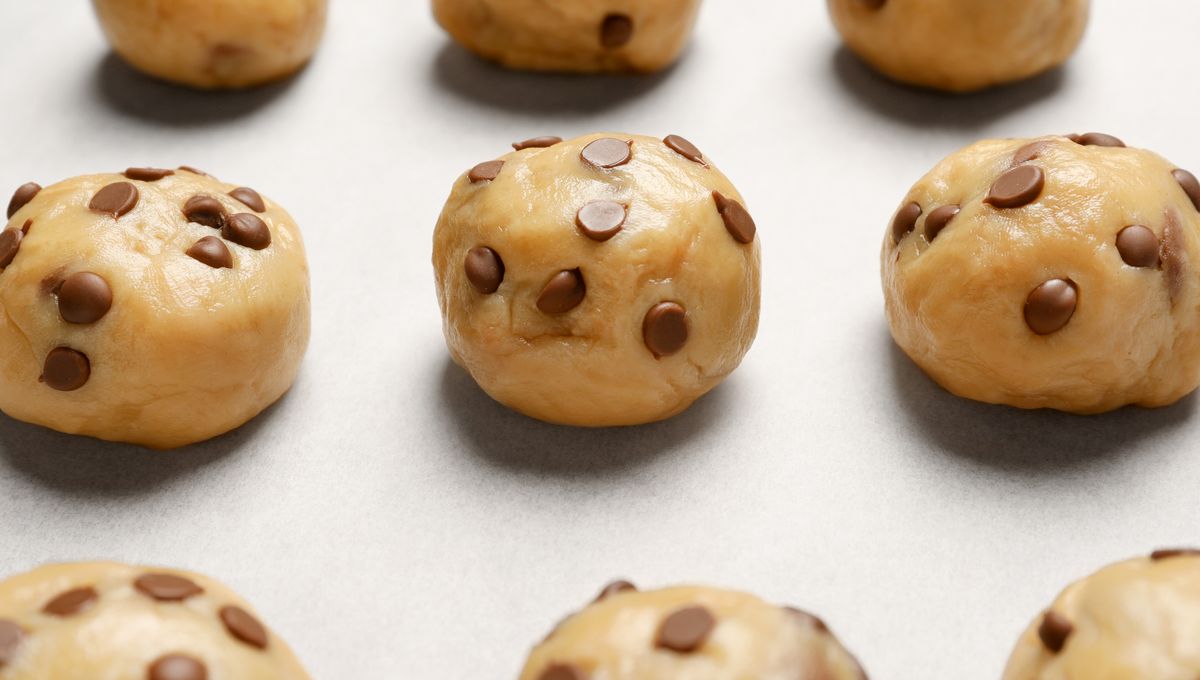
We all know we shouldn’t really eat raw cookie dough, right? But why? Is it just because your mom wanted to maximize the number of cookies that would come out of the oven, or is there some deeper logic behind it?
Well, as you may well know already, there’s actually a very good reason to avoid that tempting goo in the mixing bowl: it can make you really, really sick. But what you might not know is exactly what it is that’s causing your ill-health – or, at least, you may not know the whole story.
Cookie dough: what you probably know
So, a few of you are probably rolling your eyes right now at the gall of us to spell this out: cookie dough has raw eggs in it, and raw eggs are – especially in the US – risky to eat.
“Fresh eggs, even those with clean, uncracked shells, may contain bacteria called Salmonella that can cause foodborne illness,” warns the United States Food and Drug Administration (FDA). While usually not fatal, infection with this little germ is no joke: “Most people infected with Salmonella develop diarrhea, fever, abdominal cramps, and vomiting 12 to 72 hours after infection.”
When you fall ill with salmonella, the bacteria attack and destroy the cells lining your intestines. That makes it difficult for your guts to absorb water, giving you those painful stomach cramps – and since the liquid in your body isn’t getting taken up, it is, ahem, rejected. With force. From both ends, often.
And some people are at a much higher risk from the disease. If you’re over 65 or under 1; if you have a compromised immune system – maybe you’re undergoing chemotherapy, or are HIV-positive, or some other condition or medication is reducing your body’s ability to fight off infections; if you have sickle cell disease, a fairly rare condition – though it’s much more prevalent in Black and Hispanic populations – in which your red blood cells are C-shaped and sticky; any of these factors increase the chances that a Salmonella infection will be severe enough to send you to the hospital.
If the disease spreads beyond the intestines, things can get really bad. Salmonella bacteria in your blood can cause bacteremia, which in turn can lead to septic shock; if it gets into your cerebrospinal fluid, it can trigger a rare form of meningitis. Then there’s bone infections; joint infections; infections of the blood vessels – as one 2024 case report of a woman whose infection developed into endocarditis, an infection of the heart’s inner lining, remarked, “Virtually any anatomical site may be seeded hematogenously by Salmonella.”
It’s not something you want to invite into your life, in other words. But if you’re eating raw eggs, that’s exactly what you’re doing: by November last year, the Centers for Disease Control and Prevention logged 105 cases and 19 hospitalizations from a single outbreak of egg-related Salmonella; in July, another outbreak saw 134 cases and 38 hospitalizations (and one death); overall, government health agencies estimate that eggs are responsible for about 6.3 percent of the 1.35 million Salmonella infections – that is, 85,050 individual cases – each year in the US.
So, yeah: the raw eggs in cookie dough are a problem. But don’t get too smug over your vegan alternative recipe just yet.
Cookie dough: the surprise culprit
The bigger problem in your cookie dough, at least by volume, is actually the flour. Surprise! And while getting sick from raw flour is rare, it’s very possible – and the reason is a different, albeit familiar, food poisoning bacterium.
“Yes, raw flour can be contaminated with E. coli,” said Rachel Heidt, a pediatrician at UC Davis Children’s Hospital, in 2019. “Even though it’s processed (i.e. ground and bleached) to become flour, it doesn’t go through any steps to kill harmful bacteria that might be present in the field or at other steps during flour production.”
Like Salmonella, E. coli causes severe and often bloody diarrhea, stomach pain, and vomiting – for days on end. Also like Salmonella, it can have some dire and life-threatening complications.
For example, about one in 20 cases of infection with one strain of E. coli will lead to a rare kidney condition called hemolytic uremic syndrome, or HUS. This condition happens when small blood vessels become damaged and inflamed, causing clots to form throughout the body. This can damage the organs, particularly the kidneys, and “can result in kidney failure, stroke, and death,” Heidt warned.
Anyone can get HUS – although it’s most common in young children – and merely having a “healthy” immune system won’t protect you.
While it’s not as common as a Salmonella infection from raw eggs, the risk is far from theoretical. “There have been two outbreaks of E. coli infections in recent years (2016 and 2019) linked to raw flour,” Heidt pointed out. “These outbreaks made more than 80 people sick and led to 20 hospitalizations.”
Cookie dough: the verdict
If polls are to be believed, more than half of US adults are habitual raw cookie dough eaters, and even more believe it to be safe to do so. But with E. coli in the flour and Salmonella in the eggs, the lesson is clear: as tasty as it is, unfortunately, raw cookie dough probably isn’t worth the risk.
There are, however, loopholes.
“Some companies make edible cookie dough,” points out one Washington Post Well+Being column from 2023. “Commercial cookie dough ice cream is typically safe, too.”
And if you’d rather go homemade, there are ways to keep yourself safe too. “The key to preventing bacterial contamination is heat-treating the flour, which you can do in your microwave,” the column advises, “and using pasteurized eggs or no eggs.”
Which, for the handful of you out there whose cookie dough escapades sent them to the ER at some point, must be delicious news. You’re welcome!
The content of this article is not intended to be a substitute for professional medical advice, diagnosis, or treatment. Always seek the advice of qualified health providers with questions you may have regarding medical conditions.

Source Link: The Real Reason You Shouldn't Eat (Most) Raw Cookie Dough
