• Email Us: [email protected]
  • Contact Us: +1 718 874 1545
  • Skip to main content
  • Skip to primary sidebar

Medical Market Report

  • Home
  • All Reports
  • About Us
  • Contact Us

The Science Of Electric Eels: How Do They Generate Electricity To Hunt Prey?

September 7, 2024 by Deborah Bloomfield

Electric eels might be the stuff of nightmares for some, but are they really electric – and do they have the power to give you a painful zap? We break down just watt makes these eels so shocking. 

Advertisement

What is an electric eel?

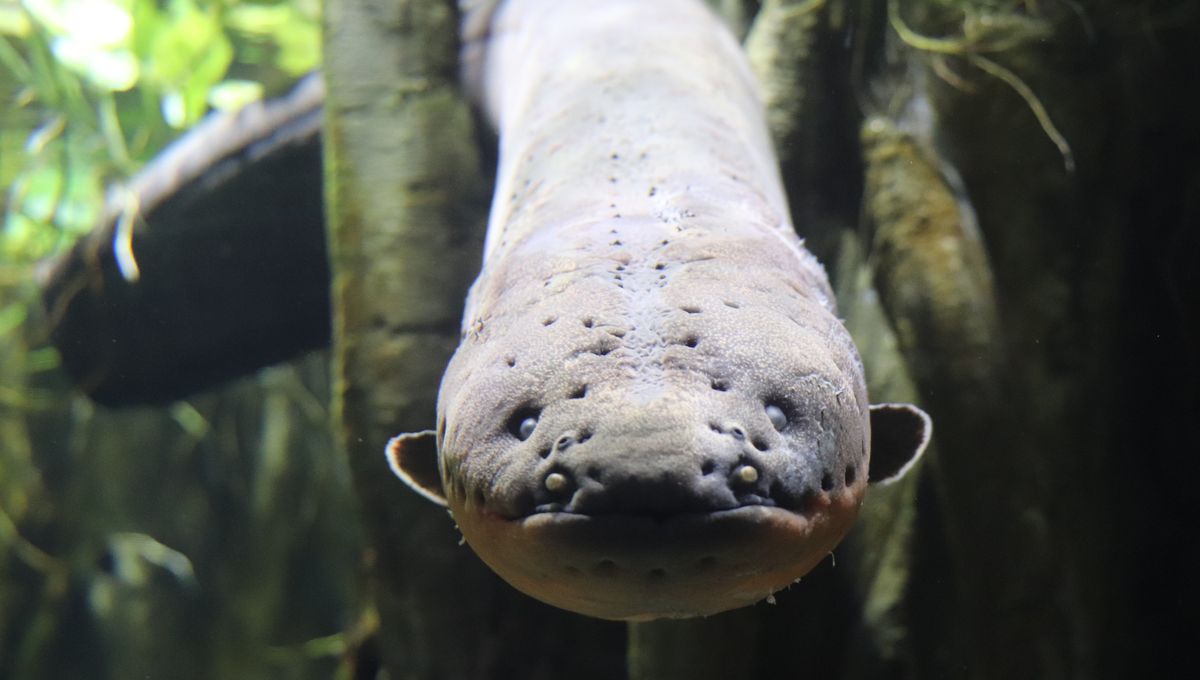
Electric eels are one of three species in the genus Electrophorus. They belong not to the “true” eels in the order Anguilliformes – which contains everyone’s favorite the moray – but to a different order called Gymnotiformes, also known as the knifefishes. With slender bodies and tapered tails, electric eels are more closely related to carp and catfish. 

Electric eels are beefy, with bodies that can measure 2.5 meters long (8 feet), and weigh 20 kilograms (45 pounds). These eels live in and around the Amazon and the Orinoco basin in South America. While they possess gills, electric eels are air breathers and receive 80 percent of their oxygen through their mouths. 

How do electric eels generate electricity?

Their impressive bodies also house three snazzy organs that help the fish create their own electricity. These are called the main organ, the Hunter’s organ, and the Sach’s organ; they also contain around 6,000 specialized cells called electrocytes. These electrocytes can discharge power simultaneously when the fish is under threat or attacking prey of its own. 

“Electric eels are like living batteries,” explains Dr Rupert Collins, Senior Curator of Fishes at the Natural History Museum, London. “They have stacks of modified muscle cells called electrocytes that have both a positive and a negative side. When the cells are triggered, it discharges an electrical impulse into the surrounding water.”

So how can an electric eel shock prey but not shock itself in the process? Well, nobody really knows for sure but the best guess is that the water surrounding the eel absorbs most of the current generated by the cells. The current also only flows for around 2 milliseconds, making it likely not long-lasting enough to do damage to the eel itself. 

Advertisement

Typically, eels generate around 600 volts of electricity, but a discharge of 860 volts was recorded from one study, both of which are enough to kill a human. Deaths from electric eel shocks are extremely rare but multiple shocks can cause respiratory difficulties and even cause your heart to stop. This, added to the fact that you’re likely in the water when faced with an eel, adds to the other life-threatening problem of drowning, if the eels don’t get you first, the water might. 

Deborah Bloomfield
Deborah Bloomfield

Related posts:

  1. Qatar working to open humanitarian corridors to Afghanistan, official says
  2. Pro-EU Dobrev leads in opposition primary to take on Hungary’s Orban
  3. “Time Capsule” Cave Reveals Funerary Ritual Dating Back 7,000 Years
  4. Incredible Photos Capture Star Systems Giving Birth To Planets In A Variety Of Ways

Source Link: The Science Of Electric Eels: How Do They Generate Electricity To Hunt Prey?

Filed Under: News

Primary Sidebar

  • What Causes All The Symptoms Of Long COVID And ME/CFS? The Brainstem Could Be The Key
  • The Only Bugs In Antarctica Are Already Eating Microplastics
  • Like Mars, Europa Has A Spider Shape, And Now We Might Know Why
  • How Did Ancient Wolves Get Onto This Remote Island 5,000 Years Ago?
  • World-First Footage Of Amur Tigress With 5 Cubs Marks Huge Conservation Win
  • Happy Birthday, Flossie! The World’s Oldest Living Cat Just Turned 30
  • We Might Finally Know Why Humans Gave Up Making Our Own Vitamin C
  • Hippo Birthday Parties, Chubby-Cheeked Dinosaurs, And A Giraffe With An Inhaler: The Most Wholesome Science Stories Of 2025
  • One Of The World’s Rarest, Smallest Dolphins May Have Just Been Spotted Off New Zealand’s Coast
  • Gaming May Be Popular, But Can It Damage A Resume?
  • A Common Condition Makes The Surinam Toad Pure Nightmare Fuel For Some People
  • In 1815, The Largest Eruption In Recorded History Plunged Earth Into A Volcanic Winter
  • JWST Finds The Best Evidence Yet Of A Lava World With A Thick Atmosphere
  • Officially Gone: After 40 Years MIA, Australia’s Only Shrew Has Been Declared “Extinct”
  • Horrifically Disfigured Skeleton Known As “The Prince” Was Likely Mauled To Death By A Bear 27,000 Years Ago
  • Manumea, Dodo’s Closest Living Relative, Seen Alive After 5-Year Disappearance
  • “Globsters” Like The St Augustine Monster Have Been Washing Up For Centuries, But What Are They?
  • ADHD Meds Used By Millions Of Kids And Adults Don’t Work The Way We Thought They Did
  • Finding Diamonds Just Got A Whole Lot Easier Thanks To Science
  • Why Didn’t The World’s Largest Meteorite Leave An Impact Crater?
  • Business
  • Health
  • News
  • Science
  • Technology
  • +1 718 874 1545
  • +91 78878 22626
  • [email protected]
Office Address
Prudour Pvt. Ltd. 420 Lexington Avenue Suite 300 New York City, NY 10170.

Powered by Prudour Network

Copyrights © 2025 · Medical Market Report. All Rights Reserved.

Go to mobile version