• Email Us: [email protected]
  • Contact Us: +1 718 874 1545
  • Skip to main content
  • Skip to primary sidebar

Medical Market Report

  • Home
  • All Reports
  • About Us
  • Contact Us

The Solar Eclipse Is Over, But Your Protective Glasses Are Still Useful

April 9, 2024 by Deborah Bloomfield

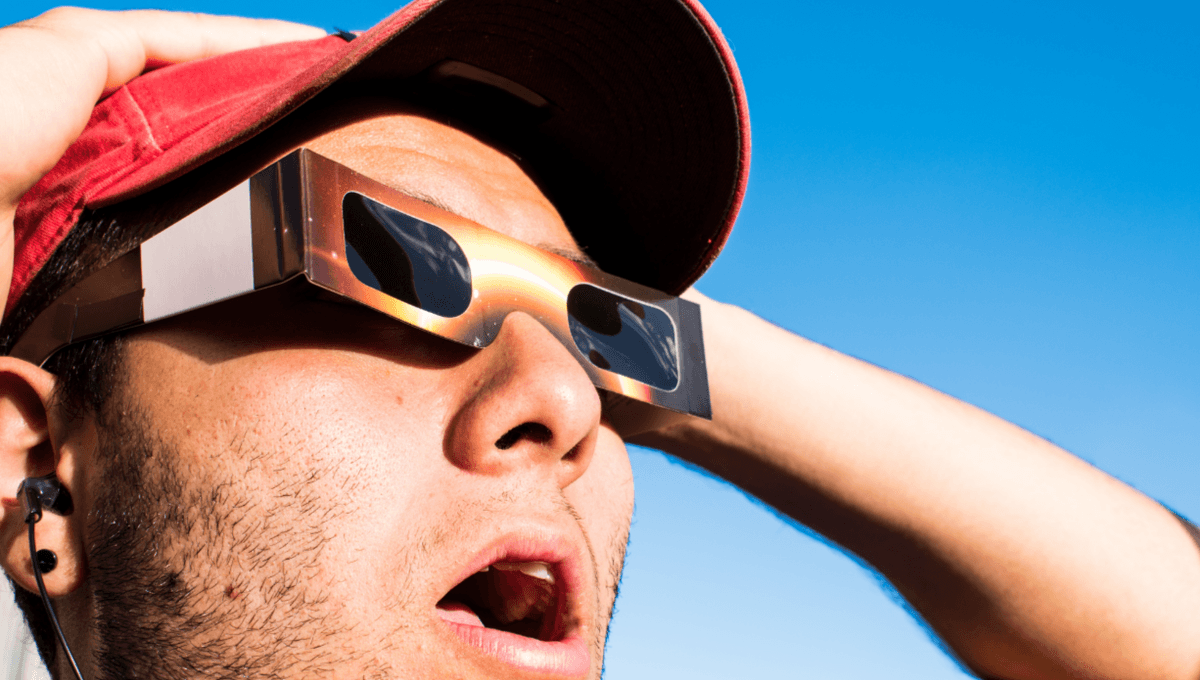
The 2024 North American total solar eclipse has come and passed. Now the spectacle is over, you might be wondering what to do with your solar eclipse glasses.

The next total solar eclipse to cross North America is predicted to occur on August 23, 2044. Unless you plan on hanging on to your protective glasses for two decades, you might be thinking about chucking them in the trash. However, it’s possible for someone else to make good use of them.

Advertisement

Astronomers Without Borders (AWB) runs a program that collects used solar eclipse glasses and distributes them to people who may not otherwise have a safe way to view the eclipse directly. You can head over to their website for more information on how to participate and for the location of donation centers across the country.

“Because of the way these eclipse glasses are manufactured, they are not very eco-friendly, so they would potentially end up in the landfill. Let’s prevent that and put them to good use, and let others less fortunate around the world experience this wondrous celestial event safely,” Andrew Fazekas, a spokesperson for AWB, told KUT Austin.

“It’s humbling to see so many organizations – big and small – coming together for this effort,” Fazekas added.

Following the “Great American Eclipse” in 2017, ABW sent tens of thousands of used solar eclipse glasses to South America, Asia, and Africa. The non-profit organization is now seeking donations to run the program after the 2024 total solar eclipse in North America. 

Advertisement

It’s looking like 2024 eclipse will produce even more used glasses than the 2017 eclipse. Per NASA, an estimated 31.6 million people live along the solar eclipse’s path of totality this year, compared to 12 million in 2017. Let’s hope those millions of spectators followed the guidance and wore protective eyewear (and didn’t gaze directly into the Sun à la Donald Trump). 

Bear in mind that you should double-check before reusing any solar eclipse glasses as some models can’t be used if they’re more than three years old, according to NASA. After 2015, official solar eclipse glasses had to comply with regulations known as ISO 12312-2, ensuring this is no longer a problem. However, some older or “fake” models might not comply with these new rules. 

To make sure your eclipse glasses are legit and follow the new regulations, look at the frame for an “ISO” mark or see the American Astronomical Society’s list of reputable vendors of solar filters and viewers.

Deborah Bloomfield
Deborah Bloomfield

Related posts:

  1. Point raises $46.5 million for its premium debit card
  2. Onin is trying to fix event planning by combining calendar and chat
  3. Internet Figures Out Which Muppets Are Predators And Which Are Prey Based On Their Eyes
  4. AI Discovers New Material That Could Slash Lithium Use In Batteries

Source Link: The Solar Eclipse Is Over, But Your Protective Glasses Are Still Useful

Filed Under: News

Primary Sidebar

  • World’s Oldest Poison Arrows Were Used By Hunters 60,000 Years Ago
  • The Real Reason You Shouldn’t Eat (Most) Raw Cookie Dough
  • Antarctic Scientists Have Just Moved The South Pole – Literally
  • “What We Have Is A Very Good Candidate”: Has The Ancestor Of Homo Sapiens Finally Been Found In Africa?
  • Europe’s Missing Ceratopsian Dinosaurs Have Been Found And They’re Quite Diverse
  • Why Don’t Snorers Wake Themselves Up?
  • Endangered “Northern Native Cat” Captured On Camera For The First Time In 80 Years At Australian Sanctuary
  • Watch 25 Years Of A Supernova Expanding Into Space Squeezed Into This 40-Second NASA Video
  • “Diet Stacking” Trend Could Be Seriously Bad For Your Health
  • Meet The Psychedelic Earth Tiger, A Funky Addition To “10 Species To Watch” In 2026
  • The Weird Mystery Of The “Einstein Desert” In The Hunt For Rogue Planets
  • NASA Astronaut Charles Duke Left A Touching Photograph And Message On The Moon In 1972
  • How Multilingual Are You? This New Language Calculator Lets You Find Out In A Minute
  • Europa’s Seabed Might Be Too Quiet For Life: “The Energy Just Doesn’t Seem To Be There”
  • Amoebae: The Microscopic Health Threat Lurking In Our Water Supplies. Are We Taking Them Seriously?
  • The Last Dogs In Antarctica Were Kicked Out In April 1994 By An International Treaty
  • Interstellar Comet 3I/ATLAS Snapped By NASA’s Europa Mission: “We’re Still Scratching Our Heads About Some Of The Things We’re Seeing”
  • New Record For Longest-Ever Observation Of One Of The Most Active Solar Regions In 20 Years
  • Large Igneous Provinces: The Volcanic Eruptions That Make Yellowstone Look Like A Hiccup
  • Why Tokyo Is No Longer The World’s Most Populous City, According To The UN
  • Business
  • Health
  • News
  • Science
  • Technology
  • +1 718 874 1545
  • +91 78878 22626
  • [email protected]
Office Address
Prudour Pvt. Ltd. 420 Lexington Avenue Suite 300 New York City, NY 10170.

Powered by Prudour Network

Copyrights © 2026 · Medical Market Report. All Rights Reserved.

Go to mobile version