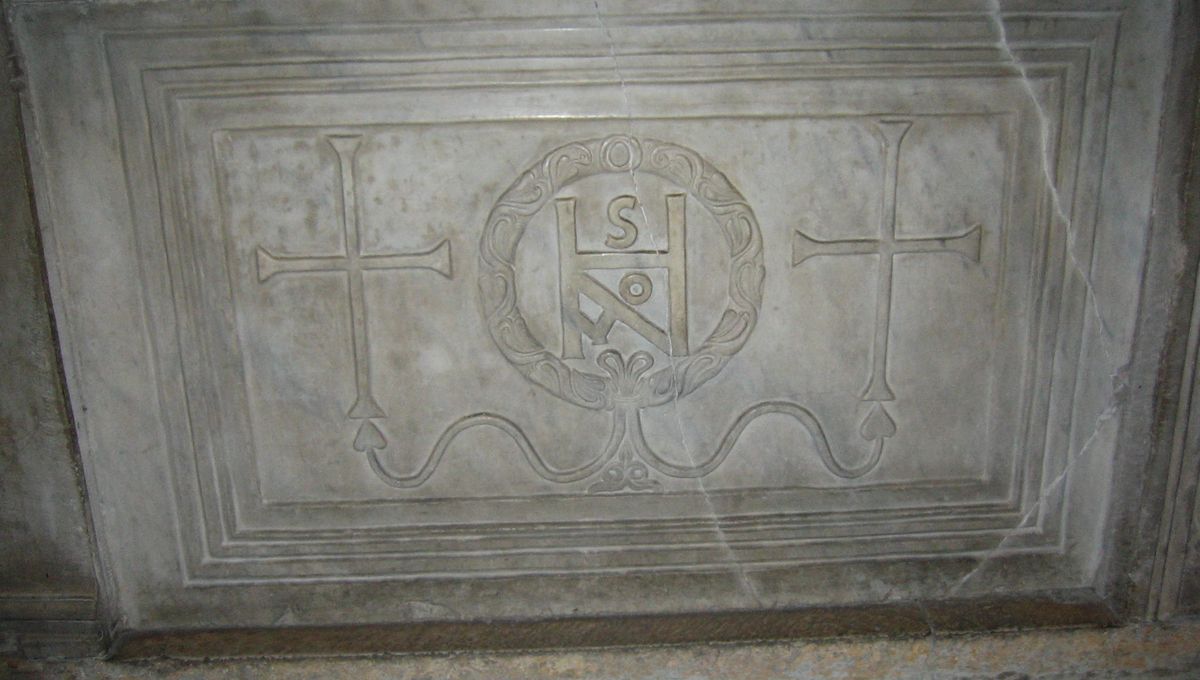
Monarchs have donned regnal names after having ascended to their thrones since ancient times. When it comes to Popes, this is a standard and important practice, and the name chosen has a lot of symbolism from honoring deceased popes to setting one’s own pontificate. But it has not always been like this. Getting elected to Peter’s throne did not demand a name change until Pope John II.
Pope John II was pope for just over two years, from January 2, 533, to May 8, 535. During his short papacy, there were some notable events. He forced one of the bishops of Gaul (modern day France, Belgium, and Luxembourg), Contumeliosus of Riez, to a monastery for committing adultery. He also excommunicated the Acoemetae – literally the sleepless ones – an order of monks that would celebrate the divine service constantly day and night, in turns, but without interruption.
The long-lasting impact of John II on the Church, though, comes from his decision to take a regnal name. The choice to change this name was because he was called Mercurius, after the innermost planet and the Roman messenger god. For this reason, he took the name Ioannes – John – and since there had been a John already 10 years before, he became John II.
Changing names did not catch on immediately
John III, born Catelinus, also changed his name 25 years after John II, but the practice was sporadic for a long time. Simply speaking, a lot of popes had proper names that had already been used by the church. For example, Pope Lando in 913 was the last pope to use a name that had not been used before until Pope Francis (excluding the composed names of John Paul I and II).
It’s only with John XIV (born Pietro Canepanova), the fourth pope to change his name, in 983, and then with Gregory V (born Bruno Von Kärnten) in 996 that the Papal name tradition takes hold.
The cosmic and pagan connection was too much for Pope John II, but the Vatican has had a long history of interest in astronomy. Another Gregory, Gregory XIII, is responsible for our current calendar, which was developed with astronomical data and led to the disappearance of 10 days in 1582.
The Holy See also established an astronomy research institution, the Specola Vaticana, the Vatican Observatory in English, which has played an important role over the century, such as astronomical observations in cataloguing stars: four nuns and dozens of Jesuits have asteroids named after them for this work.
Their work also continues in cutting-edge investigations. Brother Bob Macke, the curator of meteorites at the Vatican Observatory, has developed a specific instrument, called a pycnometer, to measure the volume and thus the density and porosity of the sample of Asteroid Bennu collected by OSIRIS-REx.

Source Link: The Surprising Cosmic Connection That Led To Popes Choosing Their Names
