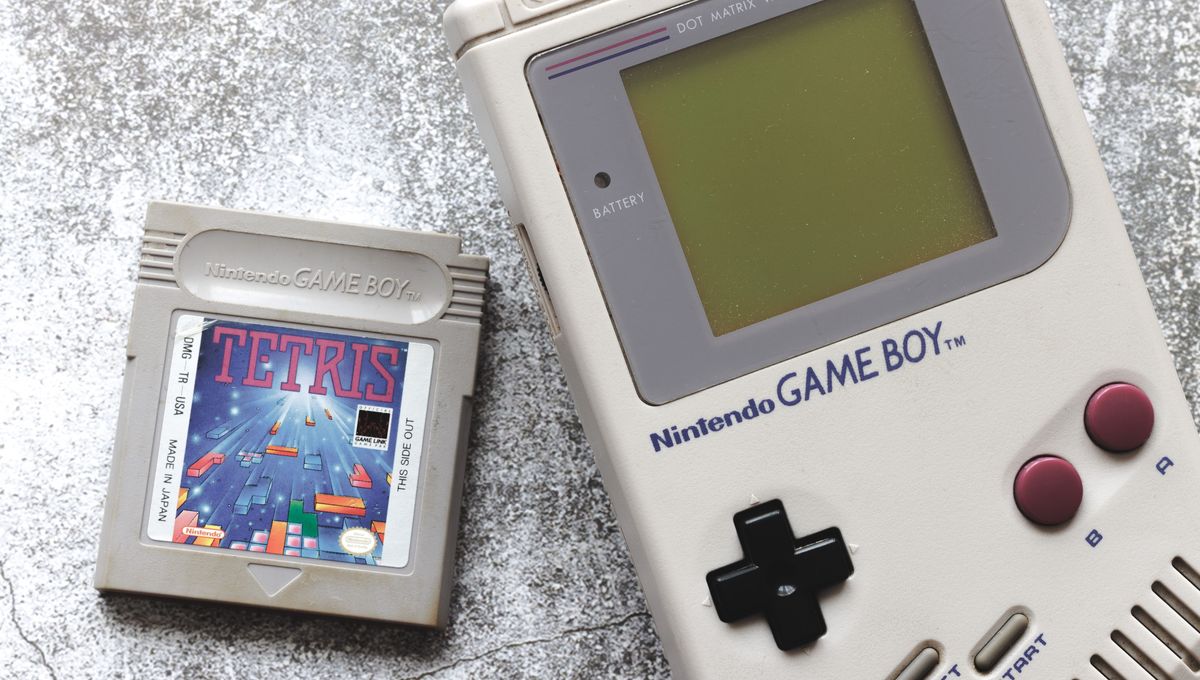
You can often hear people saying that a game, an album, a movie, or a TV series have altered their brain chemistry. Euphemistically that is something so good that radically alters how you actually think. Well, in some cases this might actually happen and the most famous example of this is probably Tetris. The capability of this game to affect our psychology has a scientific term, the Tetris Effect, and it has provided insights into how our brain works as well as a treatment for certain conditions.
ADVERTISEMENT
To the younger generation, Tetris might be an extremely simplistic game but in a world before smartphones and high-def portable consoles, it was revolutionary. But seeing is believe it, so feel free to give it a go here. But let us tell you what prolonged playing might do to your brain.
Repetitive Tasks & Adaptive Memories
In Tetris, you constantly arrange colorful shapes made of four blocks with the goal of making lines after lines disappear. There is an end to it, but consider that it has been beaten only a handful of times, and mostly in the last few years, you can easily play for many many hours without reaching an ending.
That’s how the effect takes hold in your brain. People have reported seeing the colorful blocks at the edge of their vision, when they close their eyes, or when they go to sleep. The impulse to organize blocks in rows also bleeds into the real world like in the wish of reorganizing shelving. This can happen in a lot of games. I remember always looking up in tunnels after playing Half-Life 2. This is known as the Game Transfer Phenomena.
The Tetris effect has shown that the traditional view of memory and perception as passive processes (like inputting and outputting data in a computer) is not the full picture. The Tetris Effect requires cognitive processes to be active – you are not just putting those in a little box in your brain to be retrieved at a later point. Your brain processes the information with active interpretations and adaptations.
If they weren’t active – your brain would not be constantly trying to imagine the world as Tetris (or another game). If you have seen someone trying to do a pinch zoom with two fingers over a magazine or a piece of paper, you know what I’m talking about.
Preventing Post-Traumatic Stress Symptoms
The effect has also been employed as a way to stop the onset of Post-Traumatic Stress Symptoms. Behavioral interventions such as Tetris can have preventative effects in reducing intrusive memories. While the study focused on the first week after traumatic incidents, the team found that the approach was effective in reducing intrusive memories.
ADVERTISEMENT
“Anyone can experience trauma,” author Professor Emily Holmes stated when the research came out. “It would make a huge difference to a great many people if we could create simple behavioural psychological interventions using computer games to prevent post-traumatic suffering and spare them these grueling intrusive memories. This is early days and more research is needed.”
Tetris is a fun addictive game. It can change your brain, and sometimes for the better.

Source Link: The Tetris Effect Is More Than A Gaming Quirk, It’s Changing How We See Memory
