• Email Us: [email protected]
  • Contact Us: +1 718 874 1545
  • Skip to main content
  • Skip to primary sidebar

Medical Market Report

  • Home
  • All Reports
  • About Us
  • Contact Us

The World’s Largest Monkey Roams The Forest In “Hordes” Of Over 800 Individuals

November 10, 2025 by Deborah Bloomfield

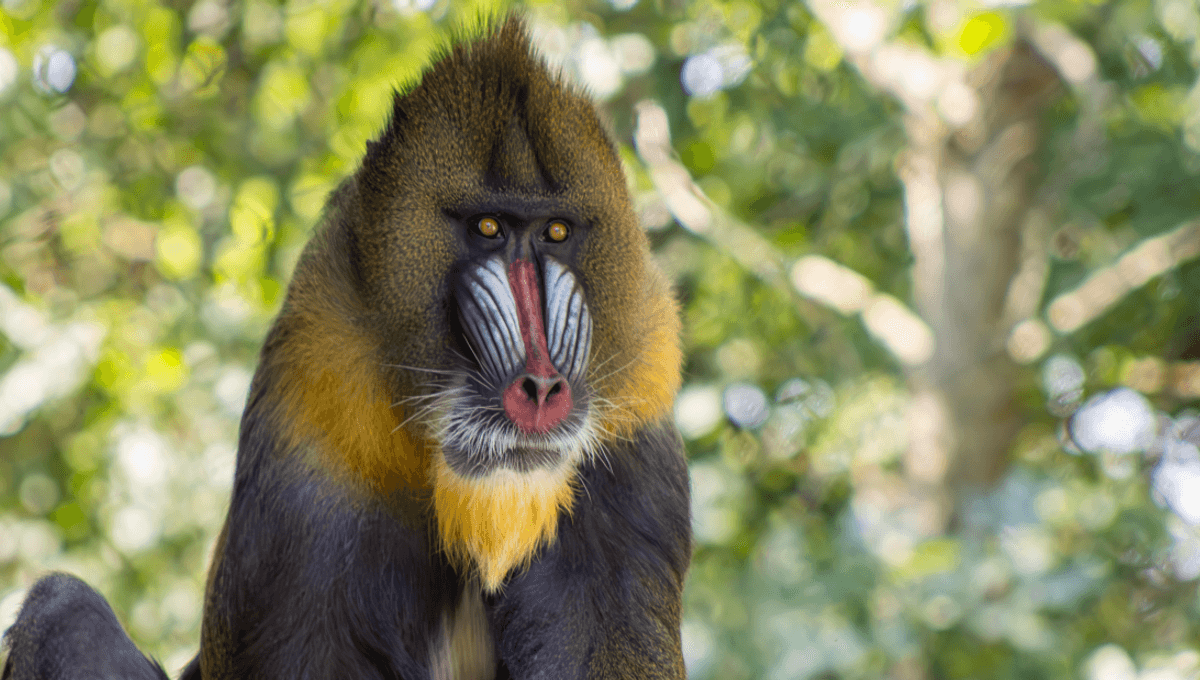
Wander into the wrong bit of forest in Gabon’s Lopé National Park and you could find yourself surrounded by a troop of over 800 primates. Here, mandrills are known to roam the forest in enormous groups called “hordes,” and suffice to say, it’s not a party you want to crash with your puny human teeth.

The rest of this article is behind a paywall. Please sign in or subscribe to access the full content.

Native to the rainforests of central Africa, mandrills (Mandrillus sphinx) are the largest monkeys in the world. They may be mistaken for apes due to their apparent lack of tail (the easiest way to tell a monkey from an ape is to see if it has a tail), but mandrills are Old World monkeys and do actually have stubby little tails. They also exhibit pretty extreme sexual dimorphism, meaning the males look very different from the females.

It’s not hard to spot the difference. The males’ faces are plastered in a rather dramatic display of blue, red, and yellow (if you’re a Lion King fan, then yes, this is indeed Rafiki’s species). Not only are they massive, but Africa Geographic reports they aggregate in the largest known groups of any non-human primate species.

Mandrill males also stand out from the females for their gaping mouths and enormous teeth. The biggest of their gnashers can be over 5 centimeters (2 inches) long (and when it comes to making baby mandrills, tooth size is everything). So, does that impressive dentistry mean they’re voracious carnivores? Not really.


Mandrills are omnivores who enjoy everything from fruit and fungi to insects and small reptiles. Sounds pretty chill, right? That is, until they get into a fight.

Mandrills will attack other animals and each other if they are threatened or competing for resources or mates. The males are dangerous on their own owing to their large size – the heaviest on record are over 50 kilograms (110 pounds) – but even female groups can hold their own despite their comparatively smaller size.

A 2006 paper detailed a Very Bad Day for one male mandrill that was incapacitated after a fight with another male. As if things weren’t bad enough, he was then set upon by a group of females. When another male tried to participate in the fray, he was chased away by the females, adding weight to the idea that female coalitions sometimes exclude unwanted males from large groups like the enormous “hordes” of mandrills you find out in Gabon.

Impressive work, mandrills, but you’ll excuse me if I take an alternative route home.

Deborah Bloomfield
Deborah Bloomfield

Related posts:

  1. Security high in Paris as 2015 jihadist attacks trial begins
  2. Enterprise software firm Informatica files for U.S. IPO
  3. Pompeii Victims Weren’t Who We Thought They Were, Changes To Ocean Circulation Are Causing The North Atlantic To Get Even Saltier, And Much More This Week
  4. How Many People Survived The Titanic?

Source Link: The World’s Largest Monkey Roams The Forest In “Hordes” Of Over 800 Individuals

Filed Under: News

Primary Sidebar

  • US Just Killed NASA’s Mars Sample Return Mission – So What Happens Now?
  • Art Sleuths May Have Recovered Traces Of Da Vinci’s DNA From One Of His Drawings
  • Countries With The Most Narcissists Identified By 45,000-Person Study, And The Results Might Surprise You
  • World’s Oldest Poison Arrows Were Used By Hunters 60,000 Years Ago
  • The Real Reason You Shouldn’t Eat (Most) Raw Cookie Dough
  • Antarctic Scientists Have Just Moved The South Pole – Literally
  • “What We Have Is A Very Good Candidate”: Has The Ancestor Of Homo Sapiens Finally Been Found In Africa?
  • Europe’s Missing Ceratopsian Dinosaurs Have Been Found And They’re Quite Diverse
  • Why Don’t Snorers Wake Themselves Up?
  • Endangered “Northern Native Cat” Captured On Camera For The First Time In 80 Years At Australian Sanctuary
  • Watch 25 Years Of A Supernova Expanding Into Space Squeezed Into This 40-Second NASA Video
  • “Diet Stacking” Trend Could Be Seriously Bad For Your Health
  • Meet The Psychedelic Earth Tiger, A Funky Addition To “10 Species To Watch” In 2026
  • The Weird Mystery Of The “Einstein Desert” In The Hunt For Rogue Planets
  • NASA Astronaut Charles Duke Left A Touching Photograph And Message On The Moon In 1972
  • How Multilingual Are You? This New Language Calculator Lets You Find Out In A Minute
  • Europa’s Seabed Might Be Too Quiet For Life: “The Energy Just Doesn’t Seem To Be There”
  • Amoebae: The Microscopic Health Threat Lurking In Our Water Supplies. Are We Taking Them Seriously?
  • The Last Dogs In Antarctica Were Kicked Out In April 1994 By An International Treaty
  • Interstellar Comet 3I/ATLAS Snapped By NASA’s Europa Mission: “We’re Still Scratching Our Heads About Some Of The Things We’re Seeing”
  • Business
  • Health
  • News
  • Science
  • Technology
  • +1 718 874 1545
  • +91 78878 22626
  • [email protected]
Office Address
Prudour Pvt. Ltd. 420 Lexington Avenue Suite 300 New York City, NY 10170.

Powered by Prudour Network

Copyrights © 2026 · Medical Market Report. All Rights Reserved.

Go to mobile version