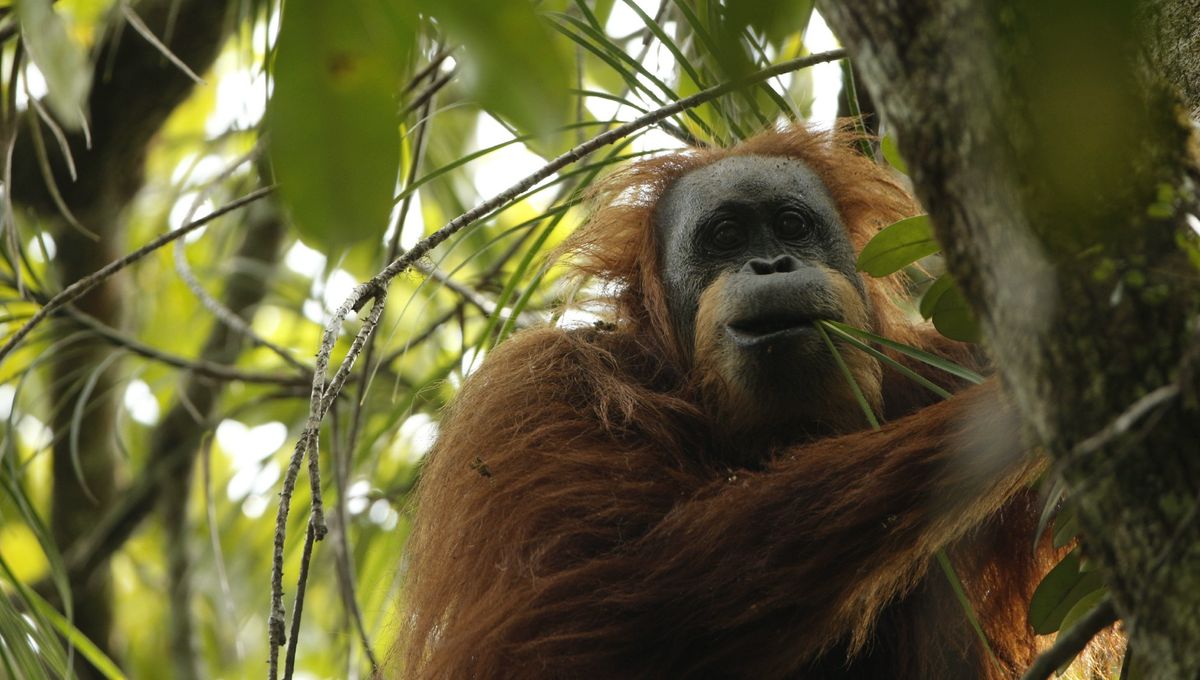
Back in 2017, scientists finally described what became the world’s newest great ape species: the Tapanuli orangutan (Pongo tapanuliensis). It should’ve been cause for celebration, but at the same time, the new species became the most endangered great ape of them all.
There are estimated to be fewer than 800 Tapanuli orangutans left in the wild, living in a small patch of forest in North Sumatra, Indonesia, known as the Batang Toru Ecosystem. It’s thought their range on the island was once much larger, but decreased by 60 percent between 1985 and 2007 (and it’s still declining).
As a result of this reduction – which involved the conversion of their forest habitat for agricultural and industrial uses – alongside illegal killing, Tapanuli orangutans are considered as “Critically Endangered” by the IUCN.
The hope with designating a new species is that it will bring attention to its plight and provide a boost to conservation efforts, including additional protection for the species and its habitat, measures that can help the population increase.
However, it’s not always as straightforward as that. “Since it [the species] was described, not much has changed. You would think new species of orangutan, new species of great ape, the world would pull up its sleeves and decide to save it,” Amanda Hurowitz, a senior director at nature advocacy group Mighty Earth, told Mongabay in 2023. “Unfortunately, the Tapanuli orangutan face many of the same threats they did in 2017.
Those threats include illegal deforestation, hunting, and the trade of young orangutans, but there are also two major construction projects that could drive the species over the edge: a hydroelectric dam and a gold mine, both of which encroach on the orangutans’ habitat.
All this isn’t to say there’s no hope for the species. Just last month, scientists from the Sumatran Orangutan Conservation Foundation–Orangutan Information Centre (YOSL-OIC) discovered Tapanuli orangutans living in a forested peat swamp 32 kilometers (20 miles) away from their known range in Batang Taru, the first confirmed record of the species in this area.
But to prevent Tapanuli orangutans from disappearing entirely will require a more concentrated effort than is currently taking place. The IUCN has estimated that without changing the approach to managing the species’ conservation, the population is likely to decline by 83 percent over the next three generations, which last about 25 years each.
“The problem at the moment for the Tapanuli orangutan is the lack of collaboration between all the actors there,” Serge Wich – a professor of primate biology at Liverpool John Moores University and part of the team that described the orangutans as a new species – told Inside Climate News in August 2025.
“There’s no action plan for this species based on the best possible knowledge out there, and that’s really unfortunate,” Wich continued. “We could, if everyone would sit together, try to make a solid plan that would hopefully safeguard the species. It’s not too late for that – it’s still possible.
“But the longer we do not do that, the more difficult the situation for the species will become.”

Source Link: The World’s Newest Great Ape Is Also Its Rarest, With Fewer Than 800 Left In The Wild
