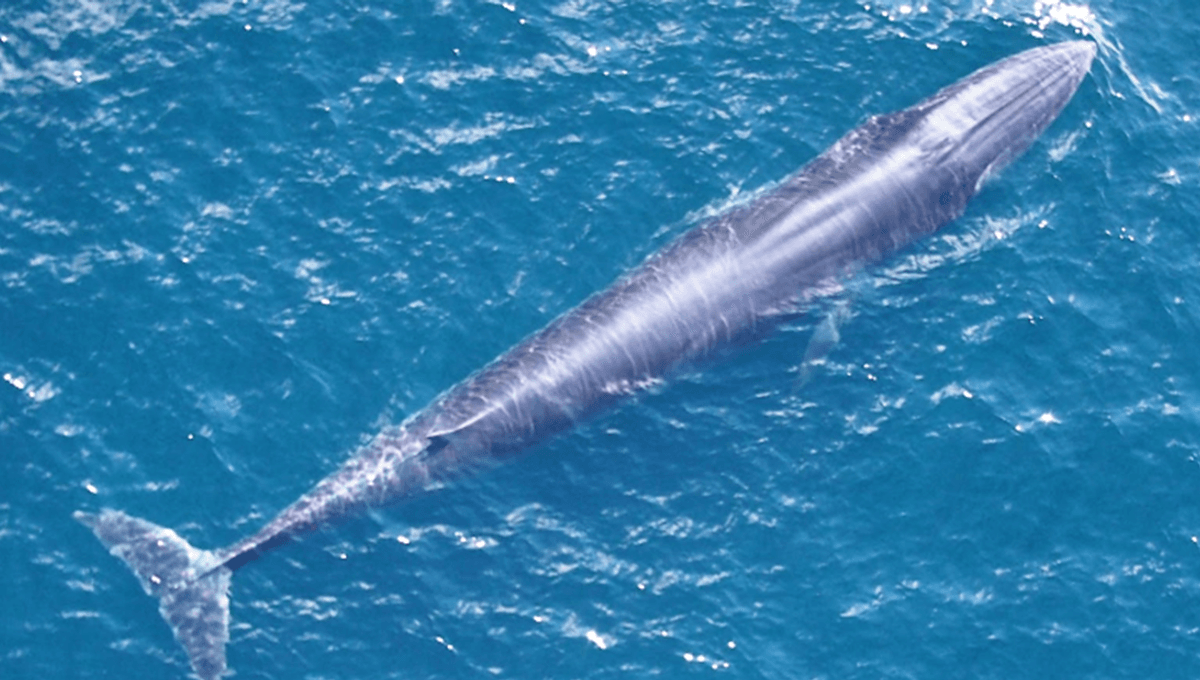
In January 2019, a beached whale in Florida started a chain reaction that led to the discovery of a brand new whale species. Originally thought to be a slightly funky population of Bryde’s whale, the newly minted Rice’s whale became Earth’s newest whale species. There’s only one problem: there are just 50 of these individuals remaining.
The rest of this article is behind a paywall. Please sign in or subscribe to access the full content.
The specimen was left to decompose at a sandbar and then the carcass was eventually taken to the Smithsonian National Museum of Natural History. There, measurements and photographs were taken of the skull, and comparisons were made to other species and specimens to determine where this creature belonged. Genetic material from skin samples was also tested confirming that this was not a Bryde’s whale or subspecies. In 2021, it was recognized as a whole new species: Rice’s whale (Balaenoptera ricei).
Rice’s whale is the only baleen whale species that lives year round in the northeastern Gulf of Mexico in the continental shelf break between 100 meters (328 feet) and 400 meters (1,312 feet) depth. Given their newness as a species and the lack of an extensive population, not much is known about their behavior.
One tagging study revealed that over three days a female engaged in deep diving behavior during the day and under 15-meter (49-foot) dives at night. It was suggested that she could have been feeding on deep-sea shoals of fish, in contrast to the Bryde’s whale that primarily feeds near the surface.
Rice’s whales are also known to produce vocalizations of a longer moaning sound when compared to any other Bryde’s whale call.
Historically, whaling would have targeted Bryde’s whales and in turn the Rice’s whales. Part of the issue with these whales is that from the sea or above they cannot be easily told apart. The Marine Mammal Commission writes, “Between 1911 and 1987, over 30,000 Bryde’s whales were killed worldwide by commercial whalers.”
Threats to this species in the modern day are numerous, including entanglement in fishing gear, ship strikes and oil spills. The 2010 Deepwater Horizon oil spill was thought to have killed a fifth of all Rice’s whales. Other marine debris is also a problem as whales can ingest large quantities.
Noise created by humans in and around the northern Gulf of Mexico is a concern for all larger whale species particularly the sounds from seismic gun surveys; its impact on Rice’s whales specifically is not well understood, but it s a known environmental stressor. Given their restricted range any climate-related changes to that area would also likely have a negative effect on this species.
“I’m not confident that in 50 years they’re going to be around,” said Jeremy Kiszka, a Florida International University marine biologist, speaking to The Washington Post. “Honestly, I wouldn’t bet my life on it.”

Source Link: The World's Newest Whale Species Is Critically Endangered With Only 50 Individuals Left
