• Email Us: [email protected]
  • Contact Us: +1 718 874 1545
  • Skip to main content
  • Skip to primary sidebar

Medical Market Report

  • Home
  • All Reports
  • About Us
  • Contact Us

There Used To Be 27 Letters In The English Alphabet, Until One Mysteriously Vanished

December 12, 2025 by Deborah Bloomfield

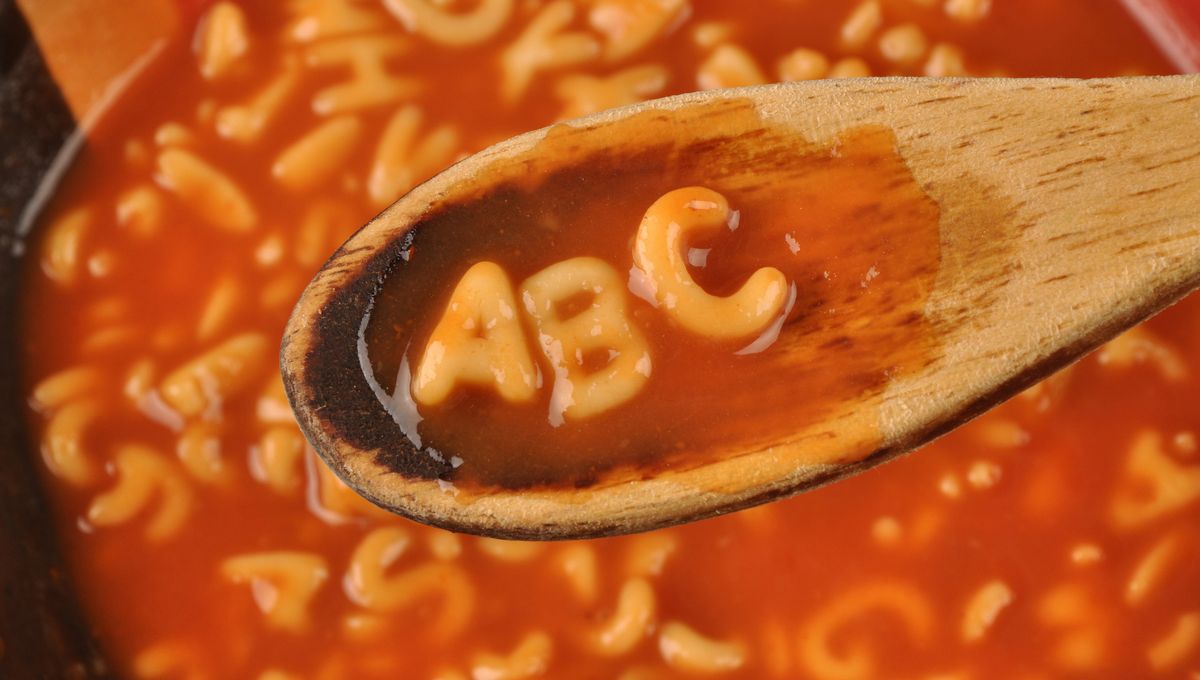
Long ago, but not that long ago, the English alphabet had 27 letters, rather than the current 26. In fact, it even had a starring role in the singsong nursery rhymes used to teach children their ABCs.

The rest of this article is behind a paywall. Please sign in or subscribe to access the full content.

That symbol is &, also known as the ampersand, meaning the word “and.” It’s still widely used today, although mostly as a stylistic choice to make word combinations look sleek or distinctive – like Ben & Jerry’s, Dungeons & Dragons, Simon & Garfunkel, and so on.

The story starts, as many things do, with the Romans and the Latin language. The Latin word for “and” is “et,” but these two letters would frequently become squished together when scribes were scrawling texts in a rush. The “e” and “t” eventually became joined into their own ligature that looked something like this: &.

Some of the oldest English alphabets ever documented feature the ampersand symbol, typically at the end of the alphabet after Z. A very early English alphabet described by the English monk Byrhtferth over 1,000 years ago contained 23 original Latin letters, plus several others, including &. 

A bunch of Old English letters have faded into obscurity over the centuries and no longer feature in modern English alphabets, but the ampersand stuck around until the 1800s. So instead of finishing with “…X, Y, Z,” 19th-century teachers and schoolchildren would continue with “&”.

However, they would pronounce it like “and, per se, and.” This is because “per se” means “by itself” in Latin. At the time, the phrase was added in instances when a letter could also represent a whole word, such as “A” or “I”. For example, people would say “A, which by itself is the word, A.” Likewise, “and per se and” basically meant: “and, which by itself is the word, and.” Over the years, this became mashed into the word we use for the symbol today, the ampersand. 

It’s unclear why or when exactly the ampersand was dropped from the English alphabet. However, one unconfirmed theory is that its demise is linked to the modern “ABC Song” taught to kids, set to the tune of Twinkle, Twinkle, Little Star. This version of the song, which leaves out the ampersand, was copyrighted in 1835 by an American music publisher. Is it a coincidence that this is also the era when & fell out of favor?

Deborah Bloomfield
Deborah Bloomfield

Related posts:

  1. Afghan envoys marooned abroad after Taliban’s sudden return
  2. Austria’s Kurz says stepping down as chancellor
  3. People Are Sharing The Most Random Facts They Know, And They’re Brilliant
  4. Large, Bright, And Gold: Get Ready For The Biggest Supermoon Of The Year

Source Link: There Used To Be 27 Letters In The English Alphabet, Until One Mysteriously Vanished

Filed Under: News

Primary Sidebar

  • There Used To Be 27 Letters In The English Alphabet, Until One Mysteriously Vanished
  • Why You Need To Stop Chucking That “Liquid Gold” Down Your Kitchen Sink
  • Youngest Mammoth Fossils Ever Found Turn Out To Be Whales… 400 Kilometers From The Coast
  • The First Wheelchair User To Travel To Space Is About To Make History
  • “It Was Bigger Than A Killer Whale”: 66 Million-Year-Old Tooth Suggests Mosasaurs Were Hunting In Rivers, Not Just Seas
  • Killer Whales And Dolphins Team Up In First-Ever Footage Of Cooperative Hunting
  • Why Does Chocolate In Advent Calendars Taste Different From Normal Chocolate?
  • Why Do Sheep And Goats Have Rectangular Pupils?
  • What Kind Of Parents Were Dinosaurs?
  • First Images Of A Tatooine-Like Planet That Orbits Its Two Stars Closer Than We’ve Seen Before
  • JWST Finds Earliest Supernova Yet, From When The Universe Was Just 730 Million Years Old
  • How A Comet On Christmas Day Changed What We Knew About Space
  • What Color Was Diplodocus? First-Ever Sauropod Fossils With Melanosomes Bring Us A Step Closer To Finding Out
  • Why Do NASA’s Voyager Spacecraft Sometimes Get Closer To Earth, As They Head Out Of The Solar System?
  • What Is The Fastest Animal In The World?
  • Would The Burglars Have Survived “Home Alone”? We Asked An Intensive Care Doctor
  • World’s First-Ever Dictionary Of Ancient Celtic Languages Set To Be Created
  • Fresh From Capturing Image Of 3I/ATLAS, NASA’s MAVEN Suffers “Anomaly” And Is No Longer Communicating With Earth
  • Thought “Superflu” Was Bad? Strap In: It’s Norovirus Season In The US
  • Why Does Evolution Turn Everything Into Crabs?
  • Business
  • Health
  • News
  • Science
  • Technology
  • +1 718 874 1545
  • +91 78878 22626
  • [email protected]
Office Address
Prudour Pvt. Ltd. 420 Lexington Avenue Suite 300 New York City, NY 10170.

Powered by Prudour Network

Copyrights © 2025 · Medical Market Report. All Rights Reserved.

Go to mobile version