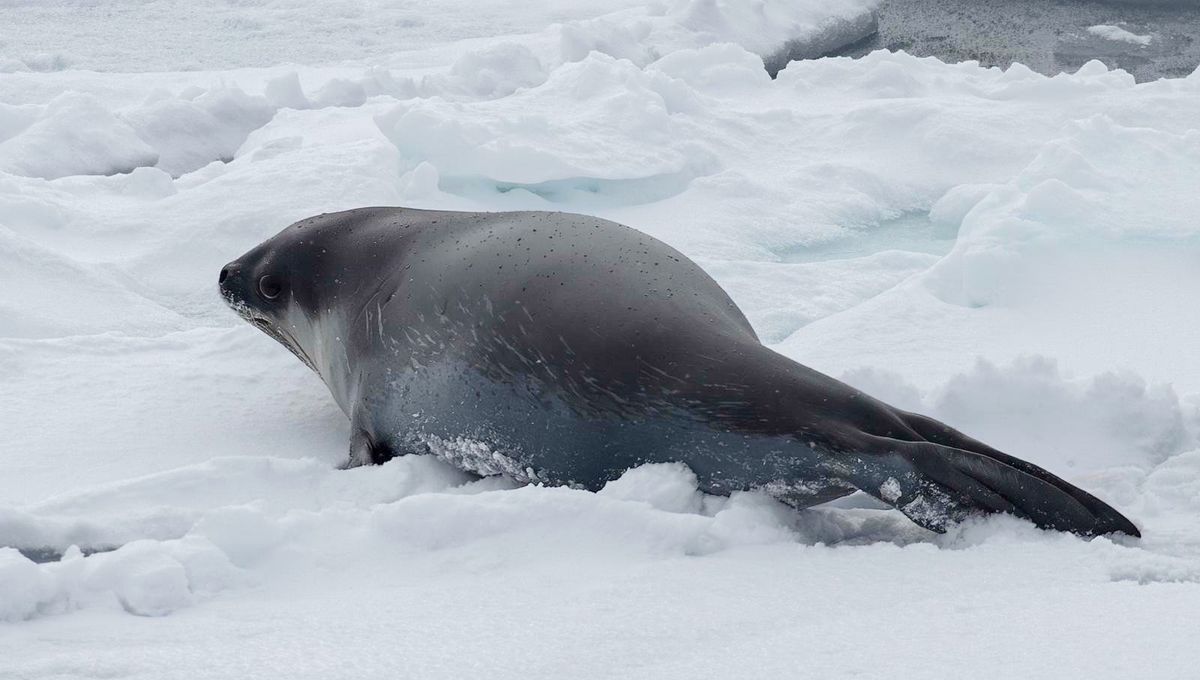
Meet the smallest member of the Antarctic true seals: the Ross seal (Ommatophoca rossii). This species is the rarest, least studied, and least frequently seen of the Antarctic seals, which also include Weddell’s seals and four other species. They are so elusive, in fact, that it’s thought no underwater photographs of this species existed – until now.
The rest of this article is behind a paywall. Please sign in or subscribe to access the full content.
Justin Hofman, an undersea specialist with National Geographic-Lindblad Expeditions, managed to capture the extraordinary photographs of the species on a recent voyage to Antarctica, describing it on Instagram as Christmas coming “a little early”.
“These are quite likely the first-ever underwater photographs of a Ross seal. This animal lives so deep within the Antarctic pack ice that its life history is not very well understood, and it is not seen very often,” he explained. “In 15 seasons of working in Antarctica, I have only seen two Ross seals, and this is the second one.”
Ross seals are so rare that they are thought to make up just 1 percent of seals living on the Antarctic sea ice, with the IUCN putting their population at around 40,000 mature individuals. While they might be seen only infrequently, they are pretty distinctive. Their faces are quite different-looking compared to other seals, small and wide with extremely large eyes that can measure 7 centimeters (2.76 inches) across. As for total body length, they can measure up to 2.3 meters long (7.6 feet), with females often slightly larger than the males.
In the Antarctic summer months, the seals haul out of the water and molt and breed on the dense pack ice. This is part of what makes them so hard to study, as the ice is usually too difficult to reach or requires icebreaker boats to access. However, we know that they have a lifespan of around 15-20 years and reach sexual maturity at 2-4 years old for the females and aged 3 for the males.
The species spends much of its time foraging in the open ocean, and can dive over 100 times a day, reaching depths of 100-300 meters (328-984 feet). While the elusive nature of these seals means we don’t know much about their diet, the limited research we have suggests they eat mainly squid, with krill and fish making up a smaller proportion.

Source Link: These Might Be The First Ever Underwater Photos Of A Ross Seal, And They’re Delightful
