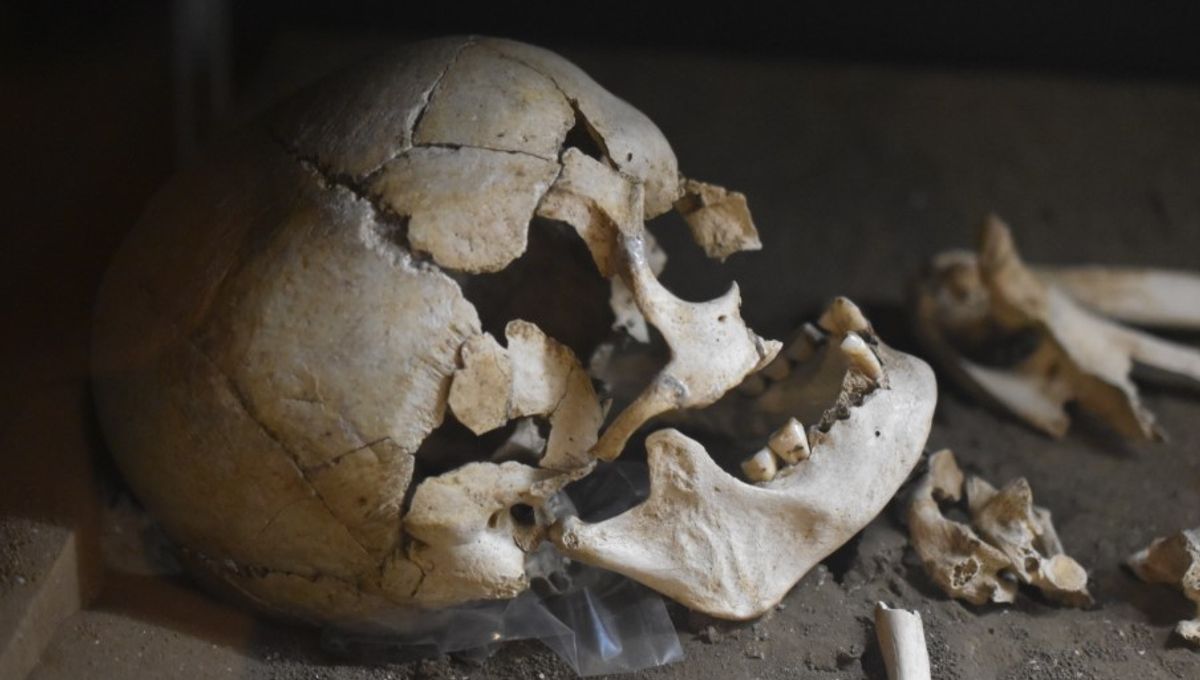
Pleistocene humans were more than happy to get into bed with Neanderthals and Denisovans, which is why most of us now carry DNA from these extinct species. However, there’s one group of prehistoric people in Japan that appears to have missed out on all the inter-hominin debauchery, giving rise to an ancient community with strangely low levels of Denisovan ancestry.
The rest of this article is behind a paywall. Please sign in or subscribe to access the full content.
Unlike Neanderthal DNA – which is uniformly spread across all modern non-African populations – Denisovan ancestry is somewhat patchy, with Oceanians and island Southeast Asians inheriting around four percent of their genomes from this ancient lineage, while other Eurasian and Native American communities have about 0.2 percent Denisovan DNA. This suggests that interbreeding between Homo sapiens and Denisovans may have occurred multiple times in different geographical regions, resulting in a complex distribution of introgressed genes.
To learn more about this process, the authors of a new study searched for Denisovan DNA in 115 genomes from early modern humans, which they then compared with 279 present-day individuals. Surprisingly, they discovered that a group of hunter-gatherers called the Jomon – who occupied Japan around 16,000 to 3,000 years ago – had less Denisovan ancestry than all other East Asians.
This finding is made all the more peculiar by a series of recent discoveries suggesting that Denisovans were widespread throughout eastern Asia. Nonetheless, while the Jomon do exhibit trace amounts of Denisovan DNA, their unusually low levels of admixture suggest that they may have descended from a population that did not mate with our extinct sister lineage.
Exactly how this group could have remained genetically isolated is unclear, although the researchers propose two possible scenarios. In the first, the Jomon descend from a group that simply never came into contact with the Denisovans, and later received very small amounts of Denisovan DNA by breeding with other modern humans that did carry some of these archaic genes.
The second, meanwhile, states that the ancestors of the Jomon were part of an initial wave of interbreeding that resulted in only a tiny amount of Denisovan DNA being introgressed into the modern human genome, but were excluded from a subsequent round of contact that produced higher levels of gene flow.
And while it’s impossible to say which of these explanations is closer to the truth, the study authors insist their “results support the existence of a deep modern human lineage in East Asia with limited, if any, Denisovan ancestry, suggesting that at least one early East Asian lineage was not in contact, or in limited contact, with Denisovans.”
This, in turn, contributes to the rapidly emerging picture of the spread of Denisovans across Eurasia, as it “suggests that Denisovans were sparsely distributed in the region [of Japan].”
The study is published in the journal Current Biology.

Source Link: This Is One Of The Only Groups Of People Outside Africa Who Had Virtually No Denisovan DNA
