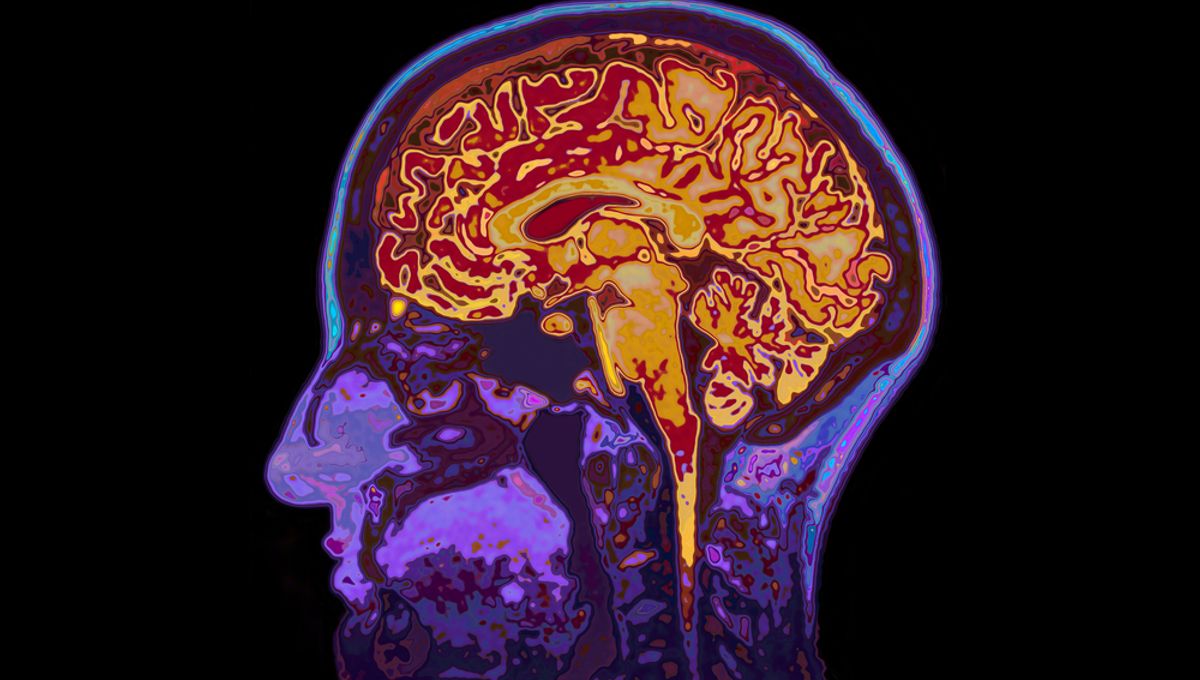
Much about aging feels like a gradual process – you don’t go to bed fresh-faced the day before your 60th birthday and then wake up looking saggier than a Shar Pei. But, when it comes to the brain, a recent study suggests that there’s a point where it begins to age much more rapidly, before leveling off again. So when is it?
ADVERTISEMENT
According to the authors of the study, it starts at around the age of 44, with brain aging – characterized by the degradation of the complex neural networks that make up our brains – increasingly ramping up until someone gets to roughly 67 years old. After that point, the brain still ages, but it plateaus by the time someone gets to their 90th birthday.
They reached this conclusion by studying the functional magnetic resonance imaging (fMRI) data of over 19,000 people. This type of MRI visualizes brain activity, helping researchers to pinpoint which parts of the brain appear to be in decline and, when taken multiple times, when they are declining.
The team also analyzed what was happening in the brain on a molecular level during this rapid aging. They were looking out for what are known as biomarkers – measurable indicators of a process going on in the body – as well as which genes were being expressed.
This led them to conclude that neuronal insulin resistance was the main factor driving the accelerated brain aging.
“We’ve identified a critical midlife window where the brain begins to experience declining access to energy but before irreversible damage occurs, essentially the ‘bend’ before the ‘break’,” explained lead author Lilianne R. Mujica-Parod in a statement.
But identifying this driving factor also gave Mujica-Parod and colleagues a target; their analysis had pinpointed a protein that could be protective against this rapid aging, and it works to transport ketones in the brain. The brain normally uses glucose as fuel, but in a pinch, it can use ketones – which are produced by the breakdown of fats – and it does so without insulin.
ADVERTISEMENT
“During midlife, neurons are metabolically stressed due to insufficient fuel; they’re struggling, but they’re still viable,” said Mujica-Parod. “Therefore, providing an alternative fuel during this critical window can help restore function.
The team even tried this out in a clinical study involving 101 participants of varying ages, giving them either ketones or glucose and taking fMRI scans. In those aged between 60 to 79, ketones made little difference to the brain’s network destabilization, though some benefits, albeit moderate, were seen in those aged 20 to 39.
However, the biggest benefits were seen in that midlife, “critical window” group – the people aged 40 to 49.
While the results are promising, it’s important to note that this was only a small study. Further research with bigger groups of people will be needed to see if this could make a viable intervention to delay or prevent brain aging, and diseases characterized by decline.
ADVERTISEMENT
Still, first author Botond Antal called the results “a paradigm shift in how we think about brain aging prevention.”
“Rather than waiting for cognitive symptoms, which may not appear until substantial damage has occurred, we can potentially identify people at risk through neurometabolic markers and intervene during this critical window.”
The study is published in PNAS.

Source Link: This Is The Age When Your Brain Starts Aging Faster – And It Starts A “Critical Window”
