• Email Us: [email protected]
  • Contact Us: +1 718 874 1545
  • Skip to main content
  • Skip to primary sidebar

Medical Market Report

  • Home
  • All Reports
  • About Us
  • Contact Us

This Is Why Papercuts Hurt So Goddamn Much

November 7, 2024 by Deborah Bloomfield

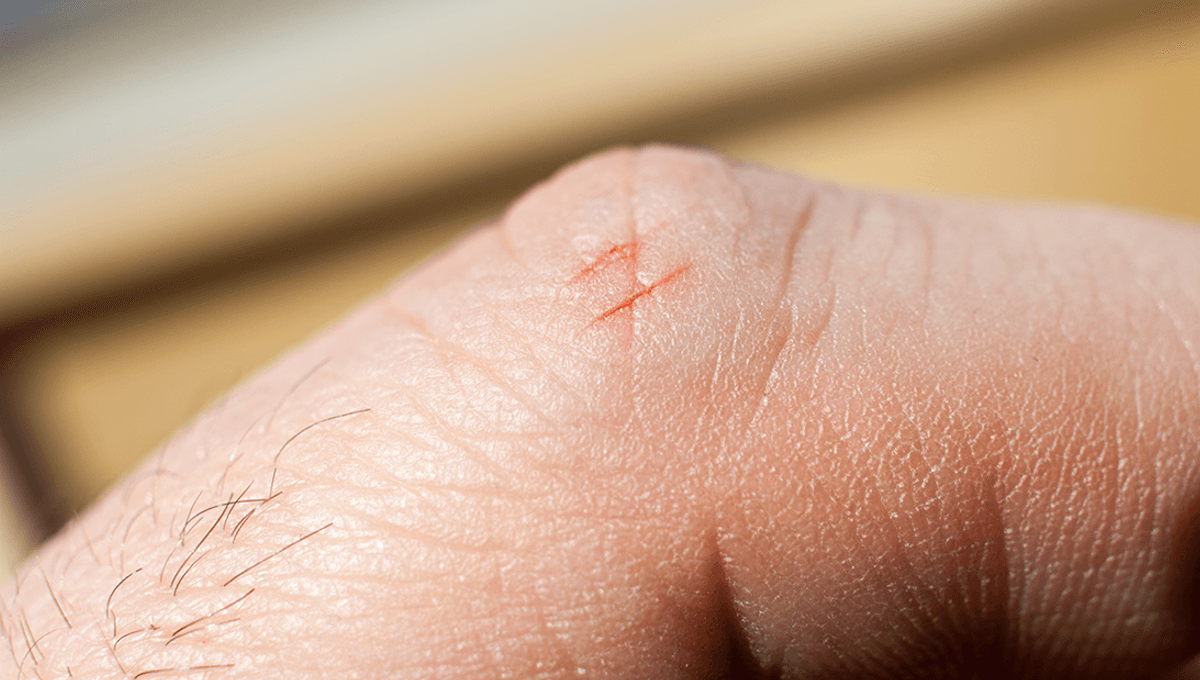
All cuts hurt, but one type of cut seems to stand out the most as being disproportionately painful to the injury you have received. We are talking of course of the humble yet ridiculously ouchy paper cut. 

So why do they hurt so much? Is it the shape? The shallowness of the cut? The feelings of betrayal and embarrassment that come from being injured by paper? 

Advertisement

One reason why they hurt so goddamn much is that they tend to occur on parts of the body that are very sensitive, such as fingers or, for any remaining aristocrats out there still sending letters, the tongue.

“The nerve networks of these body parts can discriminate with exceptional clarity and specificity, sensations of pressure, heat, cold and injury. Our brains even have specialized areas to receive signals coming from these parts in high definition,” Gabriel Neal, Clinical Associate Professor of Family Medicine, Texas A&M University, explains in an article for The Conversation. “The exquisite sensing abilities that makes our fingers, lips and tongue so good at what they normally do, also makes injuries all the more painful.”


Other sensitive parts of the body, your face or genitals for instance, would also feel heightened pain, which is one of several reasons why you don’t use your genitals to open Amazon packages.

Advertisement

Another reason is due to the shape of the paper itself. Though to the unaided eye, the edge of a piece of paper may look like a nice neat straight edge, looking a little closer it is more like a saw blade than a chef’s knife, resulting in more of a chaotic rip than a clean slice.

“The depth of the wound is perfect for exposing and exciting the nerve fibers of the skin without damaging them the way a deeper, more destructive injury can severely damage the nerve fibers impairing their ability to communicate pain,” Neal adds. “With a paper cut, the nerve fibers are lit, and they are fully operational.”

Occurring in some of our favorite and most-used areas also means that you are more likely to reopen the wounds throughout the day, as you perform other tasks with your hands and mouth. As well as this, the shallow cuts mean that a scab doesn’t develop, leaving the wound exposed, and you with an incredibly irritating and painful wound from a flimsy bit of paper.

All “explainer” articles are confirmed by fact checkers to be correct at time of publishing. Text, images, and links may be edited, removed, or added to at a later date to keep information current. 

Advertisement

The content of this article is not intended to be a substitute for professional medical advice, diagnosis, or treatment. Always seek the advice of qualified health providers with questions you may have regarding medical conditions.   

Deborah Bloomfield
Deborah Bloomfield

Related posts:

  1. Cricket-Manchester test likely to be postponed after India COVID-19 case
  2. EU to attend U.S. trade meeting put in doubt by French anger
  3. Soccer-West Ham win again, Leicester and Napoli falter
  4. Was Jesus A Hallucinogenic Mushroom? One Scholar Certainly Thought So

Source Link: This Is Why Papercuts Hurt So Goddamn Much

Filed Under: News

Primary Sidebar

  • US Just Killed NASA’s Mars Sample Return Mission – So What Happens Now?
  • Art Sleuths May Have Recovered Traces Of Da Vinci’s DNA From One Of His Drawings
  • Countries With The Most Narcissists Identified By 45,000-Person Study, And The Results Might Surprise You
  • World’s Oldest Poison Arrows Were Used By Hunters 60,000 Years Ago
  • The Real Reason You Shouldn’t Eat (Most) Raw Cookie Dough
  • Antarctic Scientists Have Just Moved The South Pole – Literally
  • “What We Have Is A Very Good Candidate”: Has The Ancestor Of Homo Sapiens Finally Been Found In Africa?
  • Europe’s Missing Ceratopsian Dinosaurs Have Been Found And They’re Quite Diverse
  • Why Don’t Snorers Wake Themselves Up?
  • Endangered “Northern Native Cat” Captured On Camera For The First Time In 80 Years At Australian Sanctuary
  • Watch 25 Years Of A Supernova Expanding Into Space Squeezed Into This 40-Second NASA Video
  • “Diet Stacking” Trend Could Be Seriously Bad For Your Health
  • Meet The Psychedelic Earth Tiger, A Funky Addition To “10 Species To Watch” In 2026
  • The Weird Mystery Of The “Einstein Desert” In The Hunt For Rogue Planets
  • NASA Astronaut Charles Duke Left A Touching Photograph And Message On The Moon In 1972
  • How Multilingual Are You? This New Language Calculator Lets You Find Out In A Minute
  • Europa’s Seabed Might Be Too Quiet For Life: “The Energy Just Doesn’t Seem To Be There”
  • Amoebae: The Microscopic Health Threat Lurking In Our Water Supplies. Are We Taking Them Seriously?
  • The Last Dogs In Antarctica Were Kicked Out In April 1994 By An International Treaty
  • Interstellar Comet 3I/ATLAS Snapped By NASA’s Europa Mission: “We’re Still Scratching Our Heads About Some Of The Things We’re Seeing”
  • Business
  • Health
  • News
  • Science
  • Technology
  • +1 718 874 1545
  • +91 78878 22626
  • [email protected]
Office Address
Prudour Pvt. Ltd. 420 Lexington Avenue Suite 300 New York City, NY 10170.

Powered by Prudour Network

Copyrights © 2026 · Medical Market Report. All Rights Reserved.

Go to mobile version