• Email Us: [email protected]
  • Contact Us: +1 718 874 1545
  • Skip to main content
  • Skip to primary sidebar

Medical Market Report

  • Home
  • All Reports
  • About Us
  • Contact Us

Thought Arctic Foxes Only Came In White? Think Again – They Come In Beautiful Blue Too

December 16, 2025 by Deborah Bloomfield

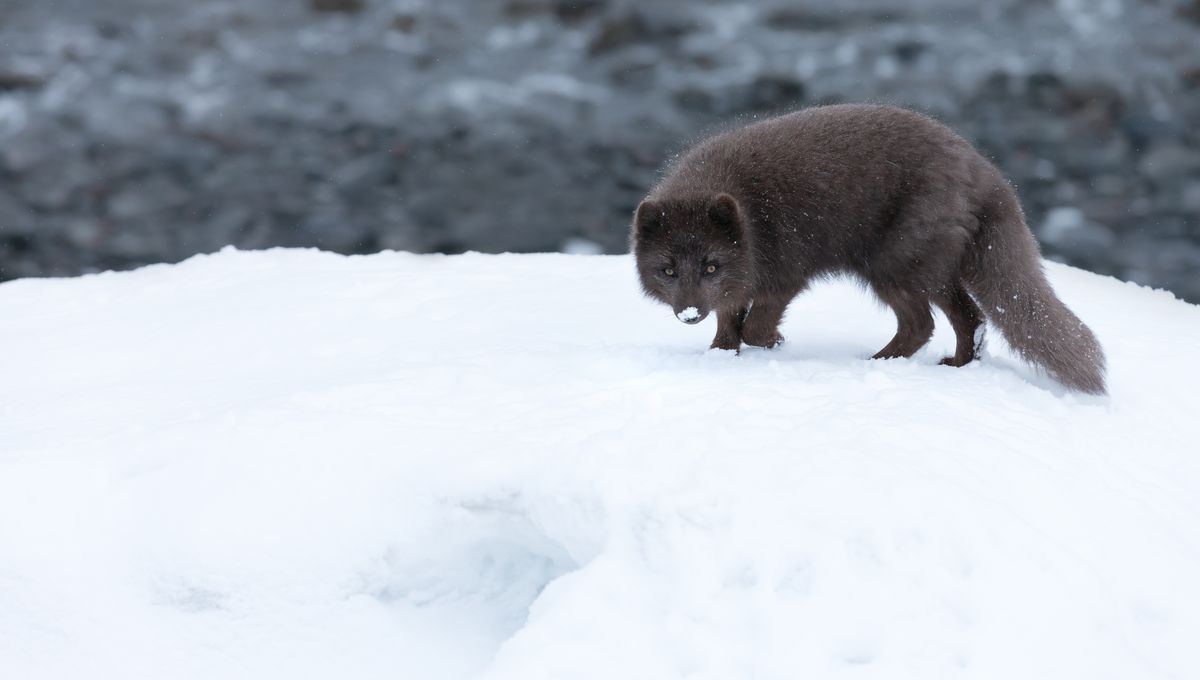
Arctic animals are some of the most hardy on Earth, with special adaptations that help them survive freezing temperatures, vast sea ice, and long periods with nothing to eat. Among these adaptations, the Arctic fox possesses beautiful white fur, helping to blend in with the snowy background. But did you know that some of these foxes come in blue, too?

The rest of this article is behind a paywall. Please sign in or subscribe to access the full content.

There is just one species of Arctic fox (Vulpes lagopus), but eight subspecies exist, largely based in Arctic tundra regions and islands surrounding the North Pole. These charismatic creatures prey almost exclusively on lemmings as their main food source, and their populations are tied together in a predator-prey relationship cycle. 

While the most famous images of these creatures might be of their snowy white coats, Arctic foxes actually change color between seasons, going from snow white in winter to dark grey in summer. But that is not the only possibility; Arctic foxes can also come in a “blue” color morph. Unfortunately, this does not mean their fur is actually blue, but they instead keep a cool-toned brown or slate grey coat year-round.


The blue morph is more typically found on islands and near the coast and makes up about 1-5 percent of the Arctic fox population in these areas, as opposed to around 1 percent in regions further inland. There is a good chance to see one in less snowy places places like the coasts of Iceland, Greenland, and the Aleutian Islands, with the blue morph found in especially high numbers here, their dark coats well-suited to the more rocky coastal environment.

A study from 2017 examined whether the blue morphs were affected by their unusual coat color by studying Arctic foxes in Norway for an 11-year period. Surprisingly, it found that they actually had a higher probability of breeding and higher adult survival than the white foxes. The authors suggest this could be because there were relatively low levels of predators at the sites in Norway, so camouflage was less important. 

They also found that blue morph juveniles had higher survival under cold conditions but a lower survival under higher temperatures when compared to white fox juveniles.  These results lead the authors to suggest that other factors, either behavioral or physiological, could have more of an impact on the species’ survival than coat color alone.

Deborah Bloomfield
Deborah Bloomfield

Related posts:

  1. The Disrupt Desk will help you catch everything you missed at Disrupt 2021
  2. Tesla hopes to build 5-10,000 vehicles a week at Berlin plant – Musk
  3. Electrical Stimulation To Brain Could Stop Fear Response In People With Phobias
  4. Carnivorous “Death-Ball” Sponge Among 30 New Deep-Sea Weirdos Discovered In The Southern Ocean

Source Link: Thought Arctic Foxes Only Came In White? Think Again – They Come In Beautiful Blue Too

Filed Under: News

Primary Sidebar

  • “Unidentified Human Relative”: Little Foot, One Of Most Complete Early Hominin Fossils, May Be New Species
  • Thought Arctic Foxes Only Came In White? Think Again – They Come In Beautiful Blue Too
  • COVID Shots In Pregnancy Are Safe And Effective, Cutting Risk Of Hospitalization By 60 Percent
  • Ramanujan’s Unexpected Formulas Are Still Unraveling The Mysteries Of The Universe
  • First-Ever Footage of A Squid Disguising Itself On Seafloor 4,100 Meters Below Surface
  • Your Daily Coffee Might Be Keeping You Young – Especially If You Have Poor Mental Health
  • Why Do Cats And Dogs Eat Grass?
  • What Did Carl Sagan Actually Mean When He Said “We Are All Made Of Star Stuff”?
  • Lonesome George: The Giant Tortoise Who Was The Very Last Of His Kind
  • Bermuda Sits On A Strange, 20-Kilometer-Thick Structure That’s Like No Other In The World
  • Time Moves Faster Up A Mountain – And That’s Why Earth’s Core Is 2.5 Years Younger Than Its Surface
  • Bio-Hybrid Robots Made Of Dead Lobsters Are The Latest Breakthrough In “Necrobotics”
  • Why Do Some Italians Live To 100? Turns Out, Centenarians Have More Hunter-Gatherer DNA
  • New Full-Color Images Of Interstellar Comet 3I/ATLAS, As We Are Days Away From Closest Encounter
  • Hilarious Video Shows Two Young Andean Bears Playing Seesaw With A Tree Branch
  • The Pinky Toe Has A Purpose And Most People Are Just Finding Out
  • What Is This Massive Heat-Emitting Mass Discovered Beneath The Moon’s Surface?
  • The Man Who Fell From Space: These Are The Last Words Of Cosmonaut Vladimir Komarov
  • How Long Can A Bird Can Fly Without Landing?
  • Earliest Evidence Of Making Fire Has Been Discovered, X-Rays Of 3I/ATLAS Reveal Signature Unseen In Other Interstellar Objects, And Much More This Week
  • Business
  • Health
  • News
  • Science
  • Technology
  • +1 718 874 1545
  • +91 78878 22626
  • [email protected]
Office Address
Prudour Pvt. Ltd. 420 Lexington Avenue Suite 300 New York City, NY 10170.

Powered by Prudour Network

Copyrights © 2025 · Medical Market Report. All Rights Reserved.

Go to mobile version