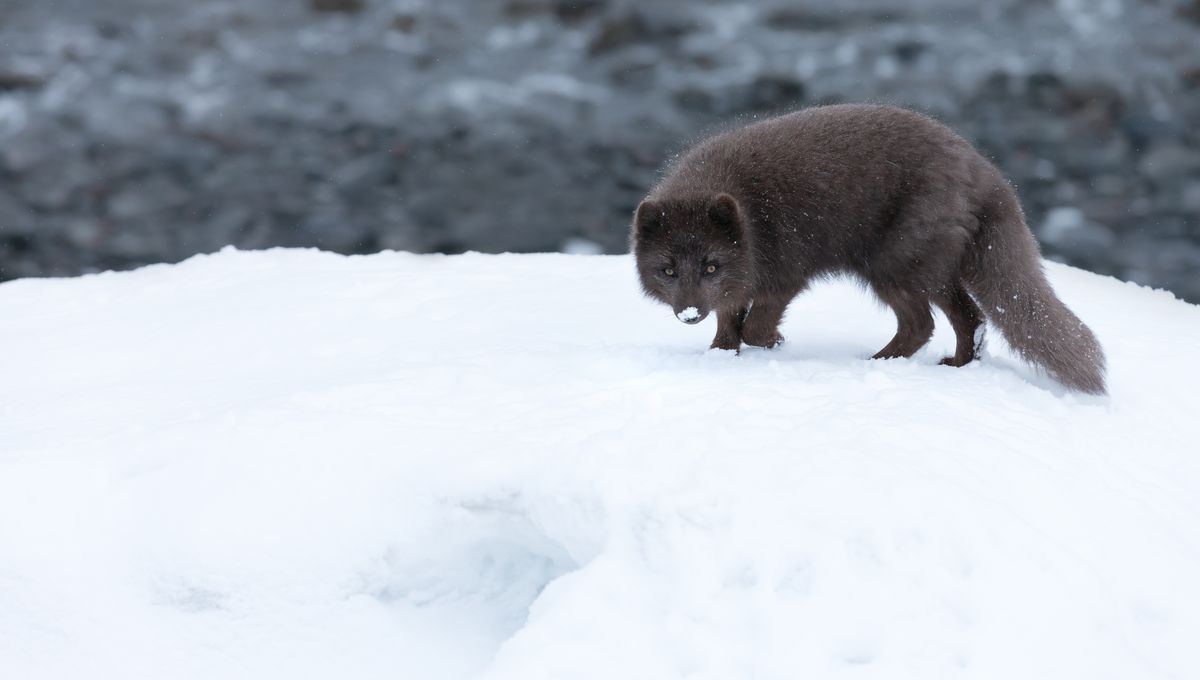
Arctic animals are some of the most hardy on Earth, with special adaptations that help them survive freezing temperatures, vast sea ice, and long periods with nothing to eat. Among these adaptations, the Arctic fox possesses beautiful white fur, helping to blend in with the snowy background. But did you know that some of these foxes come in blue, too?
The rest of this article is behind a paywall. Please sign in or subscribe to access the full content.
There is just one species of Arctic fox (Vulpes lagopus), but eight subspecies exist, largely based in Arctic tundra regions and islands surrounding the North Pole. These charismatic creatures prey almost exclusively on lemmings as their main food source, and their populations are tied together in a predator-prey relationship cycle.
While the most famous images of these creatures might be of their snowy white coats, Arctic foxes actually change color between seasons, going from snow white in winter to dark grey in summer. But that is not the only possibility; Arctic foxes can also come in a “blue” color morph. Unfortunately, this does not mean their fur is actually blue, but they instead keep a cool-toned brown or slate grey coat year-round.
The blue morph is more typically found on islands and near the coast and makes up about 1-5 percent of the Arctic fox population in these areas, as opposed to around 1 percent in regions further inland. There is a good chance to see one in less snowy places places like the coasts of Iceland, Greenland, and the Aleutian Islands, with the blue morph found in especially high numbers here, their dark coats well-suited to the more rocky coastal environment.
A study from 2017 examined whether the blue morphs were affected by their unusual coat color by studying Arctic foxes in Norway for an 11-year period. Surprisingly, it found that they actually had a higher probability of breeding and higher adult survival than the white foxes. The authors suggest this could be because there were relatively low levels of predators at the sites in Norway, so camouflage was less important.
They also found that blue morph juveniles had higher survival under cold conditions but a lower survival under higher temperatures when compared to white fox juveniles. These results lead the authors to suggest that other factors, either behavioral or physiological, could have more of an impact on the species’ survival than coat color alone.

Source Link: Thought Arctic Foxes Only Came In White? Think Again – They Come In Beautiful Blue Too
