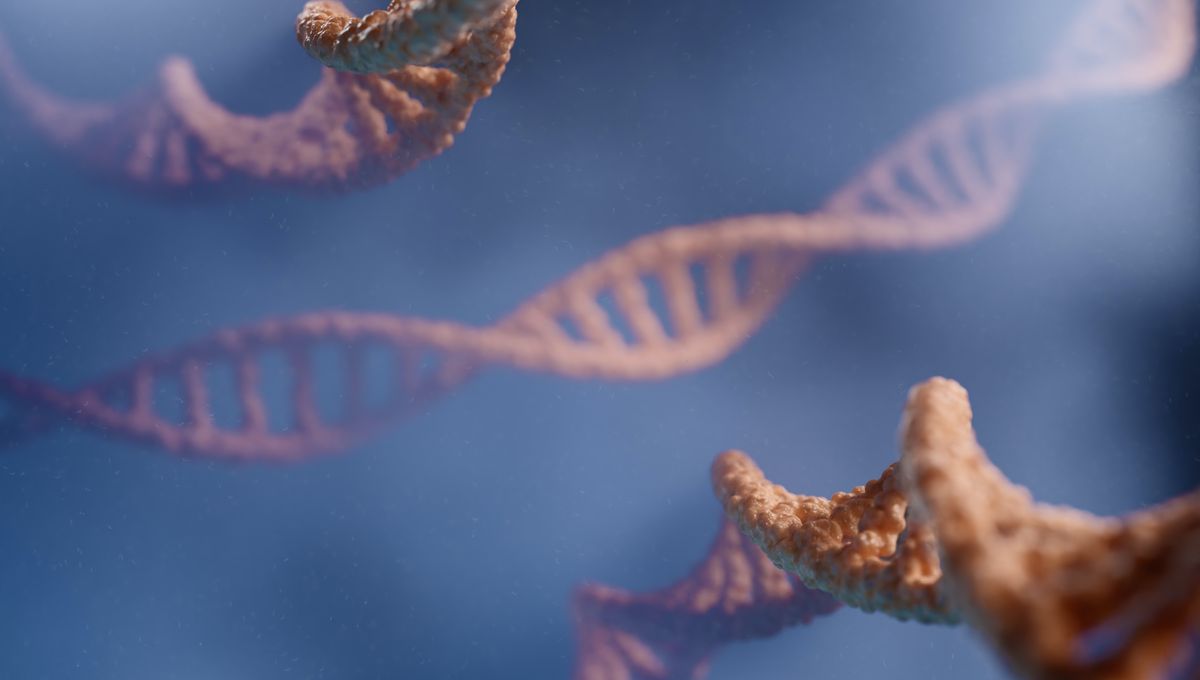
Thousands of DNA cutters, akin to the bacterial enzymes used in the gene-editing system CRISPR, have been discovered in a diverse host of species, including snails, algae, and amoeba. The finding proves that the proteins, called Fanzors, are widespread in eukaryotes – the group of organisms that comprises fungi, plants, and animals – and have potential for applications in medicine and biotechnology.
Fanzors are RNA-guided enzymes that, like CRISPR enzymes, can be programmed to cut DNA at specific sites. Their discovery earlier this year made them the first such enzymes to be found in eukaryotes and sparked hope that a novel technology for human genome editing could be on the horizon.
Now, by adding over 3,600 more enzymes into the Fanzor repertoire, the new research provides scientists with an exhaustive set of DNA cutters that could be developed into tools for research or medicine.
“People have been searching for interesting tools in prokaryotic systems for a long time, and I think that that has been incredibly fruitful,” McGovern Fellow Jonathan Gootenberg, who co-lead the research, said in a statement. “Eukaryotic systems are really just a whole new kind of playground to work in.”
It is the researchers’ hope that Fanzor enzymes, which naturally evolved in eukaryotic organisms and their viruses, will be better suited to the task of DNA cutting in other eukaryotes, and that, therefore, a safer and more efficient genome editing system could be developed in humans.
The team has already demonstrated that some Fanzors are capable of targeting DNA sequences in human cells, even without optimization. “The fact that they work quite efficiently in mammalian cells was really fantastic to see,” Gootenberg added.
There may be other benefits to a Fanzor system too: “The Fanzor systems are more compact than CRISPR proteins and therefore have the potential to be more easily delivered to cells and tissues,” Professor Feng Zhang, who first reported the RNA-guided DNA-cutting ability of Fanzors, but was not involved in the new study, told IFLScience when the discovery was announced.
Zhang also suggested that there may be less risk of off-target effects, at least when using the fungal Fanzor protein that his team studied in detail.
Building on Zhang’s work, Gootenberg and co-authors expanded the known diversity of Fanzors by an order of magnitude and were able to identify five families among the more than 3,600 new enzymes. They were also able to shed some light on their evolutionary history.
It is likely that Fanzors evolved from bacterial enzymes called TnpBs, their similarity to which is what first drew scientists’ attention to them. The team believe that TnpBs may have entered eukaryotic cells and triggered Fanzor evolution more than once, after which the enzymes evolved features suited to their new environment.
They also discovered that Fanzors have a distinct active site from their bacterial predecessors, allowing them to cut DNA more precisely.
The team hope that with additional engineering, Fanzors could one day represent a new frontier of RNA-guided biology and pave the way for novel gene editing tools. “It’s a new platform, and they have many capabilities,” said Gootenberg.
“Opening up the whole eukaryotic world to these types of RNA-guided systems is going to give us a lot to work on,” co-lead author and McGovern Fellow Omar Abudayyeh added.
Not content with the thousands they’ve already discovered, the team is keen to keep searching for more such enzymes:
“The broad distribution of Fanzor nucleases among diverse eukaryotic lineages and associated viruses suggests that many more currently unknown RNA-guided systems could exist in eukaryotes, serving as a rich resource for future characterization and development of new biotechnologies,” they write in their conclusion.
As they say, the more the merrier.
The study is published in Science Advances.

Source Link: Thousands Of Genetic “Scissors” That Could Rival CRISPR Discovered In Eukaryotes
