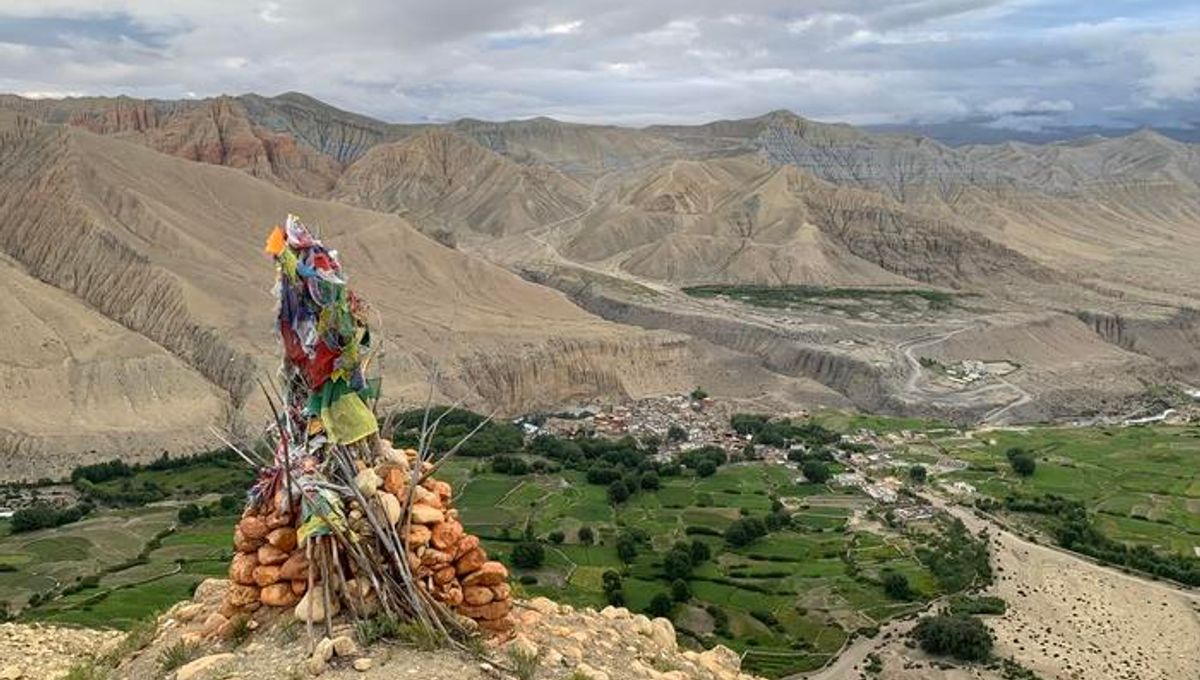
Evolution is a constant process, and humans are still changing as we adapt to the various environments we inhabit. Some of the best places to see this is in the harshest places, as demonstrated by a new study linking increased oxygen delivery and number of live births in native ethnic Tibetan women living at high altitudes.
Areas of extreme altitude are particularly difficult for humans, as the lower atmospheric pressure means there is less oxygen inhaled with each breath. Anyone who has tried mountain climbing to high altitudes may be aware of this situation as altitude sickness kicks in. However, for over 10,000 years, native Tibetan people living on the high Tibetan Plateau have not only survived in such conditions, they have thrived.
Pregnancy at higher altitudes, anywhere higher than 2,500 meters (8,202 feet) above sea level, leads to a greater risk of complications, such as preeclampsia or lor low having babies with lower birthweight, explain the study’s authors. This raises the chances of maternal or infant death. At the same time, most people trying to survive at high altitudes will experience hypoxia, a condition where the body doesn’t receive enough oxygen for its tissues. Both these issues are less of a problem for native Tibetan people, and now researchers have found specific physiological traits in Tibetan women that could enhance their ability to reproduce in such oxygen-poor environments.
The results of the study highlight the resilience of Tibetan women while also showing how humans can adapt to extreme environments. The study also offers insights into human development, and how we may respond to environmental challenges in the future.
“Understanding how populations like these adapt,” Beall said, “gives us a better grasp of the processes of human evolution”, Cynthia Beall, Distinguished University Professor Emerita at Case Western Reserve University explained in a statement.
Beall and colleagues examined 417 Tibetan women aged 46 to 86 who lived between 3,658 meters (12,000 feet) to 4,267 meters (14,000 feet) above sea level in Upper Mustang, Nepal. This is an area on the southern edge of the Tibetan Plateau.
Working in collaboration with ethnic Tibetan female nurses and research assistants from Nepal, the US-based team gathered information about the women’s physiology, their reproductive history, and various social factors, and also took DNA samples. The aim was to explore how oxygen delivery traits impact the number of live births among these women.
The results showed that the women who had the most children had unique blood and heart traits for delivering oxygen. Although these women had levels of hemoglobin – the protein in red blood cells that carries oxygen – that were near the sample’s average, their oxygen saturation was higher. This meant their blood was more efficient at delivering oxygen to their cells without making the blood more viscous – which would put more strain on the heart to pump.
“This is a case of ongoing natural selection,” Beall added. “Tibetan women have evolved in a way that balances the body’s oxygen needs without overworking the heart.”
Genetic analysis revealed that this trait likely came from the Denisovans who lived in Siberia around 50,000 years ago. The trait is a variation of the EPAS1 gene, which is unique to these people and regulates hemoglobin concentrations.
The researchers also found that these women had other traits that improved blood flow to their lungs and also gave them wider heart ventricles.
The results show how humans have adapted to live within low-oxygen regions, the outcome of natural selection in action, where those women with these traits have passed them on to successive generations who can now thrive in an environment that would be extremely physiologically stressful for others.
The paper is published in the journal PNAS.

Source Link: Tibetan Women Living At High Altitudes Adapt To Low Oxygen, Demonstrating Human Evolution In Real Time
