• Email Us: [email protected]
  • Contact Us: +1 718 874 1545
  • Skip to main content
  • Skip to primary sidebar

Medical Market Report

  • Home
  • All Reports
  • About Us
  • Contact Us

Tiniest Dino Eggs, Hungry Black Holes, And Why People Believe In Ghosts

October 25, 2024 by Deborah Bloomfield

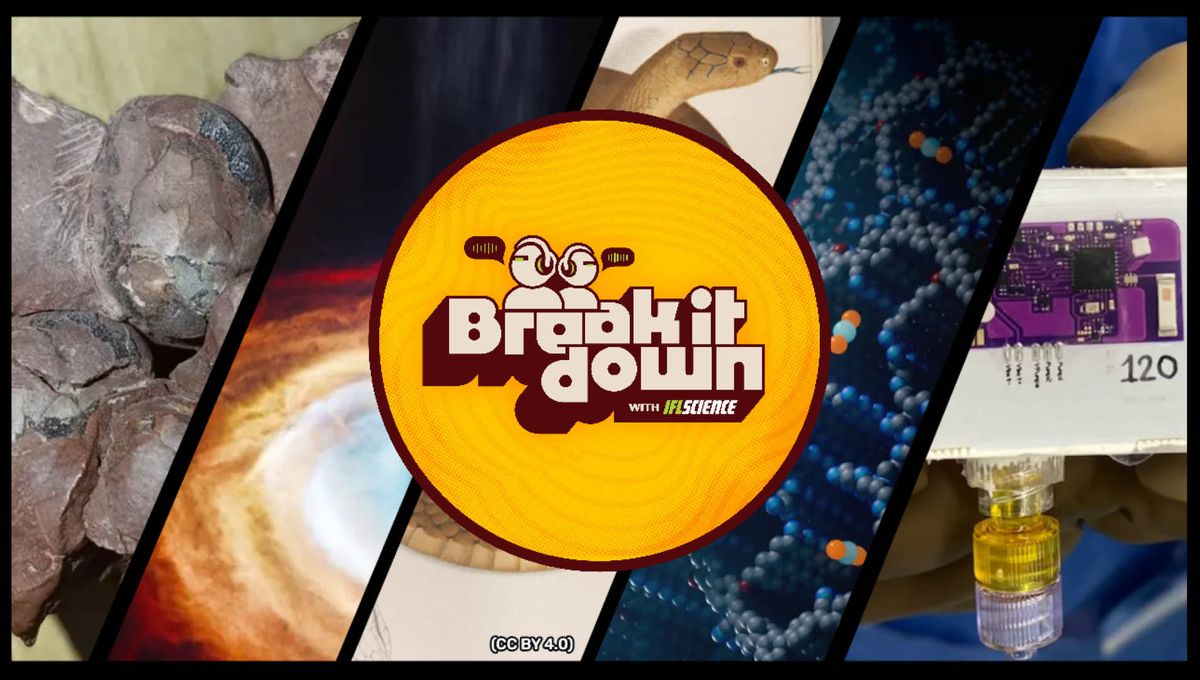
This week on Break It Down: the discovery of the smallest-ever dinosaur eggs reveals teeny tiny bones, the first black hole triple is changing our understanding of giant star death, the longest venomous snake is now four separate species, a rare bit of positive carbon capture news, how a new overdose implant can save lives, and why do people believe in ghosts? We asked an expert.

So, sit back, relax, and let’s Break It Down…

Advertisement

Links

Smallest known dinosaur eggs

Black hole triple

How many times could the Earth fit in the Sun?

King cobra x 4

Advertisement

Positive carbon capture news

Overdose implant

Why do people believe in ghosts?

Can Fear Be Fun? in CURIOUS October issue

Advertisement

Prof. Chris French interview

Spooky Season trailer

We Have Questions: What’s It Like Working In A Human Tissue Bank

The Big Questions: Are Octopuses Sentient?

Advertisement

Ricky The Bear

Deborah Bloomfield
Deborah Bloomfield

Related posts:

  1. Cricket-Manchester test likely to be postponed after India COVID-19 case
  2. EU to attend U.S. trade meeting put in doubt by French anger
  3. Soccer-West Ham win again, Leicester and Napoli falter
  4. Was Jesus A Hallucinogenic Mushroom? One Scholar Certainly Thought So

Source Link: Tiniest Dino Eggs, Hungry Black Holes, And Why People Believe In Ghosts

Filed Under: News

Primary Sidebar

  • The UK’s Tallest Bird Faced Extinction In The 16th Century. Now, It’s Making A Comeback
  • Groundbreaking Discovery Of Two MS Subtypes Could Lead To New Targeted Treatments
  • “We Were So Lucky To Be Able To See This”: 140-Year Mystery Of How The World’s Largest Sea Spider Makes Babies Solved
  • China To Start New Hypergravity Centrifuge To Compress Space-Time – How Does It Work?
  • These Might Be The First Ever Underwater Photos Of A Ross Seal, And They’re Delightful
  • Mysterious 7-Million-Year-Old Ape May Be Earliest Hominin To Walk On Two Feet
  • This Spider-Like Creature Was Walking Around With A Tail 100 Million Years Ago
  • How Do GLP-1 Agonists Like Ozempic and Wegovy Work?
  • Evolution In Action: These Rare Bears Have Adapted To Be Friendlier And Less Aggressive
  • Nearly 100 Years After Debating Bohr On Quantum Mechanics, New Experiment Proves Einstein Wrong – Again
  • 9,500-Year-Old Headless Skeleton Is New World’s Oldest Known Cremated Adult
  • World’s Longest Jellyfish Can Reach A Whopping 36 Meters, Even Bigger Than A Blue Whale
  • In 1994, December 31 Was Wiped From Existence In Kiribati
  • A Giant Volcano Off The Coast Of Oregon Failed To Erupt On Time. Its New Schedule: 2026
  • Here Are 5 Ways In Which Cancer Treatment Advanced In 2025
  • The First Marine Mammal Driven To Extinction By Humans Disappeared Only 27 Years After Being Discovered
  • The Planet’s Oldest Bee Species Has Become The World’s First Insect To Be Granted Legal Rights
  • Facial Disfiguration: Why Has The Face Been The Target Of Punishment Across Time?
  • The World’s Largest Living Reptile Can “Surf” Over 10 Kilometers To Get Between Islands
  • In 1962, A Geologist Went Into A Cave. 2 Months Later, He’d Accidentally Invented A New Field Of Biology.
  • Business
  • Health
  • News
  • Science
  • Technology
  • +1 718 874 1545
  • +91 78878 22626
  • [email protected]
Office Address
Prudour Pvt. Ltd. 420 Lexington Avenue Suite 300 New York City, NY 10170.

Powered by Prudour Network

Copyrights © 2026 · Medical Market Report. All Rights Reserved.

Go to mobile version