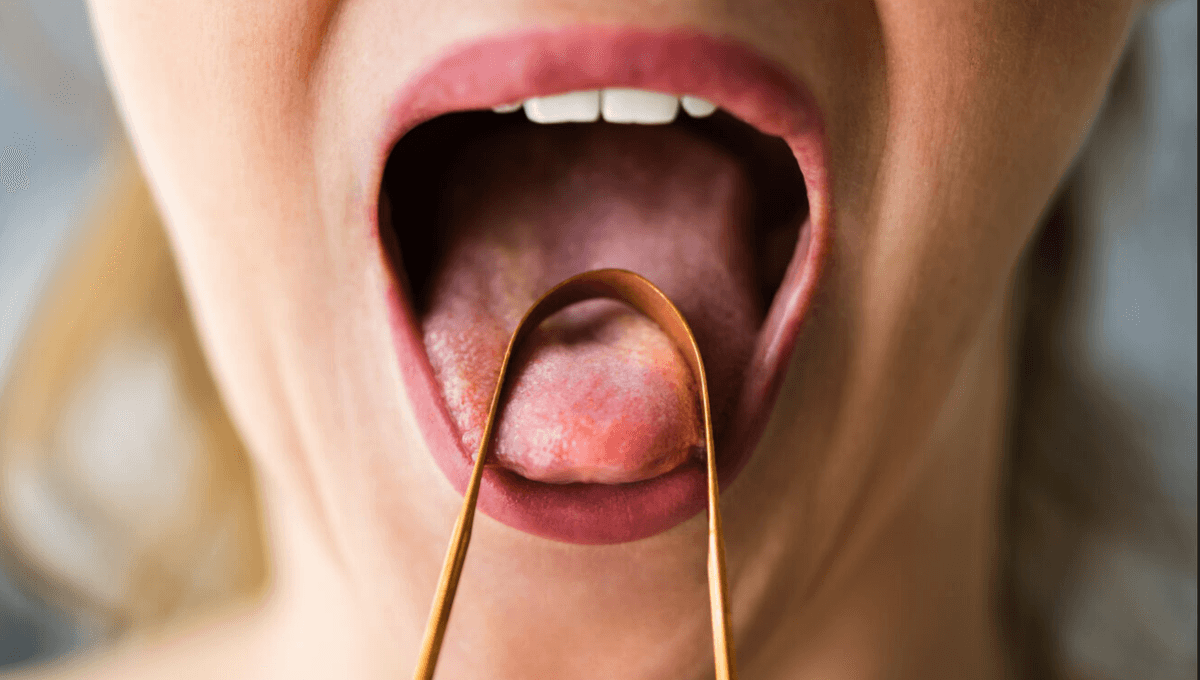
Tongue scraping involves using a tool to remove bacteria, dead cells, and food debris from the surface of the tongue. Some studies have suggested this daily ritual may hold some benefits, from reducing levels of nasty bacteria to eliminating bad breath, although other research has indicated that some of its purported benefits may be overstated.
The human tongue is covered in lingual papillae, small mounds that grip food while your teeth are chewing and provide a home for your taste buds. However, these structures can also trap bacteria that can cause bad breath and disease.
Don’t be mistaken: bacteria in the mouth are fundamental to our health. The oral cavity harbors over 700 species of bacteria, making it the second largest and most diverse microbiome in the human body after the gut.
These microorganisms feed on the carbohydrates in the food you eat and help to manage the health of your mouth – and much more. For instance, a huge amount of evidence has shown that oral bacteria are closely linked with heart health.
However, the overgrowth of certain bacteria species can lead to some negative consequences, ranging from gum disease to halitosis, aka bad breath.
As such, many experts argue that tongue scraping, as well as regular tooth brushing, is a good way to manage this vital bacterial ecosystem. Not only does it strip excess bacteria, but it also helps to remove food debris that the microorganisms feed on.
Tongue scraper benefits
Proponents of tongue scraping argue it holds some benefits:
- Reducing bad breath
- Improving the appearance of the tongue
- Fostering a healthy oral microbiome
- Improved oral health
- Enhanced sense of taste
Some of these purported benefits have been investigated by scientific studies – with mixed results.
A 2010 study by the University of Amsterdam indicated that regular tongue scraping could improve breath odor and reduce the coating on the tongue.
However, other studies have not reached the same conclusion. A 2019 study struggled to find any solid evidence that tongue scraping helped to reduce bad breath.
Also in 2019, a study found that tongue scraping was the most effective way to reduce levels of Streptococcus mutans, a bacteria found in the human oral cavity that’s linked with tooth decay.
Another study, published in 2017, looked into whether tongue cleaning could benefit people with periodontitis, a serious form of gum disease associated with an overgrowth of bacteria. They concluded that tongue scraping made no difference in the amount of bacteria or odor in their mouths.
How to use a tongue scraper
Tongue scraping can be easily incorporated into your usual oral hygiene regime.
After brushing your teeth, simply run a specialized tongue-scraping utensil across your tongue, starting from the back of your tongue to the front. Do this two or three times, rinsing the tongue scraper after each stroke.
While scraping, apply a light amount of pressure – sufficient to gently remove the slimy film of gunk on the surface, but not enough to damage the tongue.
Best tongue scraper
Tongue scrapers can be bought online or at your local pharmacy for an affordable price. You can buy disposable plastic ones, which can be used daily for several months, or metal ones, which can be easily cleaned and used indefinitely.
While they can be pricier, most experts recommend you use metal tongue scrapers over plastic ones, simply because they are most effective at removing debris and bacteria from the tongue. It also means there’s one less piece of plastic pollution that will float around the ocean for centuries.
All “explainer” articles are confirmed by fact checkers to be correct at time of publishing. Text, images, and links may be edited, removed, or added to at a later date to keep information current.
The content of this article is not intended to be a substitute for professional medical advice, diagnosis, or treatment. Always seek the advice of qualified health providers with questions you may have regarding medical conditions.

Source Link: Tongue Scraper: What Are The Benefits And How Does It Work?
