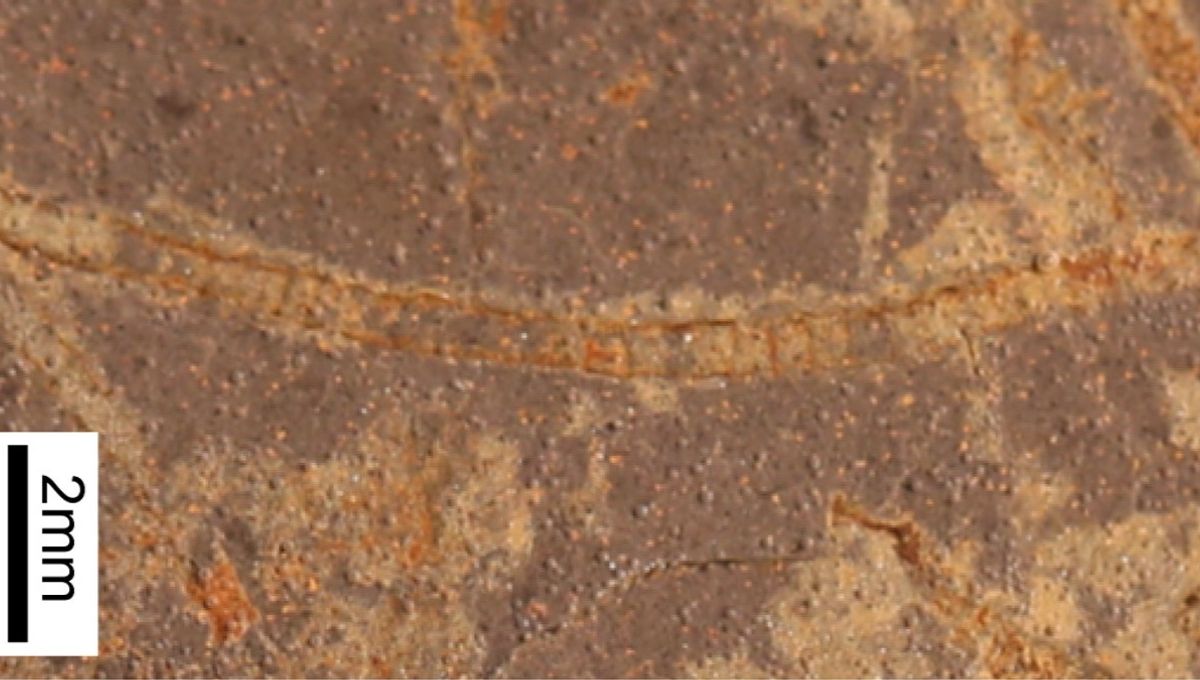
Researchers might have found some of the oldest evidence of an oxygen-producing lifeform in rocks, from samples that are at least 2.5 billion years old, as well as biological signatures in 3.3 billion-year-old material, among the oldest known. This fresh chemical evidence found in these rocks was discovered thanks to machine learning algorithms that have uncovered what scientists are calling chemical “whispers” in the rock.
The rest of this article is behind a paywall. Please sign in or subscribe to access the full content.
The original biological molecules have long since degraded, but their effect on the surrounding fossilized rocks can be found, even after the rocks have been changed by the several eons between their formation and their discovery.
“Ancient rocks are full of interesting puzzles that tell us the story of life on Earth, but a few of the pieces are always missing,” co-author Katie Maloney, an assistant professor at Michigan State University, said in a statement. “Pairing chemical analysis and machine learning has revealed biological clues about ancient life that were previously invisible.”
The team trained a machine learning algorithm to recognize the fossilized chemical signature against modern animal and plant signatures, as well as organic molecules from meteorites. These help the algorithm to work out the presence of these whispers as well as figure out if they were created by life or not, with 90 percent accuracy.
Using this method, researchers were able to push the ability to find molecular traces in much older rocks. The state of the art before this work had a limit of 1.7 billion years. This doubles the range of study, and it could be very important not just for life on Earth, but to work out if ancient Mars could host life.
“Ancient life leaves more than fossils; it leaves chemical echoes,” said Dr Robert Hazen, senior staff scientist at the Carnegie Institution for Science and a co-lead author. “Using machine learning, we can now reliably interpret these echoes for the first time.”
“This innovative technique helps us to read the deep time fossil record in a new way,” added Maloney. “This could help guide the search for life on other planets.”
Geological evidence has shown that from about 2.4 billion years ago, the Earth began to experience an increase in the oxygen levels in the atmosphere. The cause of the Great Oxygenation Event, as it is often called, is to be found in photosynthetic organisms. There has been some evidence for such lifeforms before the GOE, but it is far from certain. This work might lead to new insights into what organisms might have started the GOE.
The study is published in the Proceedings of the National Academy of Sciences.

Source Link: Traces Of Photosynthetic Lifeforms 1 Billion Years Older Than Previous Record-Holder Discovered
