• Email Us: [email protected]
  • Contact Us: +1 718 874 1545
  • Skip to main content
  • Skip to primary sidebar

Medical Market Report

  • Home
  • All Reports
  • About Us
  • Contact Us

Trichonephila Clavipes: The Spider That Spins “Golden” Silk

July 26, 2025 by Deborah Bloomfield

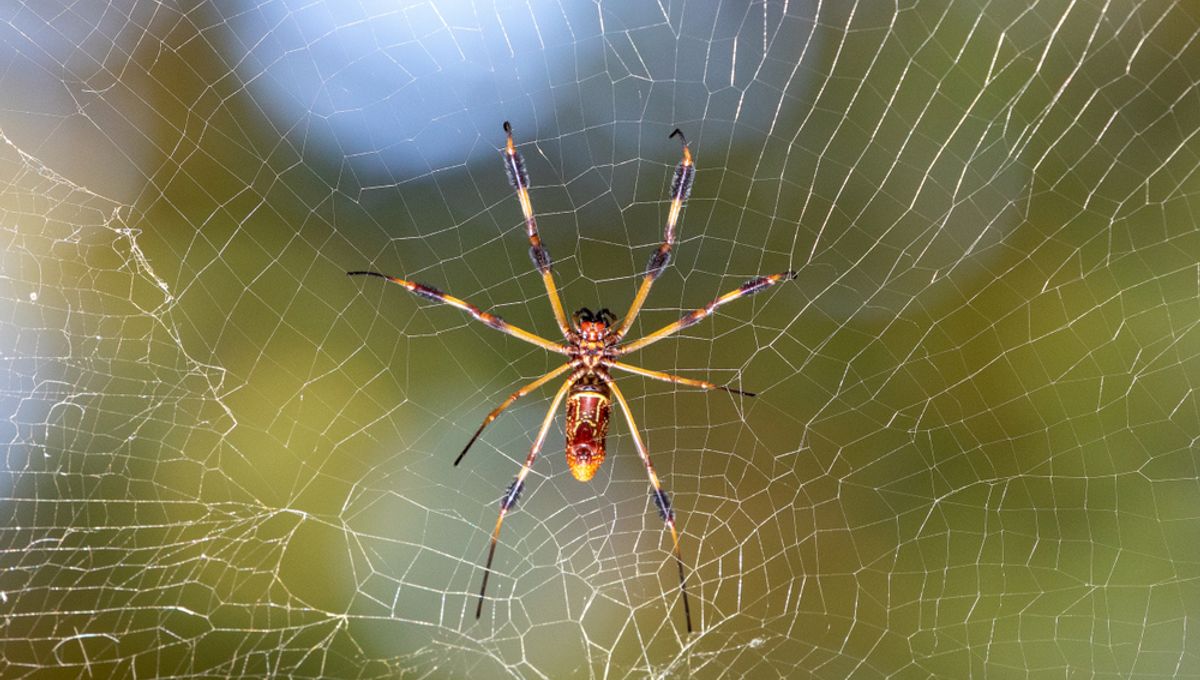
Meet the Rumplestiltskin of the animal kingdom: the Trichonephila clavipes, otherwise known as the golden silk orb-weaver. 

This striking arachnid might not spin threads of pure gold, but the critter is able to skillfully craft large golden-hued webs that can reach impressive lengths up to three feet long. The pigment responsible for the silk’s bright yellow color is xanthurenic acid. It is thought that the unusual color offers ecological benefits, such as attracting prey or camouflage.    

Golden silk orb-weavers can be found in North Carolina, Florida, and other southeastern states as well as the West Indies and parts of Central and South America, where they tend to be found in wooded areas attached to trees and bushes. The species can be identified by its distinctive coloring (brown and yellow) and the hair-like tufts found on its legs. 

Like many insects, the gold silk orbweaver displays sexual size dimorphism, which in this case means female spiders dramatically outsize their male counterparts. While a male spider is a relatively puny 6 millimeters, a typical female spider is usually between 24 and 40 millimeters long – but can grow to three inches, according to the National Park Service. 

The two sexes also display different behavior, with the males taking on a more nomadic lifestyle in the lifelong quest for willing females, who are more preoccupied with protecting their eggs. The impressive webs it casts are primarily the work of female spiders. Male spiders, in contrast, stop producing webs upon sexual maturation, instead using draglines to move from place to place. The silk used to create these webs are just one of seven different types built for different ecological purposes, from imprisoning prey to encasing eggs. The material is so strong, the silk of a related spider (Trichonephila maculata) is used by fishermen in the South Pacific to use as nets.

While T. clavipes might not look particularly friendly, they are relatively harmless. According to the University of Florida’s Institute of Food and Agricultural Services, the bite of a golden silk orb-weaver might cause some localized pain and a little redness, but it is less severe than a bee sting. 

The golden silk orb-weaver is not the only arachnid with an unusual skill. Meet the diving bell spider, an underwater species that breathes with specially built bubble pods, or the strange-looking “assassin spider” that feasts on other spiders. 

Deborah Bloomfield
Deborah Bloomfield

Related posts:

  1. Bolivian president calls for global debt relief for poor countries
  2. Five Seasons Ventures pulls in €180M fund to tackle human health and climate via FoodTech
  3. Unexplained And Deadly Heat Wave Hotspots Are Showing Up Across The Planet
  4. If Birds Are Dinosaurs, Why Are None As Big As T. Rexes?

Source Link: Trichonephila Clavipes: The Spider That Spins "Golden" Silk

Filed Under: News

Primary Sidebar

  • “Unidentified Human Relative”: Little Foot, One Of Most Complete Early Hominin Fossils, May Be New Species
  • Thought Arctic Foxes Only Came In White? Think Again – They Come In Beautiful Blue Too
  • COVID Shots In Pregnancy Are Safe And Effective, Cutting Risk Of Hospitalization By 60 Percent
  • Ramanujan’s Unexpected Formulas Are Still Unraveling The Mysteries Of The Universe
  • First-Ever Footage of A Squid Disguising Itself On Seafloor 4,100 Meters Below Surface
  • Your Daily Coffee Might Be Keeping You Young – Especially If You Have Poor Mental Health
  • Why Do Cats And Dogs Eat Grass?
  • What Did Carl Sagan Actually Mean When He Said “We Are All Made Of Star Stuff”?
  • Lonesome George: The Giant Tortoise Who Was The Very Last Of His Kind
  • Bermuda Sits On A Strange, 20-Kilometer-Thick Structure That’s Like No Other In The World
  • Time Moves Faster Up A Mountain – And That’s Why Earth’s Core Is 2.5 Years Younger Than Its Surface
  • Bio-Hybrid Robots Made Of Dead Lobsters Are The Latest Breakthrough In “Necrobotics”
  • Why Do Some Italians Live To 100? Turns Out, Centenarians Have More Hunter-Gatherer DNA
  • New Full-Color Images Of Interstellar Comet 3I/ATLAS, As We Are Days Away From Closest Encounter
  • Hilarious Video Shows Two Young Andean Bears Playing Seesaw With A Tree Branch
  • The Pinky Toe Has A Purpose And Most People Are Just Finding Out
  • What Is This Massive Heat-Emitting Mass Discovered Beneath The Moon’s Surface?
  • The Man Who Fell From Space: These Are The Last Words Of Cosmonaut Vladimir Komarov
  • How Long Can A Bird Can Fly Without Landing?
  • Earliest Evidence Of Making Fire Has Been Discovered, X-Rays Of 3I/ATLAS Reveal Signature Unseen In Other Interstellar Objects, And Much More This Week
  • Business
  • Health
  • News
  • Science
  • Technology
  • +1 718 874 1545
  • +91 78878 22626
  • [email protected]
Office Address
Prudour Pvt. Ltd. 420 Lexington Avenue Suite 300 New York City, NY 10170.

Powered by Prudour Network

Copyrights © 2025 · Medical Market Report. All Rights Reserved.

Go to mobile version