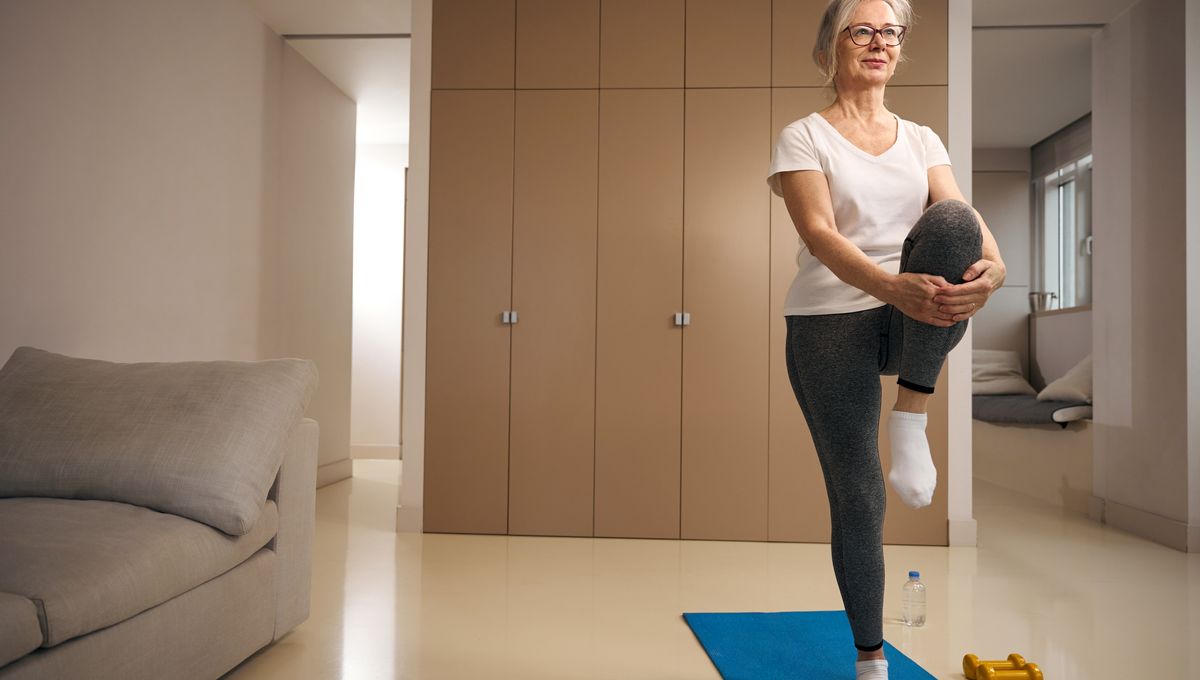
A recent study into strength and balance ability in relation to aging has concluded that, due to the gradual deterioration of muscle, a few simple tests that you can perform at home could accurately predict the age of your body.
With roughly 14 million older US adults reporting a fall at some point the previous year in 2020, research into these key indicators of aging and their effects on balance could help to improve the healthcare of older populations.
A team of researchers conducted the study on 40 individuals over the age of 50. Upper extremity grip strength and lower extremity knee strength were assessed, as well as tasks involving bilateral stances (standing on both legs) with eyes open and closed, standing gait, and unilateral stances (standing on one leg), testing both dominant and non-dominant leg balance.
They found that gait did not appear to be significantly affected by age, while both strength and balance were. Despite sex differences being present in the strength trials, the tests of balance showed no biases related to the sex of the participants. While the strength measures appeared to be less affected by age, the ability to balance in all groups was significantly affected, with the most prominent effects of age being seen on participants’ ability to stand on one leg.
The results show that within the one-leg conditions, the duration of balance decreased at a rate of 2.2 seconds per decade on the non-dominant side, and 1.7 seconds per decade on the dominant side. In the bilateral conditions, they found an increase of postural sway of 6.3 percent per decade with eyes open and 10.4 percent for eyes closed.
While the sample size of the study is too small with relatively narrow age parameters to draw any definitive conclusions about its measures, it does highlight the ways in which muscle deterioration affects specific functions of the aging body.
Sarcopenia refers to the deterioration of muscle mass, strength, and function. While sarcopenia can affect middle-aged people, it’s generally associated with deterioration in older adults, especially those with chronic diseases. It’s estimated that between 5 and 13 percent of people aged 60-70 are affected by sarcopenia, and it can contribute to the risk of falls and fractures.
“Sarcopenia is one of the most devastating impacts of aging, resulting in the loss of muscle mass, strength, and function,” the paper’s authors wrote. “Adequate muscle strength, efficient gait, and good balance, which decline with age, are crucial contributors to independence and well-being. Investigating how aging deteriorates the parameters related to balance and strength is crucial for both patients and clinicians.”
This study is published in the journal PLOS ONE.

Source Link: Try This Simple Test That Can Reveal Your Body’s "True Age"
