• Email Us: [email protected]
  • Contact Us: +1 718 874 1545
  • Skip to main content
  • Skip to primary sidebar

Medical Market Report

  • Home
  • All Reports
  • About Us
  • Contact Us

TWIS: Neptune Flashes Us Its Snazzy Rings, Fetuses Judge Our Ability To Cook Kale, And Much More This Week

September 23, 2022 by Deborah Bloomfield

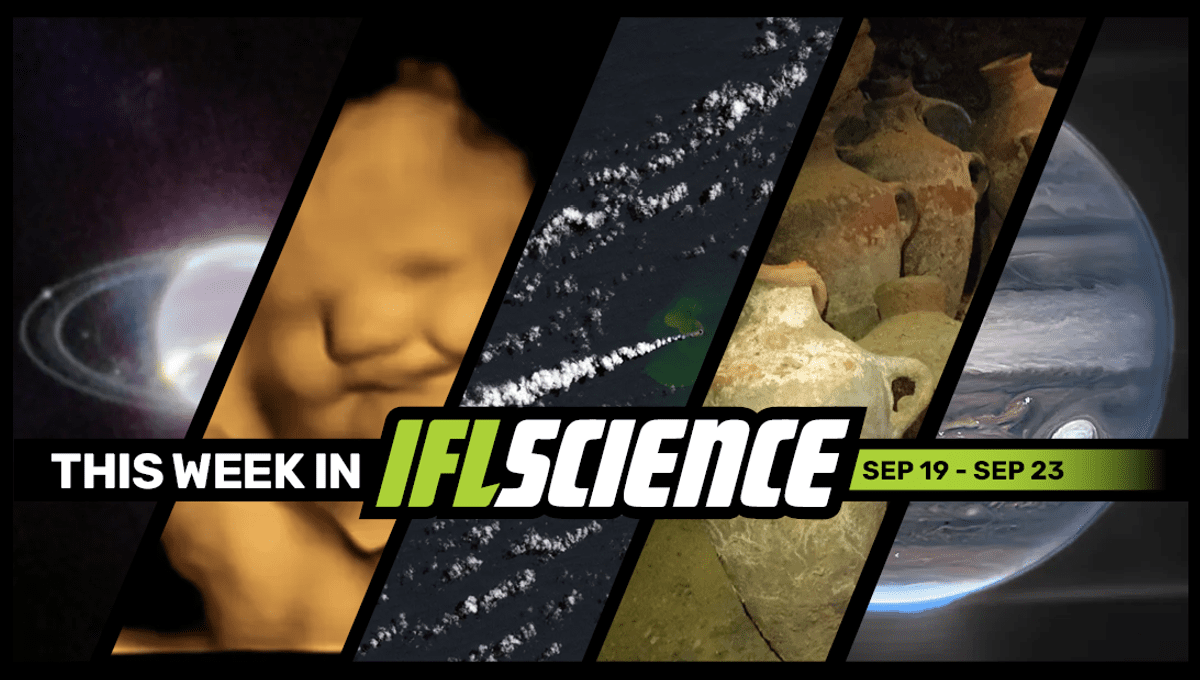
This week, JWST grants us access to view Neptune’s dazzling rings, a brand-new island has emerged out of the depths of the Pacific Ocean, and we learn about the mysteries of rare “golden blood”.

JWST Captures Neptune And Its Intriguing Rings As We Have Never Seen Before

Neptune makes a complete orbit of our Sun every 164.8 years and hides its secrets in one of the dimmest parts of our Solar System. But when you shine the most powerful space telescope ever built on something, those secrets will be revealed. In this case, the clearest images of Neptune’s rings in over 30 years. 

Advertisement

Read the full story here 

Ultrasounds Show Unborn Fetuses Making Disgusted Faces When Mom Eats Kale

The taste of kale is so repulsive to fetuses that it causes them to screw up their faces in disgust while in the womb, a new imaging study reveals. Researchers used 4D ultrasound to observe the reactions of 100 fetuses to the flavors ingested by their mothers, and found that they respond favorably to carrot but dislike leafy greens. 

Read the full story here 

Advertisement

A New Baby Island Has Just Been Born In The Pacific Ocean

It began with the eruption of an underwater volcano in the Central Tonga Islands on September 10 – and within just eleven hours, a landmass emerged from the watery depths. By September 20, the island had grown to cover 24,000 square meters with an elevation of 10 meters. 

Read the full story here 

Archaeologists Open Burial Cave Sealed Since The Time Of Rameses The Great 

Evidence for the proposition you can’t dig a hole in the Middle East without hitting a historical artifact has come from Palmahim Beach National Park in Israel. In this case, however, a mechanical digger has revealed considerably more than one piece of antiquity after it hit a rock. 

Advertisement

Read the full story here 

Next Week Jupiter Will Be Its Closest And Brightest For 59 Years

The Orion Nebula is the closest star-forming region to Earth and looks like a fuzzy star in Orion’s sword in the constellation. Even a modest amateur telescope reveals the nebula’s shape and some of the newborn stars, so imagine what the most powerful space telescope ever launched can see. Well, now you don’t have to because the images have arrived. 

Read the full story here 

Advertisement

Feature of the week: 

Golden Blood: Fewer Than 50 People In The World Have This Super-Rare Blood Type

With a mere estimate of 1 in 6 million people carrying this precious blood, being an invaluable universal donor could be life-threatening. 

Read the full story here 

Deborah Bloomfield
Deborah Bloomfield

Related posts:

  1. Brazil’s Bolsonaro slams Supreme Court, calls election a ‘farce’ as supporters rally
  2. Exclusive: Partners Group raises $15 billion for private equity investing
  3. U.S. adds top Guatemalan, Salvadoran officials to corruption list
  4. Soccer-Flamengo overrun Athletico to go second in Brazil

Source Link: TWIS: Neptune Flashes Us Its Snazzy Rings, Fetuses Judge Our Ability To Cook Kale, And Much More This Week

Filed Under: News

Primary Sidebar

  • Why Were Pompeii Victims All Wearing Thick Woolly Cloaks In August?
  • We May Finally Know What Causes These Bizarre Bright Blue Cosmic Flashes
  • What’s The Biggest Rock In The World?
  • There Is A Very Simple Test To See If You Have Aphantasia
  • Bringing Extinct Animals To Life: Is Artificial Intelligence Helping Or Harming Palaeoart?
  • This Brilliant Map Has 3D Models Of Nearly Every Single Building In The World – All 2.75 Billion Of Them
  • These Hognose Snakes Have The Most Dramatic Defense Technique You’ve Ever Seen
  • Titan, Saturn’s Biggest Moon, Might Not Have A Secret Ocean After All
  • The World’s Oldest Individual Animal Was Born In 1499 CE. In 2006, Humans Accidentally Killed It.
  • What Is Glaze Ice? The Strange (And Deadly) Frozen Phenomenon That Locks Plants Inside Icicles
  • Has Anyone Ever Actually Been Swallowed By A Whale?
  • First-Known Instance Of Bees Laying Eggs In Fossilized Tooth Sockets Discovered In 20,000-Year-Old Bones
  • Polar Bear Mom Adopts Cub – Only The 13th Known Case Of Adoption In 45 Years Of Study At Hudson Bay
  • The Longest-Running Evolution Experiment Has Been Going For 80,000 Generations
  • From Shrink Rays And Simulated Universes To Medical Mishaps And More: The Stories That Made The Vault In 2025
  • Fastest Cretaceous Theropod Yet Discovered In 120-Million-Year-Old Dinosaur Trackway
  • What’s The Moon Made Of?
  • First Hubble View Of The Crab Nebula In 24 Years Is A Thing Of Beauty… With Mysterious “Knots”
  • “Orbital House Of Cards”: One Solar Storm And 2.8 Days Could End In Disaster For Earth And Its Satellites
  • Astronomical Winter Vs. Meteorological Winter: What’s The Difference?
  • Business
  • Health
  • News
  • Science
  • Technology
  • +1 718 874 1545
  • +91 78878 22626
  • [email protected]
Office Address
Prudour Pvt. Ltd. 420 Lexington Avenue Suite 300 New York City, NY 10170.

Powered by Prudour Network

Copyrights © 2025 · Medical Market Report. All Rights Reserved.

Go to mobile version