• Email Us: [email protected]
  • Contact Us: +1 718 874 1545
  • Skip to main content
  • Skip to primary sidebar

Medical Market Report

  • Home
  • All Reports
  • About Us
  • Contact Us

Watch As Two Meteors Slam Into The Moon Just A Couple Of Days Apart

November 6, 2025 by Deborah Bloomfield

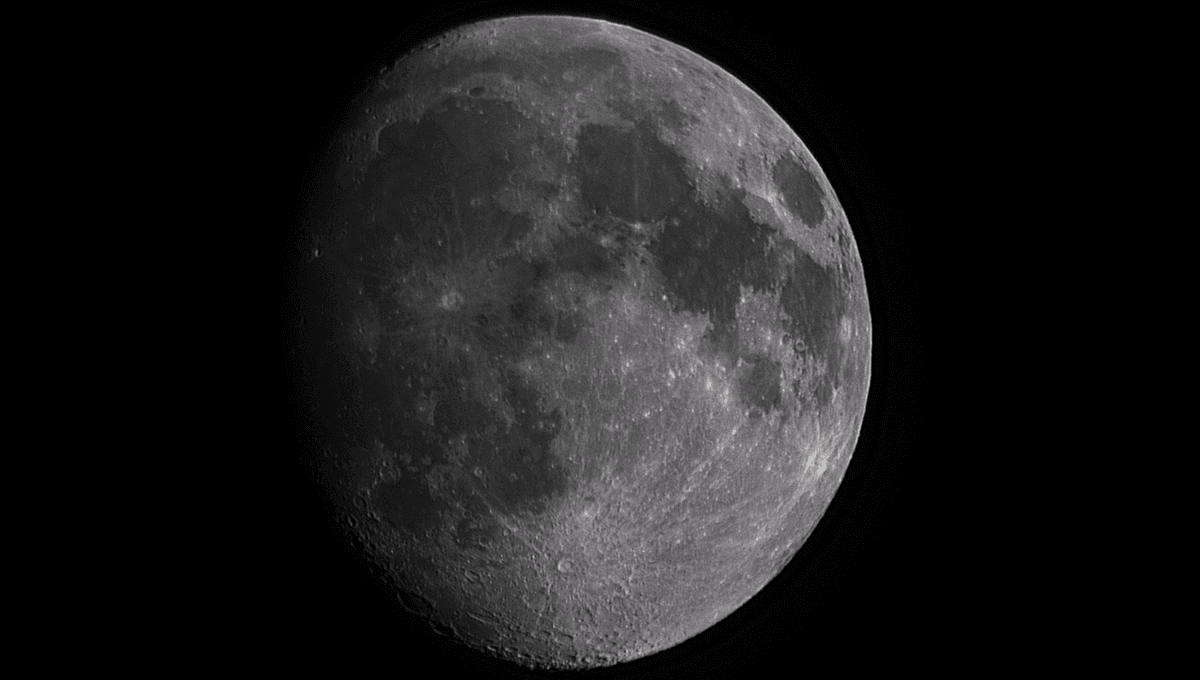
The Moon is notoriously difficult to photograph. Sometimes you want to snap a picture of it with your smartphone, and the flash goes off. It is much rarer that you are recording it and the flash happens on the Moon, but it does happen. That’s a meteor hitting our natural satellite and creating a new crater. A Japanese astronomer managed to capture it happening not once but twice, just a couple of days apart.

The rest of this article is behind a paywall. Please sign in or subscribe to access the full content.

Daichi Fujii, a curator in charge of astronomy at the Hiratsuka City Museum, is not a beginner in tracking meteor impacts on the Moon. We have covered his videos before, but the latest work is a two-for-one. On Thursday, October 30, at 8:33 pm local time, with his setup pointed at the Moon, he captured a brief flash of light in the shadowed part of our satellite.

ⓘ IFLScience is not responsible for content shared from external sites.

Just two days later, on Saturday, November 1, at 8:49 pm, he caught another meteor in the act. 

ⓘ IFLScience is not responsible for content shared from external sites.

Meteors that get to our planet do not make it to the ground; they burn in the atmosphere. Bigger ones, the fireballs and bolides, might fragment, and some pieces can reach the ground. But to make a crater, you need a really big chunk of rock.

The Moon instead has no atmosphere. Meteors and fireballs cannot be seen before they impact, and they do impact. They are moving a 27 kilometers (17 miles) per second and once they get to the lunar soil, they form a glowing crater – an event that can be seen from Earth, as Fujii has amply demonstrated.

We can just look at the Moon and see that it has been hit quite a fair bit. One estimate suggests that our satellite is hit by around 20 asteroids for every one that hits Earth. Catching that in the act is not very common but does happen, even during a lunar eclipse.


Fujii suggests that those two meteorites might be either the Northern or Southern Taurids, two meteor showers active right now. The Southern Taurids, nicknamed the Halloween Fireballs, actually peak on November 2, so it is certainly possible. But it is also possible that it was an unrelated comet chunk, like the one that burned over Portugal on November 2, 2025, at 8:41 pm local time.

It is very important to spot events like this. It provides insights into the risks astronauts may face on the Moon as well as the changes in asteroid strike abundance over time.

Deborah Bloomfield
Deborah Bloomfield

Related posts:

  1. Honeywell, Wood aim to make sustainable aviation fuel cleaner
  2. Bed-Sharing With Dogs Can Be Dangerous In Winter, Warns Vet
  3. Could Smelling Tears Influence Sexual Arousal? Scientists Have Actually Tested It
  4. Chernobyl Frogs Have Changed Color, And It Could Be What’s Helped Them Survive

Source Link: Watch As Two Meteors Slam Into The Moon Just A Couple Of Days Apart

Filed Under: News

Primary Sidebar

  • Inhaling “Laughing Gas” Could Treat Severe Depression, Live Seven-Arm Octopus Spotted In The Deep Sea, And Much More This Week
  • People Are Surprised To Learn That The Closest Planet To Neptune Turns Out To Be Mercury
  • The Age-Old “Grandmother Rule” Of Washing Is Backed By Science
  • How Hero Of Alexandria Used Ancient Science To Make “Magical Acts Of The Gods” 2,000 Years Ago
  • This 120-Million-Year-Old Bird Choked To Death On Over 800 Stones. Why? Nobody Knows
  • Radiation Fog: A 643-Kilometer Belt Of Mist Lingers Over California’s Central Valley
  • New Images Of Comet 3I/ATLAS From 4 Different Missions Reveal A Peculiar Little World
  • Neanderthals Used Reindeer Bones To Skin Animals And Make Leather Clothes
  • Why Do Power Lines Have Those Big Colorful Balls On Them?
  • Rare Peek Inside An Egg Sac Reveals An Adorable Developing Leopard Shark
  • What Is A Superhabitable Planet And Have We Found Any?
  • The Moon Will Travel Across The Sky With A Friend On Sunday. Here’s What To Know
  • How Fast Does Sound Travel Across The Worlds Of The Solar System?
  • A Wonky-Necked Giraffe In California Lived To 21 Against The Odds
  • Seal Finger: What Is This Horrible Infection That Makes Your Hand Swell Like A Balloon?
  • “They Usually Aren’t Second Tier”: When Wolves Adopt Pups From Rival Packs
  • The Road To New Physics Beyond Our Knowledge Might Pass Through Neutrinos
  • Flu Season Is Revving Up – What Are The Symptoms To Look Out For?
  • Asteroid Bennu Was Missing Just One Ingredient Needed To Kickstart Life – We just Found It
  • Rare Core Samples Provide “Once In A Lifetime” Opportunity To Study The Giant Line That Slices Through Scotland
  • Business
  • Health
  • News
  • Science
  • Technology
  • +1 718 874 1545
  • +91 78878 22626
  • [email protected]
Office Address
Prudour Pvt. Ltd. 420 Lexington Avenue Suite 300 New York City, NY 10170.

Powered by Prudour Network

Copyrights © 2025 · Medical Market Report. All Rights Reserved.

Go to mobile version