• Email Us: [email protected]
  • Contact Us: +1 718 874 1545
  • Skip to main content
  • Skip to primary sidebar

Medical Market Report

  • Home
  • All Reports
  • About Us
  • Contact Us

Watch Butterflies In The Amazon Drinking Turtle Tears

July 28, 2023 by Deborah Bloomfield

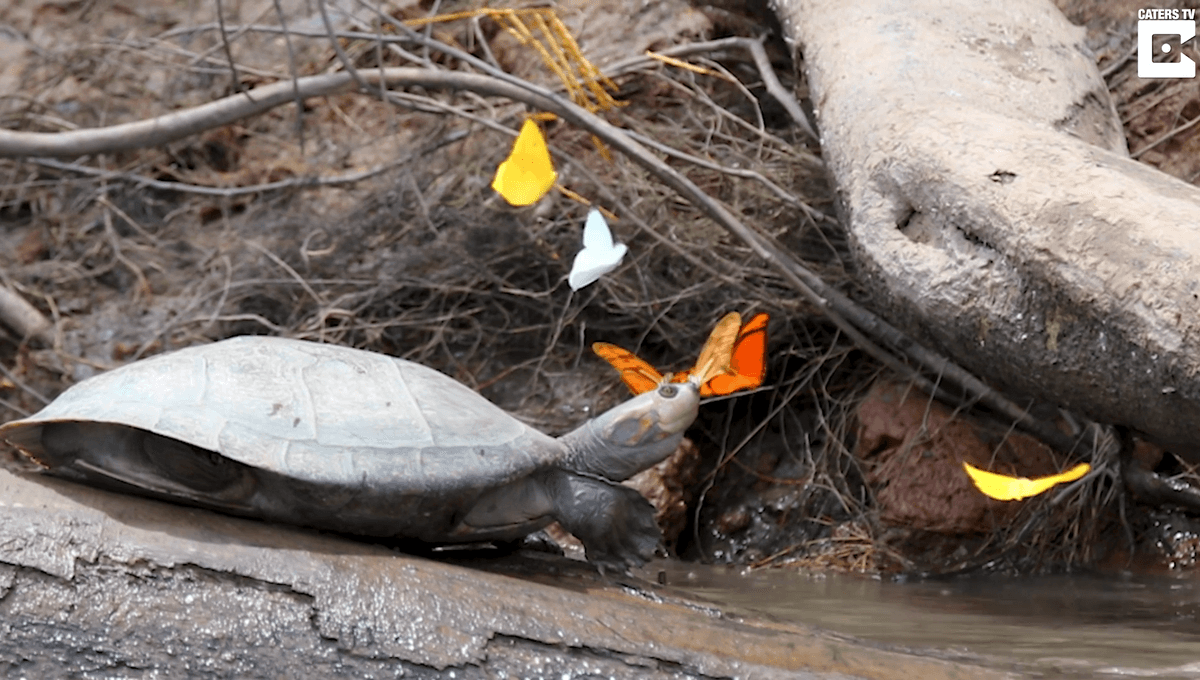
If you are ever lucky enough to travel down the Peruvian Amazon, you may see a rather magical sight. Amongst all the incredible animal species that the area is home to, butterflies have been filmed doing something rather incredible: drinking the tears of the turtles that live there.

Tropical entomologist and science communicator Phil Torres posted a video to his YouTube channel showing the remarkable behavior of these butterfly species. He explains that the butterflies, around eight different species, are all seeking one thing: sodium. 

Advertisement

This area is lacking in salt because of the distance from the open sea. The Atlantic Ocean is more than 1,600 kilometers (1,000 miles) away, and the Andes Mountains are blocking the wind from carrying important mineral particles to this region. This causes the animals that live here to get a bit creative to find salt.

ⓘ IFLScience is not responsible for content shared from external sites.

Typically butterflies feast on the nectar of flowers, slurping up the sugary goodness with their long proboscis. These insects also need salt, and while they can’t get it from plants, poop, mud, and turtle tears provide them with a good source. This is likely because the diet of the turtles contains meat and therefore a higher salt content. The turtles don’t seem to get much out of the experience, however. 

Advertisement

“They definitely don’t seem to enjoy it,” Peter told LiveScience in 2018. “This is a fairly colorful example of commensalism — a species partnership where one species benefits and the other species doesn’t really get affected, positively or negatively.”

Butterflies aren’t the only animal to seek an unusual source to get the salt content they need – the Kitum cave elephants are known to mine dirt from these caves to access calcium, magnesium, and sodium. 

Deborah Bloomfield
Deborah Bloomfield

Related posts:

  1. El Salvador buys its first 200 bitcoins, president says
  2. Biden administration to move public lands agency back to Washington from Colorado
  3. Creators of molecule-building precision tools win Chemistry Nobel
  4. Lake Vs Pond: Do You Know The Difference?

Source Link: Watch Butterflies In The Amazon Drinking Turtle Tears

Filed Under: News

Primary Sidebar

  • Humans Weren’t Capable Of “Mass Hunting” Until 50,000 Years Ago – What Changed?
  • ESA Steps Up Earth Monitoring, As NASA And NOAA Missions Face Uncertain Futures
  • Yellowstone’s Wolves And The Controversy Racking Ecologists Right Now
  • A New Universal Principle Behind Fragmentation Predicts Size Of Any Breakup Debris
  • Airbus Just Had To Ground 6,000 Of Its Airplanes – Was A Celestial Threat To Blame?
  • Meet Pumuckel, The World’s Shortest Living Horse (And Probably The Cutest Thing You’ll See This Week)
  • How A 500-Year-Old Inaccurate Bible Is Responsible For The Modern World
  • This Newly Discovered Blood Type Is So Rare, Only 3 People In The World Are Known To Have It
  • The Science Of Magic: Find Out More In Issue 41 Of CURIOUS – Out Now
  • People Sailed To Australia And New Guinea 60,000 years ago
  • How Do Cells Know Their Location And Their Role In The Body?
  • What Are Those Strange Eye “Floaters” You See In Your Vision?
  • Have We Finally “Seen” Dark Matter? Mysterious Ancient Foot May Be From Our True Ancestor, And Much More This Week
  • The Unexpected Life Hiding Out in the Great Pacific Garbage Patch
  • Scientists Detect “Switchback” Phenomenon In Earth’s Magnetosphere For The First Time
  • Inside Your Bed’s “Dirty Hidden Biome” And How To Keep Things Clean
  • “Ego Death”: How Psychedelics Trigger Meditation-Like Brain Waves
  • Why We Thrive In Nature – And Why Cities Make Us Sick
  • What Does Moose Meat Taste Like? The World’s Largest Deer Is A Staple In Parts Of The World
  • 11 Of The Last Spix’s Macaws In The Wild Struck Down With A Deadly, Highly Contagious Virus
  • Business
  • Health
  • News
  • Science
  • Technology
  • +1 718 874 1545
  • +91 78878 22626
  • [email protected]
Office Address
Prudour Pvt. Ltd. 420 Lexington Avenue Suite 300 New York City, NY 10170.

Powered by Prudour Network

Copyrights © 2025 · Medical Market Report. All Rights Reserved.

Go to mobile version