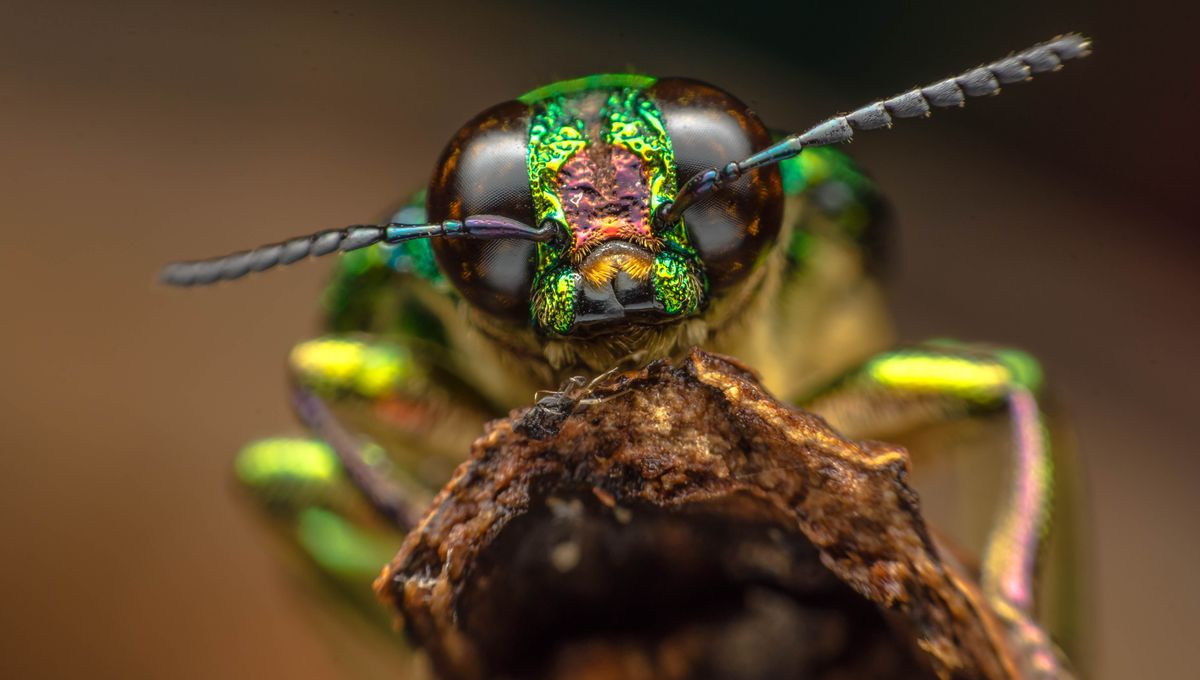
Consciousness in the animal kingdom may be far more wide-reaching than previously thought, according to a number of animal cognition experts. In a recent declaration, they argue that all sorts of animals – from fish to insects – may be sentient, and that this should inform our treatment of such animals going forward.
Previous research has hinted that other animals may have complex inner lives. Octopuses are a key example: studies demonstrate that they are incredibly smart, are capable of advanced problem-solving, and suggest they can feel physical and emotional pain – all of which could be taken as evidence that they have consciousness.
Meanwhile, crows, dogs, mice, and elephants have all been known to behave in ways that could imply they are sentient beings. Even various creepy crawlies, including bees and flies, are being investigated as potentially having consciousness.
Now, almost 40 researchers have signed The New York Declaration on Animal Consciousness – a proclamation on the extent of animal sentience, which was presented at a conference at New York University on Friday morning.
Although the statement concedes that “much uncertainty remains”, it also states that “there is strong scientific support for attributions of conscious experience to other mammals and to birds.”
“Second, the empirical evidence indicates at least a realistic possibility of conscious experience in all vertebrates (including reptiles, amphibians, and fishes) and many invertebrates (including, at minimum, cephalopod mollusks, decapod crustaceans, and insects).”
Consciousness refers to an animal’s awareness of themselves or their surroundings. Sentience, on the other hand, is an aspect of consciousness that describes an animal’s capacity to experience and feel things.
“Sentience refers to an animal’s ability to have subjective experiences, such as pleasure, pain, fear, and other emotions. While these concepts may be related, sentience pertains explicitly to an animal’s ability to feel the world,” Michaella Pereira Andrade and Tatiana Leite, members of the Wild Animal Initiative’s octopus sentience investigation team, previously told IFLScience’s Rachael Funnell.
In the face of mounting evidence that animals may be able to do just that, scientists are “taking the topic seriously, not dismissing it out of hand as a crazy idea in the way they might have in the past,” Jonathan Birch, a philosopher at the London School of Economics and Political Science and one of the declaration’s signatories, told Nature.
“What [the declaration] says is there is sufficient evidence out there such that there’s a realistic possibility of some kinds of conscious experiences in species even quite distinct from humans,” added Anil Seth, director of the Centre for Consciousness Science at the University of Sussex, and another one of the authors of the declaration.
Other researchers are more skeptical and argue that what we’ve found so far is not necessarily indicative of consciousness. But the signatories hope that their statement will spark more research into animal consciousness, providing more clarity on the subject, and also a rethink regarding animal welfare in lawmaking.
“When there is a realistic possibility of conscious experience in an animal, it is irresponsible to ignore that possibility in decisions affecting that animal,” the declaration reads. “We should consider welfare risks and use the evidence to inform our responses to these risks.”

Source Link: Way More Animals Than Assumed (Including Insects) May Have Consciousness, Scientists Argue
